
Short Answer
Understanding Dark Matter
Dark matter is a mysterious and invisible form of matter that is believed to constitute a significant portion of the universe’s total mass. It does not emit, absorb, or reflect light, making it undetectable through conventional electromagnetic observations. Despite its invisibility, dark matter is inferred from its gravitational effects on visible matter, radiation, and the large-scale structure of the cosmos.
- Invisible Mass:
Dark matter cannot be observed directly but is detected through its gravitational influence on galaxies and galaxy clusters. - Cosmic Scaffold:
It acts as an unseen framework that holds galaxies together and shapes the formation of cosmic structures.
Historical Context and Significance
For decades, dark matter has been a cornerstone in astrophysics, introduced to explain phenomena that visible matter alone cannot account for. Observations such as the unexpectedly high rotational speeds of galaxies and the clustering of galaxies in the universe suggest the presence of an unseen mass component. This has led to the development of theoretical models that incorporate dark matter as a fundamental element in cosmic evolution.
Recent Observational Challenges
New data obtained from advanced telescope arrays have begun to challenge the traditional dark matter paradigm. These instruments, capable of detecting subtle distortions in light caused by gravitational lensing, have produced highly detailed maps of mass distribution in the universe. Surprisingly, these maps reveal inconsistencies with predictions made by standard dark matter models, indicating that our understanding of dark matter’s role and properties may be incomplete.
Gravitational Lensing and Mass Mapping
Gravitational lensing occurs when massive objects bend the path of light from distant sources, creating distortions that can be measured to infer the mass distribution along the line of sight. The latest observations show that the gravitational lensing effects do not perfectly align with the expected dark matter density profiles, suggesting that the invisible mass may behave differently than previously thought.
Theoretical Implications and Alternative Models
The discrepancies between observation and theory have prompted scientists to reconsider the nature of dark matter and explore alternative explanations. If the conventional model of cold, collisionless dark matter particles falls short, other hypotheses gain prominence.
Modified Gravity Theories
One such alternative is Modified Newtonian Dynamics (MOND), which proposes changes to the laws of gravity at very low accelerations. MOND attempts to replicate the effects attributed to dark matter without invoking unseen particles. Although MOND has faced challenges in explaining large-scale cosmic phenomena, recent data have revived interest in its potential applicability.
Self-Interacting Dark Matter
Another avenue involves the possibility that dark matter particles interact with each other or with unknown forces within a “dark sector.” These self-interactions could produce complex behaviors and structures that influence gravitational effects, offering explanations for the observed anomalies in mass distribution.
Scientific and Technological Impact
Reevaluating dark matter’s nature has profound consequences across multiple scientific disciplines. It influences particle physics by challenging existing models of fundamental particles and forces. In cosmology, it affects theories of structure formation and the universe’s ultimate destiny. This evolving understanding drives innovation in experimental design, inspiring new detectors and observational strategies aimed at uncovering the true characteristics of dark matter.
The Role of Modern Telescopes in Dark Matter Research
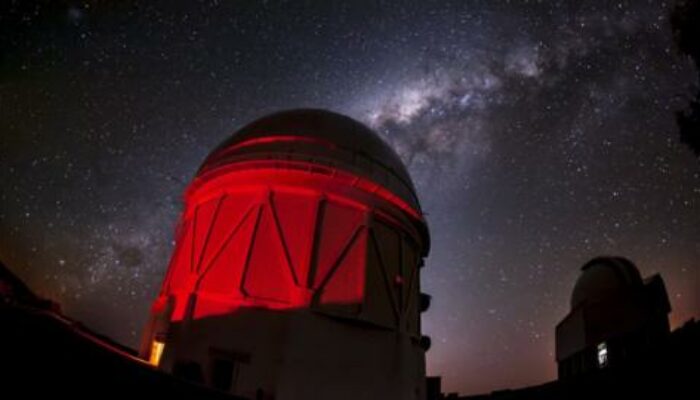
Contemporary astronomical telescopes are not merely passive tools but active contributors to scientific discovery. By capturing photons and mapping gravitational perturbations with increasing precision, they provide critical data that refine our cosmic models. These observations weave together a more intricate picture of the universe, revealing unexpected patterns that challenge established knowledge.
Future Prospects and Ongoing Investigations
The path forward in dark matter research is both thrilling and uncertain. Upcoming observational campaigns equipped with more sensitive instruments and broader spectral capabilities are expected to either confirm the emerging challenges to the standard model or uncover new complexities. The synergy between observational advancements and theoretical innovation holds promise for breakthroughs in understanding the universe’s hidden mass.
Conclusion: The Evolving Mystery of Dark Matter
The elusive nature of dark matter continues to captivate scientists, inviting ongoing inquiry and debate. It may be more subtle, dynamic, or governed by unknown physics than current models suggest. As we probe deeper into the cosmic shadows, we are reminded that the universe’s secrets extend beyond the light we observe, urging us to rethink and expand our comprehension of the fundamental forces shaping reality.
FAQ
What is dark matter?
Dark matter is an invisible form of matter that makes up a significant portion of the universe’s mass, detected through its gravitational effects.
How do telescopes contribute to dark matter research?
Modern telescopes capture light and measure gravitational lensing, providing critical data that challenges existing dark matter theories.
What are alternative theories to dark matter?
Alternative theories include Modified Newtonian Dynamics (MOND) and self-interacting dark matter, which propose different explanations for gravitational phenomena.




Leave a Reply