
Short Answer
Understanding Dark Matter: Beyond Classical States
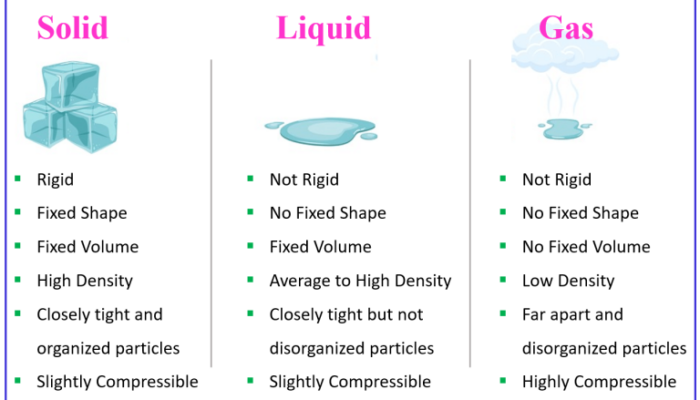
When exploring the enigmatic nature of dark matter, a common initial approach is to categorize it using familiar states of matter: solid, liquid, or gas. These classical phases define much of the physical world we experience daily, from the firmness of a rock to the fluidity of water and the expansiveness of air. However, these conventional classifications fall short when applied to dark matter, a mysterious component of the universe that defies straightforward categorization and invites investigation into realms beyond traditional matter states.
Classical States of Matter and Their Limitations
Solids, liquids, and gases are distinguished by the arrangement and energy of atoms and molecules, primarily governed by electromagnetic forces:
- Solids:
Possess a fixed shape and volume due to tightly bound atoms. - Liquids:
Maintain volume but adapt shape to their container, with atoms less rigidly bound. - Gases:
Expand to fill available space, with atoms or molecules moving freely. - Plasma:
Often considered the fourth state, consisting of ionized particles with unique electromagnetic properties.
These states arise from electromagnetic interactions that enable atoms to form bonds and structures. Dark matter, however, does not engage with electromagnetic forces, making these classical states inadequate for describing its nature.

Why Dark Matter Defies Conventional Classification
Unlike baryonic matter, which forms atoms and molecules through electromagnetic interactions, dark matter neither emits, absorbs, nor reflects light. This lack of electromagnetic interaction prevents it from forming the atomic and molecular bonds necessary for the physical properties that define solids, liquids, or gases. Consequently, applying these familiar states to dark matter oversimplifies its true nature.
Speculative States and Theoretical Models of Dark Matter
Despite the inadequacy of classical states, the human tendency to categorize drives speculation about whether dark matter might exist in an exotic phase governed by unknown physics. Several theoretical frameworks propose alternative states or behaviors:
- Weakly Interacting Massive Particles (WIMPs):
Hypothetical particles that interact primarily through gravity and the weak nuclear force, forming diffuse halos around galaxies rather than dense structures. - Bose-Einstein Condensate:
A quantum state where bosonic particles occupy the same ground state at near absolute zero, potentially allowing dark matter to exhibit macroscopic quantum phenomena on cosmic scales. - Self-Interacting Dark Matter:
Models where dark matter particles exert weak forces on each other, possibly forming clumps or clouds with fluid-like properties distinct from classical matter.
Astrophysical Evidence and Dark Matter’s Gravitational Role
Observations of galaxies and large-scale cosmic structures provide critical insights into dark matter’s characteristics. Its gravitational influence outweighs ordinary matter by approximately five to one, affecting galaxy rotation curves and the formation of cosmic web structures. These effects arise from gravity rather than fluid dynamics or electromagnetic forces, underscoring dark matter’s unique role in the universe’s architecture.
Phase Transitions and Cosmic Evolution
The concept of phase transitions, fundamental in understanding classical matter, may have analogs in the dark matter sector. It is conceivable that under extreme conditions, such as those in the early universe, dark matter underwent transitions into exotic states shaped by unknown forces. These transitions could have influenced cosmic evolution in ways still being unraveled by modern physics.
Challenges in Detecting and Defining Dark Matter
Despite extensive experimental efforts, direct detection of dark matter particles remains elusive. This persistent challenge compels scientists to broaden their conceptual frameworks beyond traditional matter states. Dark matter may embody a form of mass and energy that intertwines quantum mechanics, gravity, and particle physics in unprecedented ways, resisting simple classification.
Why Understanding Dark Matter’s State Matters
Deciphering the physical nature of dark matter is crucial for comprehending the universe’s fundamental structure. It shapes galaxy formation, cosmic evolution, and the overall mass-energy content of the cosmos. Recognizing that dark matter does not conform to classical states expands our scientific horizons and deepens our grasp of the universe’s hidden architecture.
Common Misconceptions About Dark Matter
Dark matter is just another form of ordinary matter in a different state.
Dark matter does not interact electromagnetically and cannot form atoms or molecules, making it fundamentally different from ordinary matter.
Dark matter behaves like a gas or fluid similar to those on Earth.
While some models suggest fluid-like behavior, these interactions are unlike electromagnetic forces and result in unique, non-classical dynamics.
Conclusion: The Enigmatic Nature of Dark Matter
Dark matter eludes simple categorization as solid, liquid, gas, or plasma. It represents a mysterious form of matter whose properties transcend classical definitions, dominated by gravitational interactions and devoid of electromagnetic engagement. This complexity fuels ongoing scientific inquiry, with the hope that future discoveries will reveal whether dark matter occupies novel states or phases, fundamentally reshaping our understanding of matter itself. Until then, dark matter remains one of the universe’s most profound mysteries, challenging our deepest intuitions about the fabric of reality.



Leave a Reply