
Short Answer
Understanding the Invisible Aspects of Reality
Each day, our eyes take in a vibrant array of colors, shapes, and movements, forming the foundation of how we perceive the world around us. However, this seemingly complete visual experience conceals a vast realm of phenomena and dimensions that remain beyond direct human observation. The question arises: how much of reality exists beyond what we can see? This inquiry touches on the core of human curiosity and highlights the inherent limitations of our sensory perception.
Definition of Invisible Reality
Invisible reality refers to all aspects of existence that cannot be detected by the unaided human senses, particularly sight. This includes a wide range of physical, biological, and cosmic phenomena that require technological tools or indirect methods to be observed or understood.
- Electromagnetic Spectrum Beyond Visible Light:
The human eye perceives only a narrow band of electromagnetic radiation known as visible light. However, the spectrum extends to include infrared, ultraviolet, X-rays, and radio waves, all of which are invisible without specialized instruments. - Subatomic Particles:
Fundamental components of matter such as quarks, gluons, and neutrinos exist in forms that cannot be directly seen but are inferred through experimental data and quantum theory. - Microorganisms:
Bacteria, viruses, and other microscopic life forms inhabit our environment and bodies, remaining unseen without magnification tools like microscopes. - Dark Matter and Dark Energy:
These mysterious substances constitute the majority of the universe’s mass-energy content but evade direct detection through conventional means.
The Mechanisms Behind Invisible Phenomena
Invisible phenomena operate through principles that often lie outside the scope of human sensory capabilities. For example, electromagnetic waves outside the visible range interact with matter differently, requiring detectors tuned to specific frequencies. Subatomic particles behave according to quantum mechanics, a framework that defies classical intuition and necessitates indirect observation through particle accelerators and detectors. Microorganisms are too small to be resolved by the naked eye, demanding optical magnification. Meanwhile, dark matter and dark energy reveal their presence only through gravitational effects and cosmological observations rather than direct sensory or electromagnetic detection.
Scientific Explanation and Key Concepts
The invisible aspects of reality can be described using scientific models and mathematical frameworks:
- Electromagnetic Spectrum:
Defined by wavelength (λ) and frequency (f), electromagnetic waves follow the relation c = λf, where c is the speed of light. Visible light occupies a small range (~400-700 nm), while other wavelengths extend far beyond. - Quantum Mechanics:
Governs the behavior of subatomic particles, described by wavefunctions (Ψ) and probabilistic outcomes rather than deterministic paths. - Cosmological Models:
Dark matter and dark energy are incorporated into the Lambda Cold Dark Matter (ΛCDM) model, which explains the universe’s large-scale structure and accelerated expansion.
Examples from Everyday Life and the Universe
Invisible reality manifests in numerous practical and cosmic contexts:
- Infrared Radiation:
Used in remote controls and thermal imaging, infrared light is invisible but detectable with appropriate sensors. - Microbial Life:
The human gut hosts trillions of bacteria essential for digestion and immunity, invisible without microscopes. - Cosmic Phenomena:
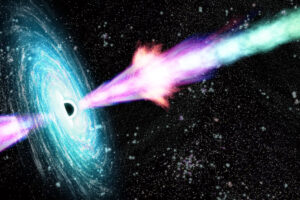
Telescopes capture X-rays from black holes and radio waves from pulsars, revealing celestial objects beyond visible light. - Dark Matter Effects:
The rotation curves of galaxies indicate the presence of unseen mass influencing gravitational dynamics.
Common Misunderstandings About Invisible Reality
- Misconception: Reality is limited to what we can see.
Correction: Much of existence lies beyond visible perception, accessible only through scientific instruments and theories. - Misconception: Invisible means non-existent.
Correction: Invisible phenomena have measurable effects and are integral to the structure and function of the universe. - Misconception: Technology can reveal all invisible aspects.
Correction: While technology expands perception, many invisible domains remain elusive and may always challenge direct observation.
The Significance of Invisible Reality
Recognizing the invisible components of reality is crucial for advancing science, technology, and our understanding of existence. It drives innovation in imaging, detection, and theoretical physics, enabling breakthroughs in medicine, astronomy, and environmental science. Moreover, it fosters intellectual humility by reminding us that human perception is inherently limited and that the universe contains layers of complexity beyond immediate experience.
Cultural and Philosophical Perspectives on Invisibility
Throughout history, invisible forces have held symbolic and spiritual importance in many cultures. Concepts such as spirits, auras, and energies often represent the unseen dimensions of existence, reflecting humanity’s quest to comprehend the unknown. This cultural fascination parallels scientific endeavors, both seeking to uncover hidden truths and expand the boundaries of knowledge.
Technological Advances Expanding the Visible Frontier
Modern technologies continuously push the limits of what can be observed. Multispectral imaging captures data across various wavelengths, quantum sensors detect subtle physical phenomena, and particle accelerators probe the subatomic world. Each innovation reveals new layers of the invisible, illustrating that the frontier of unseen reality is ever-expanding rather than fixed.
Conclusion: Embracing the Unseen
The extent of what remains invisible is not a fixed quantity but an ongoing dialogue between human perception, technological progress, and scientific insight. The visible world is merely a slender thread woven into a vast, intricate tapestry of both seen and unseen elements. Acknowledging the invisible invites curiosity, humility, and wonder, encouraging us to explore the profound depths of reality that lie beyond our immediate senses. In this pursuit, invisibility transforms from a void into a boundless frontier, perpetually inviting discovery and expanding our understanding of existence.



Leave a Reply