
Short Answer
Understanding Matter: Normal vs. Dark
In the vast cosmic arena, matter exists in two distinct forms: the familiar normal matter and the mysterious dark matter. Normal matter constitutes everything we see and touch-stars, planets, and living organisms-while dark matter remains invisible, detectable only through its gravitational influence. The fundamental question that intrigues scientists is whether dark matter abides by the same physical laws as normal matter or if it operates under a different set of principles yet to be fully understood.
Definition and Characteristics of Normal Matter
Normal matter, also known as baryonic matter, is composed of particles such as protons, neutrons, and electrons. These particles interact through four fundamental forces: gravity, electromagnetism, and the strong and weak nuclear forces. This interplay governs the formation of atoms and molecules, enabling chemical reactions and the emission or absorption of light. Consequently, normal matter is visible, tangible, and measurable through electromagnetic radiation.
- Composition:
Made up of baryons including protons and neutrons, along with electrons. - Interactions:
Engages in electromagnetic, strong, weak, and gravitational forces. - Visibility:
Emits and absorbs light, making it observable with telescopes and detectors.
Defining Dark Matter
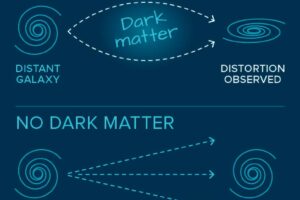
Dark matter is an elusive form of matter that does not emit, absorb, or reflect electromagnetic radiation, rendering it invisible to conventional detection methods. Its presence is inferred from gravitational effects on visible matter, such as the unexpected rotational speeds of galaxies, the cohesion of galaxy clusters, and subtle fluctuations in the cosmic microwave background radiation. These phenomena suggest a substantial amount of unseen mass influencing the universe’s structure.

- Invisible Nature:
Does not interact with light or electromagnetic forces. - Gravitational Influence:
Detected through its effect on the motion of stars and galaxies. - Cosmic Role:
Constitutes a significant portion of the universe’s total mass.
Gravitational Behavior of Dark Matter
Gravity is the primary force through which dark matter reveals itself. Observations confirm that dark matter exerts gravitational pull and warps spacetime similarly to normal matter. However, unlike normal matter, which interacts visibly with electromagnetic forces, dark matter’s gravitational effects are its only detectable signature. It forms extensive halos around galaxies, influencing their rotation and stability without participating in electromagnetic interactions.
Electromagnetic and Nuclear Forces: A Divergence
Normal matter’s behavior is heavily influenced by electromagnetic forces, which enable atoms to bond and form complex structures. Dark matter, lacking electric charge, does not engage with these forces, preventing it from participating in chemical reactions or emitting light. Additionally, the strong and weak nuclear forces, responsible for atomic nucleus stability and radioactive decay in normal matter, appear absent in dark matter interactions. This absence suggests dark matter occupies a unique niche in particle physics, possibly involving particles beyond the Standard Model.
Quantum Properties and Theoretical Candidates
The quantum nature of dark matter remains largely speculative. Some proposed candidates, such as Weakly Interacting Massive Particles (WIMPs), are fermions and would obey the Pauli exclusion principle, similar to normal matter particles. Others, like axions, are bosons and might form exotic states such as Bose-Einstein condensates under certain conditions. These quantum characteristics could influence how dark matter behaves on both microscopic and cosmic scales.
Alternative Theories and Challenges
While dark matter is widely accepted as a form of matter exerting gravitational effects, alternative explanations like Modified Newtonian Dynamics (MOND) propose changes to gravitational laws to account for observed phenomena without invoking dark matter. Despite their appeal, these theories struggle to comprehensively explain all cosmological observations as effectively as the dark matter hypothesis. The gravitational signature remains the most robust evidence supporting dark matter’s existence.
Current Research and Future Prospects
Advancements in particle detection technologies aim to directly observe dark matter particles and unravel their properties. Confirming the nature of dark matter would clarify whether it follows hidden physical laws or simply represents a non-interacting component of the universe’s mass. Until such discoveries are made, dark matter remains a profound enigma at the intersection of astrophysics and particle physics.
Significance of Understanding Dark Matter
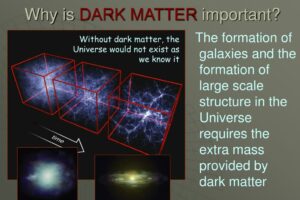
Dark matter’s silent yet substantial influence shapes the large-scale structure of the cosmos, governing galaxy formation and evolution. Understanding whether it obeys the same laws as normal matter is crucial for refining our models of the universe and could lead to groundbreaking insights into fundamental physics. This knowledge not only deepens our comprehension of cosmic architecture but also challenges and enriches the scientific frameworks that describe reality.


Leave a Reply