
Short Answer
Understanding Infrared Telescopes and Their Temperature Requirements
Infrared telescopes play a vital role in astronomy by detecting heat energy emitted from celestial objects, revealing phenomena invisible to the naked eye. However, these instruments must operate at extremely low temperatures to function effectively. Contrary to what one might expect, warming an infrared telescope to room temperature would severely impair its ability to capture clear and detailed cosmic data. This necessity for cold operation is fundamental to the success of infrared astronomy.
Definition of Infrared Radiation and Its Astronomical Significance
Infrared radiation is a form of electromagnetic energy primarily associated with heat emission. Unlike visible light, which humans can see, infrared waves carry information about cooler and often more distant objects in space. These include:
- Cold celestial bodies:
Objects too cool to emit visible light but detectable through their heat signatures. - Star formation regions:
Areas shrouded in dust where new stars are born, often hidden from optical telescopes. - Molecular clouds:
Dense interstellar clouds where galaxies and stellar systems develop.
Why Infrared Telescopes Must Remain Extremely Cold
Every object with a temperature above absolute zero emits thermal radiation, including the telescope itself. This self-generated heat produces infrared signals that can overwhelm the faint cosmic emissions the telescope aims to detect. If the telescope is warm, its own infrared radiation acts as background noise, masking the subtle signals from distant space and reducing the clarity and reliability of observations.
Mechanisms for Achieving Cryogenic Cooling
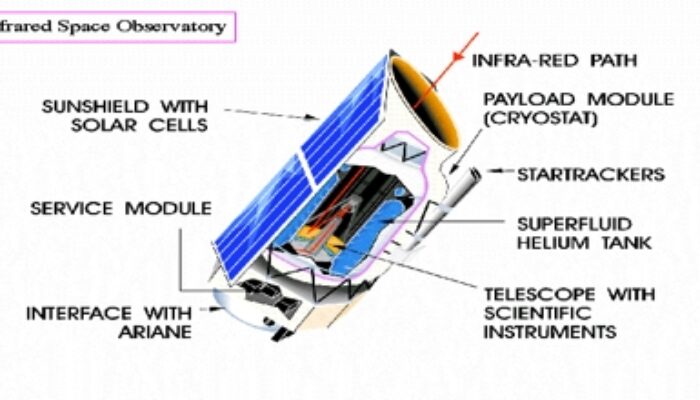
To minimize self-emission, infrared telescopes are cooled to temperatures often below -250°C. This drastic cooling suppresses the telescope’s own infrared output, allowing it to detect weak signals from the universe with high precision. Achieving and maintaining such low temperatures involves sophisticated engineering techniques:
- Passive cooling:
Utilizing the vacuum of space, radiation shields, and sunshades to deflect and dissipate heat naturally. - Orbital positioning:
Placing telescopes far from Earth’s heat sources to benefit from the coldness of space. - Active refrigeration:
Employing mechanical cryocoolers or coolant fluids to maintain ultra-low temperatures.
Case Study: The James Webb Space Telescope
The James Webb Space Telescope exemplifies advanced cryogenic design. Orbiting far from Earth, it features a massive sunshield roughly the size of a tennis court that blocks heat from the Sun, Earth, and Moon. This shield creates a shadowed, frigid environment where its instruments can operate at extremely low temperatures, enabling the detection of ancient cosmic signals that have traveled billions of years to reach us.
Impact of Temperature Stability on Detector Performance
Infrared detectors are highly sensitive to temperature fluctuations. Even slight changes can introduce noise or degrade their performance. Maintaining a stable, cold environment ensures consistent detector sensitivity and longevity, which is crucial for long-term astronomical studies. This stability allows scientists to compare data collected over extended periods without interference from instrumental thermal noise.
Expanding Observational Capabilities Through Cooling
Operating infrared telescopes at cryogenic temperatures not only improves data clarity but also enables the observation of phenomena that would otherwise remain hidden. These include:
- Distant exoplanets:
Detecting the faint thermal glow of planets orbiting other stars. - Interstellar dust clouds:
Observing thin, diffuse clouds that scatter visible light but emit infrared radiation. - Supernova remnants:
Studying the cooling debris left behind after stellar explosions.
Future Prospects and Technological Advances
While current infrared astronomy relies heavily on cryogenic cooling, future innovations may reduce this dependency. Advances in detector materials and sophisticated noise-filtering algorithms could potentially allow for effective observations at higher temperatures. Nonetheless, the fundamental physics of thermal radiation and detector sensitivity currently make ultra-cold conditions indispensable for capturing the universe’s faint heat signatures.
Additional Benefits of Cryogenic Environments
Besides enhancing observational quality, maintaining extremely low temperatures protects the telescope’s components from thermal stress. Materials contract at cold temperatures, and careful engineering manages this contraction to prevent damage. This preservation extends the operational lifespan of optical elements and electronic sensors, ensuring the telescope remains functional and accurate over many years.
Conclusion: The Essential Role of Cold in Infrared Astronomy
Operating infrared telescopes at freezing temperatures is not merely a technical preference but a fundamental requirement dictated by the laws of physics and the nature of infrared radiation. The cold environment acts as a shield against thermal noise, allowing astronomers to detect the faintest cosmic heat signals and deepen our understanding of the universe. Without this icy condition, the invaluable insights gained from infrared observations would be lost in the telescope’s own warmth.
Next time you imagine a space telescope gazing into the cosmos, picture it enveloped in an intense cold so profound it preserves the purity of its vision-an arctic sentinel enabling humanity’s quest to explore the hidden depths of the universe.
FAQ
Why do infrared telescopes need to be cold?
Infrared telescopes need to be cold to suppress their own infrared emissions, which can interfere with the detection of faint cosmic signals.
What methods are used to achieve cryogenic cooling?
Methods include passive cooling through radiation shields, orbital positioning far from heat sources, and active refrigeration systems.



Leave a Reply