
Short Answer
Understanding the Black Hole Image
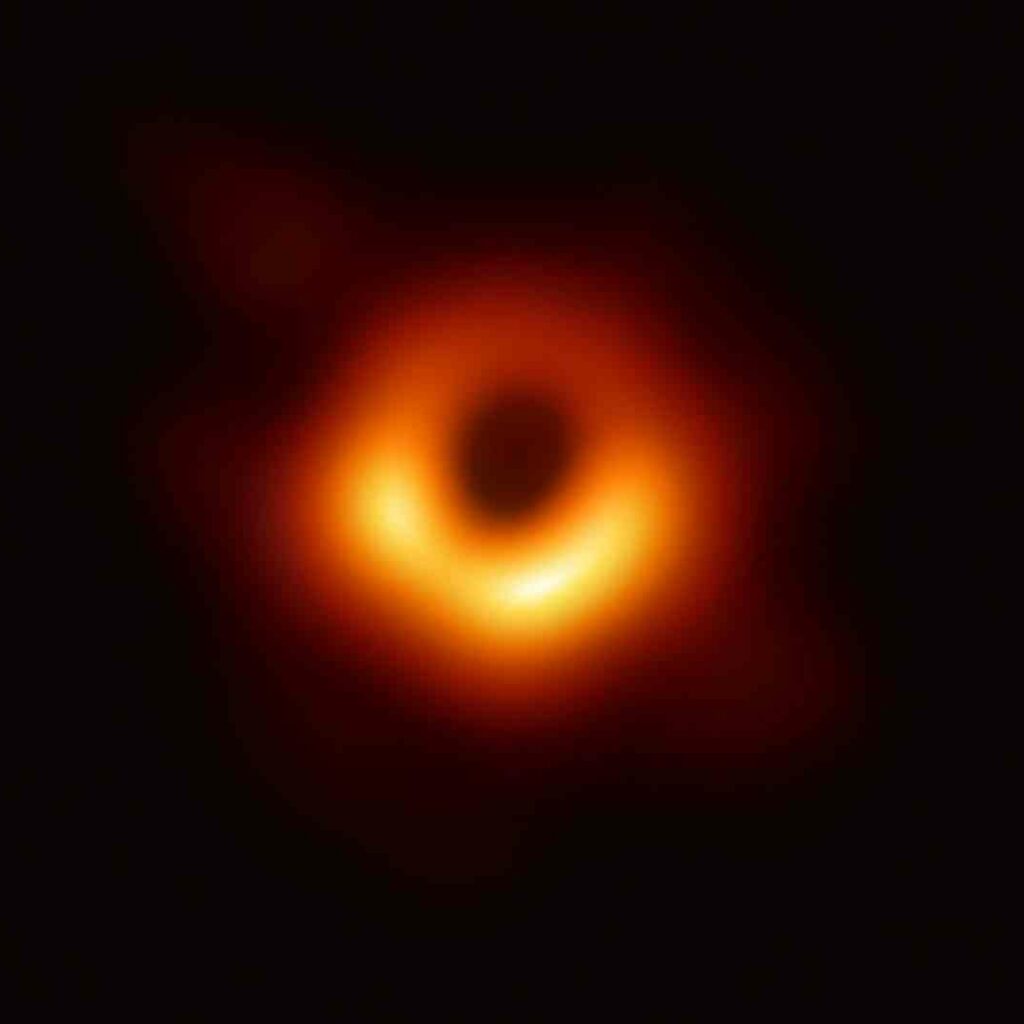
The famous image of a black hole, characterized by a glowing, hazy ring surrounding a dark center, often appears indistinct or blurry. This visual softness raises questions, especially in an era where technology captures images of atomic structures and distant galaxies with remarkable precision. The reason behind this lack of sharpness is not due to poor photography but stems from the immense challenges and intricate nature of imaging such a remote, mysterious, and fundamentally unique cosmic object.
Definition of a Black Hole and What Is Photographed
A black hole is a region in space where gravity is so intense that nothing, including light, can escape its pull. Therefore, the black hole itself is invisible. The image we observe is not of the black hole directly but of the luminous accretion disk-a swirling mass of superheated gas and dust caught in the black hole’s gravitational field. This disk emits radiation that travels across vast cosmic distances and through the warped spacetime near the event horizon before reaching Earth-based observatories.
Imaging Techniques and Technological Constraints
Capturing light from the turbulent environment near a black hole might suggest the possibility of a clear image. However, the resolution is fundamentally limited by both physical laws and current technology. The Event Horizon Telescope (EHT), which produced the first black hole image, is not a single telescope but a global network of radio telescopes. These instruments work together using very-long-baseline interferometry (VLBI), a method that synchronizes observations to create a virtual telescope with an effective diameter equal to that of Earth.

Key Factors Affecting Image Clarity
- Wavelength and Resolution:
The EHT operates at radio wavelengths, which are much longer than visible light. Since image resolution is inversely related to wavelength, longer wavelengths inherently limit the ability to resolve fine details, similar to trying to read small text through foggy glasses. - Interstellar Medium Distortion:
Radio waves from the black hole’s vicinity travel billions of light-years through turbulent interstellar plasma. This medium scatters and distorts the signals, much like frosted glass blurs an image, reducing clarity. - Incomplete Data and Image Reconstruction:
Earth-based telescopes face geographic and atmospheric limitations, resulting in gaps in data collection. Advanced algorithms reconstruct images from this incomplete data, but these computational methods introduce uncertainties that smooth out sharp features, producing softer images. - Dynamic Environment:
The accretion disk around a black hole is highly variable, changing over hours to days. This intrinsic variability makes capturing a single, definitive still image difficult, as the target itself is constantly evolving.
Physical Significance of the Black Hole Image
The apparent fuzziness of the black hole image is not a flaw but a profound insight into extreme physics. The dark central region, known as the “shadow,” corresponds to the event horizon-the boundary beyond which nothing can return. Surrounding this shadow is the photon ring, where light orbits the black hole before either falling in or escaping. The size and shape of this shadow provide astrophysicists with a direct test of Einstein’s theory of general relativity under extreme gravitational conditions.
Encoded Information in the Image
The glowing ring contains valuable data about the black hole’s properties, including its mass, spin, and magnetic fields. It reveals how matter behaves when subjected to intense gravitational forces, heating to billions of degrees and forming a cosmic whirlpool of spacetime. Each pixel in the image represents a milestone in human scientific achievement, symbolizing global collaboration and the pursuit of knowledge beyond the visible universe.
How Black Hole Imaging Challenges Traditional Photography
Unlike conventional photographs that capture light emitted or reflected by objects, the black hole image is essentially a computational construct. It combines physical observations, signal processing, and theoretical modeling to create a visual representation of an object that cannot be seen directly. This approach redefines the concept of photography in astrophysics.
Future Prospects for Sharper Black Hole Images
Advancements in telescope technology, including expanding the array into space and improving data processing techniques, promise incremental improvements in image resolution. However, some degree of blurriness may remain inherent due to the nature of the black hole environment itself. This persistent softness invites ongoing curiosity and highlights the delicate balance between uncertainty and discovery at the frontier of astrophysical research.
Why the Black Hole Image Is Important
The first image of a black hole represents both a scientific breakthrough and an artistic achievement. It opens new avenues for understanding the universe’s most extreme objects and tests fundamental physics theories. More than just a picture, it tells a compelling story of cosmic scale, where the darkest regions illuminate profound truths about gravity, matter, and the fabric of spacetime.
Common Misconceptions About Black Hole Images
The black hole itself is visible in the image.
The image shows the glowing accretion disk and the black hole’s shadow, not the black hole directly, which is invisible because it emits no light.
The image is a traditional photograph.
It is a computationally reconstructed image derived from radio signals and complex algorithms, not a direct optical photograph.
The blurriness indicates poor technology.
The fuzziness results from fundamental physical limits, interstellar interference, and the dynamic nature of the black hole’s environment, not technological failure.






Leave a Reply