

Short Answer
Understanding the Universe: An Overview
Every time we look up at the night sky, from the shimmering stars to the vast expanse of space, a fundamental question arises: what governs this immense cosmic panorama? Human curiosity drives us beyond mere admiration of celestial beauty toward uncovering the underlying principles that unify the diverse phenomena of the universe into a coherent framework. The fascination lies not only in what we see but in the profound mysteries that invite deeper exploration and comprehension.
Historical Context: The Quest for Cosmic Order
For centuries, humanity’s efforts to decipher the workings of the cosmos have progressed through landmark theories-Newtonian mechanics, Einstein’s theory of relativity, and quantum mechanics. Each has revealed remarkable insights but also exposed significant gaps, especially in reconciling the behavior of the universe at large scales with the quantum world of the very small. This divide between the macroscopic and microscopic realms has both intrigued and challenged physicists, prompting the search for a unifying theoretical framework that can seamlessly integrate these disparate domains.
Definition of the Emerging Unified Theory
This emerging theoretical framework aims to bridge the longstanding divide between general relativity and quantum mechanics. Rather than merely addressing inconsistencies, it proposes a radical rethinking of the fundamental nature of space, time, and matter. Central to this approach is the concept that the universe operates as an interconnected whole, governed by principles that transcend traditional physical boundaries.

- Unified Framework:
A comprehensive theory that integrates gravitational and quantum phenomena into a single conceptual model. - Discrete Spacetime:
The idea that spacetime is not continuous but consists of quantized, fundamental units emerging from a deeper level of reality. - Emergent Gravity:
Gravity is viewed not as a fundamental force but as a macroscopic effect arising from underlying quantum interactions.
How the Theory Operates
This innovative framework suggests that spacetime itself is composed of discrete building blocks, challenging the classical notion of a smooth continuum. Gravity emerges as a large-scale phenomenon resulting from the complex interplay of quantum informational processes. By placing information and quantum entanglement at the core of physical laws, the theory redefines the hierarchy of forces and interactions that shape the cosmos.
Mathematical and Conceptual Foundations
While the full mathematical formalism is complex and still under development, key elements include:
- Quantization of Spacetime:
Spacetime is modeled as a network of discrete units, often represented through spin networks or other combinatorial structures. - Information-Theoretic Principles:
Physical phenomena are described in terms of information flow and entanglement entropy, linking geometry with quantum states. - Emergent Gravity Equations:
Gravity arises from statistical mechanics of microscopic quantum degrees of freedom, leading to modified Einstein field equations.
Practical Implications and Observational Evidence
This theoretical approach offers promising explanations for several puzzling cosmological phenomena:
- Accelerated Cosmic Expansion:
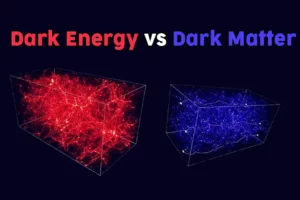
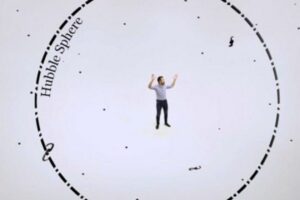
The observed acceleration of the universe’s expansion may be a natural outcome of the underlying quantum structure of spacetime. - Dark Matter and Dark Energy:
Instead of invoking unknown particles or fields, these phenomena could emerge from the fundamental informational architecture of the cosmos. - Big Bang Initial Conditions:
The theory provides a framework to understand the universe’s origin without singularities, through emergent spacetime dynamics.
Common Misunderstandings
- Misconception: Gravity is a fundamental force like electromagnetism.
Correction: In this framework, gravity is an emergent phenomenon arising from quantum informational processes rather than a basic interaction. - Misconception: Spacetime is a smooth, continuous fabric.
Correction: The theory posits that spacetime is quantized, composed of discrete units at the smallest scales. - Misconception: The theory is purely speculative and untestable.
Correction: It makes falsifiable predictions about black hole behavior and spacetime microstructure, which can be tested through advanced experiments and observations.
Philosophical and Conceptual Significance
This framework blurs the traditional boundary between observer and observed, emphasizing that measurement and information exchange are fundamental to the constitution of physical reality. It introduces a novel perspective where consciousness and information flow are integral components of the universe’s fabric, enriching our understanding of existence beyond purely materialistic views.
Broader Impact and Universal Patterns
The theory resonates with patterns found in complex systems across various scales-from neural networks in biological brains to social dynamics-suggesting that the universe itself may follow principles of self-organization and emergent behavior. This universality highlights a profound connection between the cosmos’s grand structure and the intricate interactions within smaller systems, inspiring both scientific and artistic reflection.
Why This Theory Is Crucial
By offering a unified description of the cosmos, this theory represents a pivotal step in humanity’s quest to comprehend the universe. It promises to replace fragmented models with a cohesive understanding that integrates gravity, quantum mechanics, and cosmology. This unification not only advances scientific knowledge but also deepens our appreciation of the cosmos as a harmonious and interconnected whole, guiding future research and exploration.
Conclusion: A New Chapter in Cosmic Understanding
The universe has long invited us to unravel its mysteries, and this emerging theoretical framework provides a powerful lens to view the cosmos with renewed clarity. Far from being a mere scientific breakthrough, it redefines our narrative of existence, portraying the universe as an elegant, interconnected system governed by fundamental informational principles. Embracing this vision, humanity embarks on a profound journey-not only across the stars but into the very essence of reality itself.
FAQ
What is the significance of this theory?
It aims to replace fragmented models with a cohesive understanding of the universe, integrating gravity, quantum mechanics, and cosmology.
Is this theory testable?
Yes, it makes predictions about black hole behavior and spacetime microstructure that can be tested through advanced experiments.



Leave a Reply