
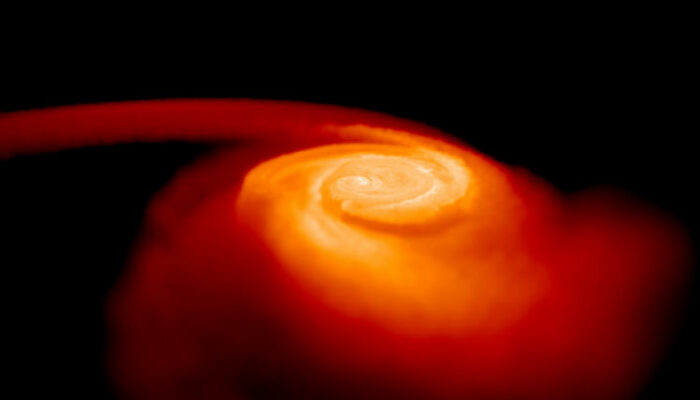
Short Answer
Understanding Neutron Star Gravity
Neutron stars represent some of the densest objects in the universe, formed from the remnants of massive stars that have undergone supernova explosions. These stellar remnants pack immense mass into a sphere roughly 20 kilometers in diameter, resulting in gravitational fields that are extraordinarily intense-approximately 2×10¹¹ times stronger than Earth’s gravity. This extreme gravity warps spacetime, slows down time, and compresses matter to nuclear densities, creating conditions far beyond everyday experience.
Conceptualizing Earth with Neutron Star Gravity
Imagining Earth possessing the gravity of a neutron star requires a radical shift in perspective. Our planet, with a diameter exceeding 12,700 kilometers, would be subjected to gravitational forces so overwhelming that the fundamental nature of matter, life, and planetary structure would be irrevocably altered. This thought experiment challenges our understanding of physics and the delicate balance that sustains life on Earth.
Biological Consequences of Extreme Gravity
Life on Earth has evolved under a gravitational acceleration of approximately 9.8 meters per second squared. If Earth’s gravity were to intensify to neutron star levels, the biological impact would be catastrophic. The immense gravitational force would exert crushing pressure on all living tissues, destroying cellular structures almost instantaneously. Muscles, bones, and organs, adapted to Earth’s mild gravity, would collapse under their own weight, making survival impossible.

Geological and Atmospheric Transformations
The planet’s geology and atmosphere would also undergo profound changes under such extreme gravity:
- Crustal Instability:
The solid Earth’s crust would likely fracture or collapse due to the overwhelming gravitational stress, distorting continents and ocean basins. - Atomic Compression:
Atoms, normally separated by vast empty spaces, would be compressed to the extent that electron orbitals collapse, transforming matter into exotic states. - Atmospheric Collapse:
The atmosphere would be irresistibly drawn toward the surface, disrupting the balance necessary for breathable air and weather systems, effectively eliminating winds and storms.
Transformation of Earth’s Physical Structure
Under neutron star gravity, Earth’s structure would approach that of a neutron star itself. The intense gravitational compression would force electrons to merge with protons, creating a neutron-rich environment. Consequently, Earth would become an ultra-dense sphere only a few kilometers across, losing all familiar physical characteristics. The conventional concept of solidity would no longer apply, as matter transitions into exotic phases governed by nuclear physics rather than classical chemistry.
Time Dilation Effects
Einstein’s theory of general relativity predicts that strong gravitational fields slow down the passage of time relative to regions with weaker gravity. On a neutron star-gravity Earth, time would dilate significantly. Observers on the surface would experience time passing more slowly compared to those farther away, leading to a distorted perception of temporal flow. This phenomenon introduces profound philosophical questions about the nature of time and reality under extreme gravitational conditions.
Technological and Engineering Challenges
The overwhelming gravitational forces would render all conventional materials and structures inadequate. Buildings, bridges, and machines designed for Earth’s normal gravity would collapse under their own weight. Resource extraction and technological development would become impossible, as the planet’s environment would resemble a collapsed stellar core rather than a hospitable world for innovation or civilization.
Impact on Solar System Dynamics
Earth’s sudden increase in gravity would disrupt the delicate gravitational balance within the solar system:
- Moon’s Orbit:
The Moon could be either pulled violently toward Earth or ejected into a new orbit due to the altered gravitational forces. - Planetary Interactions:
The gravitational interplay among planets would be disturbed, potentially destabilizing orbits and affecting the Sun’s influence on the solar neighborhood. - Mass and Gravity Distortion:
Earth’s increased mass and altered shape would have far-reaching effects on the solar system’s gravitational equilibrium.
The Significance of Earth’s Gravity
This speculative scenario underscores the critical role Earth’s gravity plays in sustaining life and maintaining planetary stability. Gravity, often perceived as a constant and mundane force, is in fact finely tuned to support complex ecosystems and geological processes. The extreme gravity of a neutron star highlights the fragility and uniqueness of terrestrial conditions, emphasizing how delicate the balance is that allows life to flourish.
Broader Implications and Reflections
Exploring the concept of Earth under neutron star gravity invites deeper contemplation of cosmic extremes and the forces shaping our universe. It serves as a reminder of the vast range of gravitational environments that exist and the extraordinary conditions required for habitability. This thought experiment not only expands our understanding of astrophysics but also enriches our appreciation for the delicate equilibrium that defines our pale blue dot.
Summary
Envisioning Earth with the gravity of a neutron star is more than a theoretical exercise; it is a profound exploration of the interplay between gravity, matter, and life. It highlights the uniqueness of Earth’s gravitational environment and the immense challenges posed by extreme gravity. Through this lens, gravity emerges as a fundamental architect of existence, shaping the history, structure, and potential of worlds across the cosmos.
FAQ
What would happen to life on Earth with neutron star gravity?
Life would be unable to survive due to the crushing pressure on all living tissues, causing immediate destruction of cellular structures.
How does neutron star gravity affect Earth's structure?
Earth's structure would collapse under immense pressure, transforming into an ultra-dense sphere and losing familiar physical characteristics.
What are the implications for time under neutron star gravity?
Time would dilate significantly, slowing down for observers on the surface compared to those in weaker gravitational fields.


Leave a Reply