
Short Answer
Definition of Telescopes and Their Cosmic Role
Telescopes are sophisticated instruments designed to observe and analyze the universe beyond the reach of the naked eye. Far from being simple star-gazing devices, they serve as essential tools that penetrate the vast darkness of space, revealing a multitude of cosmic phenomena. These devices detect a wide range of signals-from the visible light emitted by distant stars to the faint cosmic microwave background radiation, a relic from the universe’s earliest moments.
Electromagnetic Spectrum and Telescopic Observations
Telescopes operate across various segments of the electromagnetic spectrum, each providing unique insights into the universe’s structure and behavior.
Optical Telescopes
Optical telescopes capture photons in the visible light range, allowing astronomers to study the elemental makeup and motion of celestial bodies through spectral lines. These observations facilitate understanding of stellar life cycles, planetary atmospheres, and the detection of exoplanets. The vibrant images of nebulae, star clusters, and galaxies are not only visually stunning but also encode information about nuclear fusion, cosmic dust interactions, and gravitational dynamics.
Radio Telescopes
Radio telescopes detect low-frequency radio waves emitted by hydrogen clouds, the fundamental matter reservoirs from which stars form. These instruments reveal large-scale galactic structures and phenomena invisible to optical devices, such as pulsars and fast radio bursts. By mapping radio emissions, astronomers reconstruct the cosmic web’s vast filaments, offering a macroscopic view of matter distribution across billions of light-years.
Infrared Telescopes
Infrared telescopes penetrate cosmic dust clouds that obscure visible light, unveiling star-forming regions and the early stages of planetary system development. They have revolutionized our understanding of protostars and planet formation processes. Additionally, infrared observations detect thermal emissions from distant, ancient galaxies, capturing redshifted light that provides a window into the early universe’s formative epochs.
Ultraviolet Telescopes
Ultraviolet telescopes focus on energetic emissions from young, massive stars and hot gases in supernova remnants. These observations are vital for studying interstellar interactions, star cluster formation, and the ionization states of nebulae, enriching our knowledge of galactic chemical enrichment and energy transfer mechanisms.
X-ray Telescopes
X-ray telescopes observe high-energy photons from extreme cosmic environments such as black holes and neutron stars. These compact objects emit intense X-rays during matter accretion or magnetic reconnection events. X-ray imaging reveals the hot intracluster medium in galaxy clusters and the physics of relativistic jets, providing insights into matter behavior under intense gravitational forces.
Gamma-ray Telescopes
Gamma-ray telescopes detect the universe’s most energetic and violent phenomena, including gamma-ray bursts, supernova explosions, and antimatter annihilation events. These fleeting bursts illuminate the processes behind stellar death, cosmic ray acceleration, and fundamental particle physics symmetries shaping the cosmos.
Beyond Electromagnetic Waves: Gravitational Wave Observatories
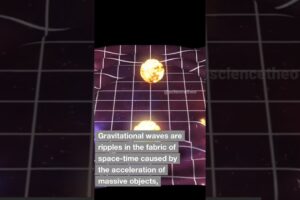
In addition to electromagnetic observations, gravitational wave detectors use laser interferometry to sense ripples in spacetime caused by merging black holes or neutron stars. This groundbreaking method adds a new dimension to cosmic exploration, revealing the dynamics of massive objects and the very fabric of spacetime itself.
Advanced Techniques in Modern Telescopy
Contemporary telescopes employ sophisticated data acquisition and analysis methods that extend beyond simple imaging.
- Spectroscopy:
Decomposes light into its component wavelengths, enabling detailed chemical and motion studies of celestial objects. - Time-Domain Astronomy:
Monitors transient cosmic events like supernovae and variable stars, providing real-time insights into dynamic processes. - Polarimetry:
Measures light polarization to infer magnetic field orientations and scattering phenomena across the universe.
Advantages of Space-Based Telescopes
Space telescopes operate above Earth’s atmosphere, avoiding atmospheric distortion and absorption that limit ground-based observations. This vantage point allows detection of wavelengths otherwise blocked or scattered, significantly enhancing clarity and expanding discovery potential. Iconic instruments like the Hubble Space Telescope and the Chandra X-ray Observatory exemplify the unparalleled observational power of space-based platforms.
Why Telescopes Are Vital to Astronomy and Science
Telescopes open windows to otherwise inaccessible realms, revealing not only the locations of celestial bodies but also their compositions, behaviors, and evolutionary paths. They construct a multidimensional portrait of the universe-a complex interplay of light, energy, and matter that narrates cosmic history and future possibilities. From observing newborn stars shrouded in gas and dust to detecting colossal black hole mergers billions of light-years away, telescopes continuously broaden humanity’s cosmic understanding and inspire scientific curiosity.
Common Misconceptions About Telescopes
Telescopes only see stars and planets.
Telescopes detect a wide range of electromagnetic signals and gravitational waves, revealing diverse cosmic phenomena beyond visible objects.
All telescopes operate the same way.
Different telescopes are designed to observe specific wavelengths or signals, each uncovering unique aspects of the universe.
Space telescopes are just bigger versions of ground telescopes.
Space telescopes avoid atmospheric interference, enabling observations impossible from Earth’s surface.
FAQ
What are telescopes?
Telescopes are instruments that allow for the observation and analysis of celestial objects beyond the capabilities of the naked eye.
Why are space telescopes important?
Space telescopes operate above Earth's atmosphere, allowing for clearer observations and the detection of wavelengths blocked by the atmosphere.


Leave a Reply