

Short Answer
Overview of the James Webb Space Telescope
The James Webb Space Telescope (JWST) represents the most advanced space observatory ever developed, designed to transform our comprehension of the universe. As it embarks on its mission, JWST is expected to unlock mysteries from the most distant regions of space, enabling astronomers to explore phenomena previously beyond reach. The excitement surrounding JWST stems from its potential to deliver groundbreaking discoveries, ranging from the earliest galaxy formations to the detailed chemical makeup of exoplanet atmospheres. This wealth of scientific data promises to captivate both experts and enthusiasts alike.
Definition and Purpose
JWST is a large, infrared-optimized space telescope intended to observe the universe in unprecedented detail. Its primary goals include studying the formation of the first stars and galaxies, investigating stellar nurseries, analyzing exoplanet atmospheres, and examining objects within our own Solar System.
- Infrared Sensitivity:
JWST’s instruments are designed to detect infrared light, allowing it to see through cosmic dust clouds that obscure many celestial objects in visible light. - Scientific Scope:
The telescope’s mission encompasses a broad range of astrophysical topics, from the early universe to planetary science.
Exploring the Early Universe
One of JWST’s most ambitious objectives is to observe the epoch of reionization, a critical phase approximately 13 billion years ago when the first stars and galaxies emerged, ending the cosmic dark ages. Thanks to its exceptional infrared capabilities, JWST can penetrate dense clouds of gas and dust that have previously hidden this era from view. These observations will provide detailed insights into how primordial galaxies formed and evolved, refining existing models of cosmic structure development and offering a clearer timeline of the universe’s infancy.
Investigating Star and Planet Formation
JWST will also focus on stellar nurseries within the Milky Way and other galaxies, regions where stars and planets are born. These areas are often shrouded in thick dust, making them difficult to study with optical telescopes. By observing in the infrared spectrum, JWST can reveal the physical conditions inside these dense clouds, shedding light on the complex processes of gas dynamics, radiation, and magnetic fields that govern star and planet formation. The data collected will enhance educational content and scientific understanding of the lifecycle of stars and the origins of planetary systems.
Characterizing Exoplanet Atmospheres
Beyond detecting exoplanets, JWST excels at analyzing their atmospheres with high-resolution infrared spectroscopy. This capability allows scientists to identify key chemical components such as water vapor, carbon dioxide, methane, and other molecules that indicate atmospheric composition and potential habitability. The detailed atmospheric profiles generated by JWST will deepen our knowledge of exoplanet climates and may even reveal biosignatures, marking a significant advance in the search for extraterrestrial life.
Studying Solar System Bodies
JWST’s reach extends to objects within our own Solar System, including icy moons of the gas giants and distant Kuiper Belt objects. Infrared observations can detect surface materials and thermal processes invisible to other instruments, providing valuable information about planetary geology, atmospheric phenomena, and seasonal variations. These findings will enrich our understanding of the dynamic nature of nearby celestial bodies and inform future space exploration missions.
Probing the Interstellar Medium
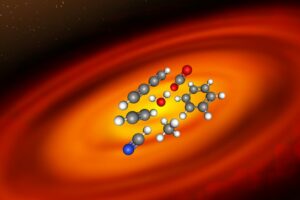
The telescope is also equipped to study the interstellar medium-the vast regions of gas and dust between stars. This material plays a crucial role in cosmic evolution, acting as both the remnants of stellar processes and the raw material for new star formation. JWST’s sensitivity enables detailed mapping of molecular distributions and dust properties, revealing the complex interactions between radiation, matter, and magnetic fields that shape galactic environments.
Examining Supermassive Black Holes
JWST will investigate the environments surrounding supermassive black holes at the centers of distant galaxies. By capturing high-resolution images and spectra, it will provide unprecedented views of accretion disks, relativistic jets, and the dynamic processes influencing galaxy formation and evolution. These observations will offer compelling insights into some of the universe’s most extreme phenomena, appealing to both the scientific community and the general public.
Impact and Future Prospects
The extensive data collected by JWST will fuel a wide array of scientific publications, documentaries, and interactive resources. Combining stunning imagery with detailed scientific analysis, this content will reveal a universe more intricate and beautiful than ever imagined. From the earliest cosmic light to the subtle signatures of distant planetary atmospheres, JWST’s discoveries will serve as a foundation for education, research, and public engagement for many years to come.
Significance of the James Webb Space Telescope
JWST’s mission is poised to revolutionize our understanding of the cosmos by providing unprecedented insights into the universe’s origins, the formation and evolution of stars and planets, and the nature of distant worlds. Its findings will not only advance scientific knowledge but also inspire curiosity and wonder, deepening humanity’s connection to the vast universe we inhabit.
FAQ
What is the primary objective of the James Webb Space Telescope?
The primary objective of JWST is to study the formation of the first stars and galaxies, analyze exoplanet atmospheres, and investigate stellar nurseries.
How does JWST differ from previous telescopes?
JWST is optimized for infrared observations, allowing it to see through cosmic dust and study phenomena that are invisible to optical telescopes.
What types of celestial objects will JWST study?
JWST will study a variety of celestial objects including early galaxies, star-forming regions, exoplanets, and bodies within our Solar System.

Leave a Reply