
Short Answer
Understanding the Cosmos: An Expansive Overview
Space has captivated human imagination for centuries, representing the ultimate frontier filled with mysteries and wonders. From ancient stargazers mapping constellations to contemporary scientists utilizing advanced technology, our comprehension of the universe has grown dramatically. However, despite these advances, much of what we believe about space remains incomplete, and emerging discoveries are poised to revolutionize both scientific paradigms and philosophical perspectives.
The Vastness and Complexity of the Universe
The universe is far more intricate than a mere collection of stars and galaxies scattered across a void. It is a complex network woven with dark matter, dark energy, and other enigmatic forces that challenge traditional understanding. Historically, visible matter was considered the primary component of the cosmos, but current research reveals that it constitutes less than 5% of the total cosmic content. This insight dismantles the assumption that space is primarily understood through direct observation, highlighting instead a dominant, unseen realm.
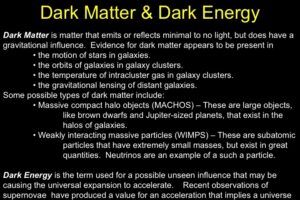
- Dark Matter:
An invisible substance inferred from gravitational effects, dark matter shapes the structure and movement of galaxies. - Dark Energy:
A mysterious force driving the accelerated expansion of the universe, influencing its ultimate fate.
The Role of Dark Components in Cosmic Architecture
Dark matter and dark energy are fundamental in sculpting the universe’s large-scale structure. Although undetectable by conventional instruments, their presence is evident through gravitational interactions and cosmic expansion patterns. This invisible domain suggests a significant gap in human knowledge, where unseen forces govern the behavior of celestial bodies and the evolution of space-time itself.
Reevaluating the Nature of Space and Time
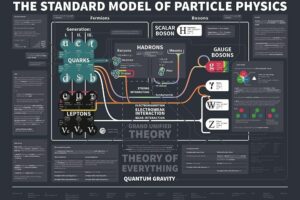
Einstein’s general relativity revolutionized our understanding by merging space and time into a flexible, interconnected fabric. This framework explains phenomena such as gravitational waves and black holes-regions of extreme density from which light cannot escape. Yet, this elegant theory encounters challenges when confronted with quantum mechanics, which governs the subatomic world. The incompatibility between these two pillars of physics, especially in extreme environments like black holes and the universe’s origin, drives the ongoing quest for a unified “theory of everything.”
The Multiverse Hypothesis: Expanding the Cosmic Horizon
One of the most provocative ideas in modern cosmology is the concept of multiverses-an infinite collection of universes existing beyond our observable realm. Each universe within this vast ensemble could possess unique physical laws, dimensions, and realities. This perspective transforms space from a singular continuum into a mosaic of diverse existential realms, suggesting that our universe is just one among countless others, and our significance within this grander scheme may be far less central than traditionally believed.
Quantum Vacuum and the Dynamic Nature of Space
Recent studies into the quantum vacuum reveal that what we perceive as empty space is actually a turbulent sea of fluctuating energy. Virtual particles continuously emerge and vanish, creating a “quantum foam” that challenges classical notions of emptiness. This dynamic medium may be fundamental to the creation of universes, the flow of time, and the formation of matter, prompting a reevaluation of basic assumptions about existence and the fabric of space-time.
Exploring the Potential for Extraterrestrial Life
The search for life beyond Earth has evolved significantly, influenced by discoveries of extremophiles-organisms thriving in harsh environments once thought uninhabitable. These findings broaden the definition of habitable zones and suggest that life could exist in diverse and unexpected cosmic niches. This possibility extends the discussion from the mere existence of life to the potential abundance of varied biospheres throughout the galaxy and beyond, indicating that our understanding of life’s role in the universe is still in its infancy.
The Accelerating Universe and Its Implications
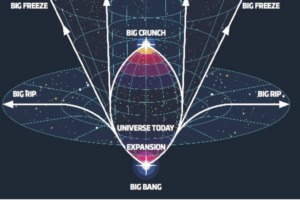
Observations show that not only are galaxies receding from each other, but the rate of this expansion is increasing, driven by dark energy. This acceleration implies a future where galaxies become isolated “island universes,” unable to interact or communicate. Such a scenario challenges our long-term cosmic outlook and raises profound questions about the destiny of the universe, entropy, and the ultimate fate of cosmic structures.
Technological Innovations Driving Cosmic Discoveries
Advancements in technology, including space-based observatories, gravitational wave detectors, and next-generation telescopes, are opening new windows into the universe. These tools enable scientists to detect phenomena previously hidden from view, continuously reshaping our understanding of the cosmos. Each breakthrough not only answers existing questions but also uncovers new mysteries, emphasizing the need for intellectual flexibility and openness to revolutionary ideas.
The Philosophical and Existential Dimensions of Cosmic Exploration
The journey to comprehend space transcends scientific inquiry, touching on profound existential themes. The universe is not a static repository of facts but a dynamic enigma that invites ongoing exploration and wonder. As our knowledge expands, so does our appreciation for the complexity and mystery of the cosmos, encouraging humility and curiosity as essential drivers of discovery.
Conclusion: Embracing the Unknown in Cosmic Understanding
In summary, our current knowledge of space is provisional and incomplete, shaped by evolving theories and emerging evidence. The cosmos represents not only a physical frontier but also a domain of intellectual and imaginative exploration. As we continue to push beyond established boundaries, we must remain receptive to unexpected revelations and prepared for transformative shifts in understanding. The adventure of cosmic discovery is ongoing, with the most extraordinary insights yet to be unveiled.
FAQ
What is dark matter?
Dark matter is an invisible substance that influences the structure and movement of galaxies through its gravitational effects.
What is dark energy?
Dark energy is a mysterious force that drives the accelerated expansion of the universe and affects its ultimate fate.
What is the multiverse hypothesis?
The multiverse hypothesis suggests that there are an infinite number of universes beyond our observable realm, each with potentially different physical laws.

Leave a Reply