
Short Answer
Overview of Next-Generation Space Telescopes
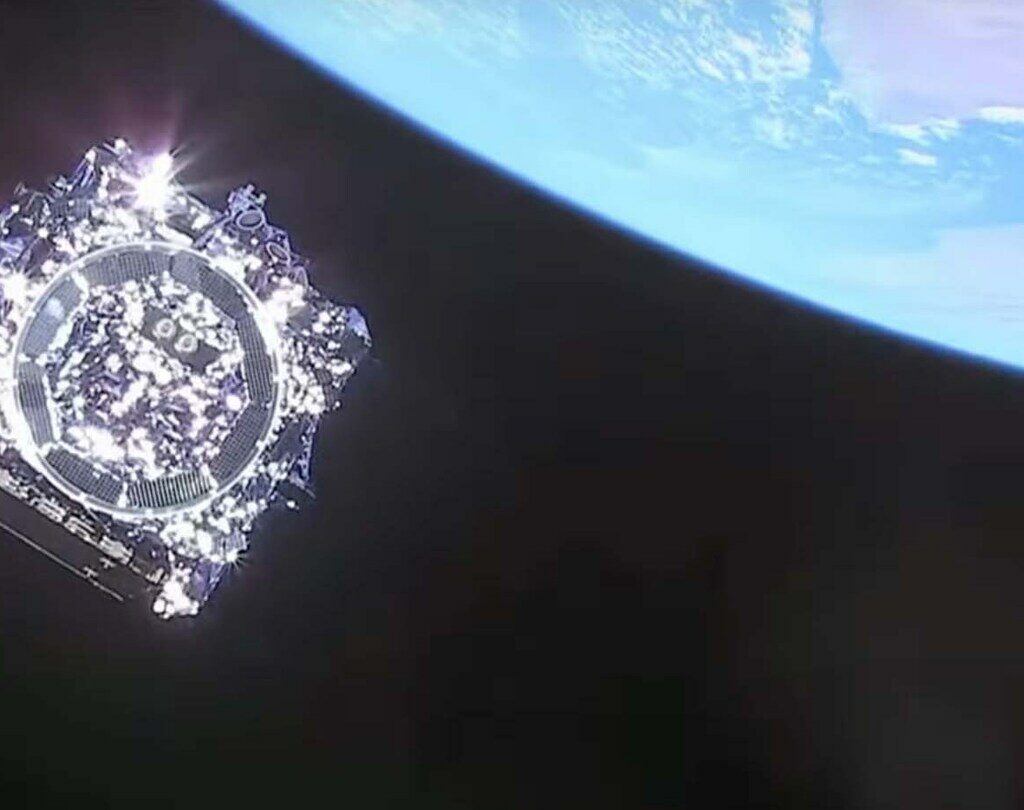
The James Webb Space Telescope (JWST) has captivated both the scientific community and the public, marking a revolutionary milestone in our exploration of the universe. Situated approximately one million miles from Earth, JWST has expanded the frontiers of astronomical observation. However, as with all pioneering technologies, its reign is temporary. A new wave of advanced telescopes is already in development, promising to surpass Webb’s capabilities and usher in a new era of cosmic discovery sooner than anticipated.
Definition and Scope of Emerging Telescopes
These upcoming observatories represent more than just incremental upgrades; they embody a significant leap forward in observational power and versatility. Designed to capture a broader and deeper range of cosmic phenomena, these instruments will collect diverse types of data that will transform our understanding of astrophysics and cosmology.
- Multi-wavelength Observation:
Future telescopes will cover an extensive spectrum, from visible and near-infrared light to far-infrared and submillimeter wavelengths, providing astronomers with a comprehensive view of celestial objects. - Enhanced Data Variety:
The new generation will gather hyperspectral, temporal, polarimetric, and high-resolution imaging data, enabling multifaceted analyses of the universe.
Technological Innovations Driving New Capabilities
At the core of these advancements lies the integration of cutting-edge technology with visionary engineering. The ability to observe across a wide spectral range allows scientists to probe phenomena previously hidden or poorly understood.
- Hyperspectral Imaging:
Unlike traditional imaging that records brightness, hyperspectral techniques dissect light into numerous narrow bands, revealing detailed chemical compositions of planets, asteroids, and interstellar clouds. - Time-Domain Astrophysics:
Enhanced temporal resolution will enable continuous monitoring of transient events such as supernovae, fast radio bursts, and variable stars, providing real-time insights into dynamic cosmic processes. - Polarimetry:
Measuring the polarization of light offers clues about magnetic fields and scattering particles, deepening our understanding of galactic magnetism and star formation. - Adaptive Optics and Interferometry:
These technologies work together to correct atmospheric distortions and combine signals from multiple telescopes, achieving unprecedented spatial resolution to study fine details like exoplanet surfaces and galactic cores.
Scientific Content and Data Types Anticipated
The diverse data streams expected from these telescopes will enrich astrophysical research and public knowledge alike.
- Hyperspectral Data:
Detailed spectral maps will illuminate the chemical and physical properties of celestial bodies, aiding in the study of planetary formation and atmospheric evolution. - Transient Event Monitoring:
Continuous observation of fleeting phenomena will refine models of stellar life cycles and exotic matter behavior. - Polarimetric Measurements:
Insights into cosmic magnetic fields will enhance our grasp of galaxy formation and interstellar medium dynamics. - High-Resolution Imaging:
Fine structural details of distant objects will be resolved, revolutionizing our perception of the universe’s complexity. - Wide-Field Surveys:
Expanded fields of view will facilitate the discovery of ultra-faint galaxies, rogue planets, and potential dark matter signatures. - Exoplanet Characterization:
Advanced spectrometers and high-contrast imaging will enable detailed studies of Earth-like planets, including atmospheric composition and potential biosignatures.
Data Processing and Accessibility
The enormous volume and complexity of data generated will necessitate sophisticated processing techniques. Machine learning and automated algorithms will play a crucial role in transforming raw observations into actionable scientific knowledge.
- Automated Classification:
Algorithms will categorize celestial objects and phenomena efficiently. - Anomaly Detection:
Machine learning will identify unusual or unexpected events for further study. - Predictive Modeling:
Advanced models will forecast cosmic events and behaviors based on observed data. - Interactive Content:
Real-time event trackers and immersive 3D visualizations will enhance educational and research experiences.
Interdisciplinary Impact and Content Integration
Beyond pure astrophysics, the multi-modal outputs of these telescopes will foster interdisciplinary research, linking astronomy with chemistry, geology, and atmospheric sciences. This holistic approach will provide richer narratives and deeper insights into cosmic phenomena.
- Astrochemistry:
Understanding elemental distributions and chemical evolution across the cosmos. - Planetary Geology:
Investigating surface compositions and geological processes on exoplanets. - Atmospheric Science:
Studying exoplanet atmospheres to assess habitability and climate dynamics.
Significance of Next-Generation Telescopes
These forthcoming observatories represent a monumental enhancement of our astronomical toolkit. Their diverse and rich data outputs will not only accelerate scientific discovery but also inspire educators, students, and the general public by deepening humanity’s understanding of the universe. From microsecond variability studies to expansive galactic surveys, the breadth and depth of content will redefine our cosmic perspective.
Conclusion: The Future of Cosmic Exploration
While the James Webb Space Telescope stands as a landmark achievement, its successors are set to propel space observation into an unprecedented era. Equipped with advanced spectroscopic, temporal, polarimetric, and imaging technologies, these new telescopes will generate a wealth of celestial data that will transform scientific paradigms and ignite curiosity across generations. The future of space exploration is unfolding now, reshaping how we comprehend our place in the cosmos.
FAQ
What are next-generation telescopes?
Next-generation telescopes refer to advanced astronomical instruments designed to surpass the capabilities of existing telescopes like the James Webb Space Telescope, using cutting-edge technology for improved observation.
How will these telescopes enhance our understanding of the universe?
They will provide multi-wavelength observations, enhanced data types, and greater resolution, allowing scientists to study cosmic phenomena in unprecedented detail.




Leave a Reply