
Short Answer
Understanding Black Holes
Black holes are among the most mysterious and captivating phenomena in the cosmos. These regions of space exhibit gravitational forces so intense that nothing, not even light, can escape their pull. Initially predicted by Einstein’s theory of general relativity, black holes were once considered purely theoretical constructs, hidden behind an impenetrable veil of darkness. Over time, however, scientific advancements have transformed these enigmatic entities from abstract concepts into observable cosmic features.
What Is a Black Hole Image?
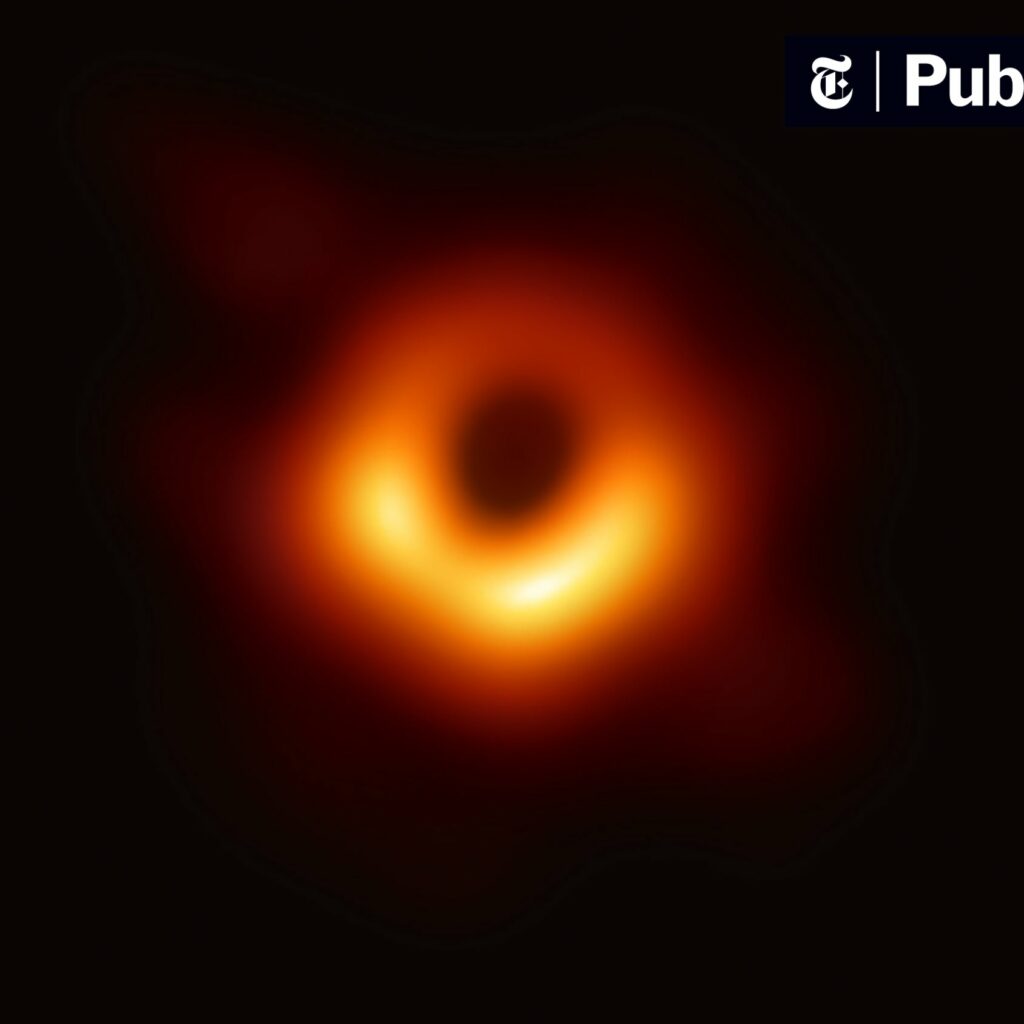
The iconic images of black holes do not depict the black holes themselves, as these are invisible singularities where conventional physics breaks down. Instead, what we see is the glowing ring of superheated gas and plasma swirling around the event horizon-the boundary beyond which nothing can return. This luminous halo is the result of matter accelerating and heating to extreme temperatures as it spirals inward, emitting detectable radiation. The dark center represents the black hole’s shadow, a silhouette cast by the event horizon against the bright accretion disk.
How Black Hole Imaging Works
Capturing an image of a black hole requires overcoming immense technical challenges. Traditional optical telescopes cannot resolve these distant and compact objects due to their size and the obscuring matter around them. To address this, scientists developed the Event Horizon Telescope (EHT), a global array of synchronized radio observatories that collectively function as a single Earth-sized telescope. This network captures radio waves emitted near the black hole’s edge, enabling unprecedented resolution.
The raw data collected by the EHT are complex radio signals rather than direct photographs. These signals undergo extensive computational processing, where sophisticated algorithms reconstruct the image by piecing together information encoded in different wavelengths. This method is akin to assembling a vast cosmic puzzle, transforming abstract data into a coherent visual representation of the black hole’s environment.
Scientific Significance of Black Hole Images
The first images of black holes represent a monumental scientific breakthrough. They provide empirical evidence supporting the existence of event horizons, confirming predictions made by Einstein’s general relativity under extreme gravitational conditions. These observations serve as a critical testing ground for theories that seek to unify quantum mechanics, astrophysics, and relativistic gravity, pushing the boundaries of our understanding of the universe.
Variations Among Black Holes
Black holes are not uniform; they differ widely in size, spin, and surrounding environments. For example, Sagittarius A*, the supermassive black hole at the center of our Milky Way galaxy, exhibits different characteristics compared to M87*, a much larger black hole located in a distant galaxy. Each black hole image captured by the EHT and other observatories offers unique insights, challenging existing models and enriching our knowledge of these cosmic phenomena.
Philosophical and Cultural Impact
The public fascination with black hole imagery reflects a deeper human desire to understand the unknown through scientific inquiry rather than myth. These images symbolize humanity’s quest to illuminate the darkest corners of the universe, transforming abstract mathematical predictions into tangible evidence. They also provoke philosophical reflections on the nature of reality, illustrating the coexistence of emptiness and substance, order and chaos, visibility and invisibility.
Common Misconceptions About Black Hole Images
The images show the black hole itself.
The images depict the glowing accretion disk and the black hole’s shadow, not the singularity, which is invisible.
The images are direct photographs like those taken by a camera.
The images are reconstructions created from radio wave data processed through complex algorithms.
Why Black Hole Imaging Matters
Imaging black holes is a landmark achievement in astronomy and physics, offering a new window into the most extreme environments in the universe. These images validate fundamental theories, inspire technological innovation, and deepen our cosmic perspective. As observational techniques improve, future images promise to reveal even more intricate details, further unraveling the mysteries of black holes and their role in shaping the cosmos.
Summary
Black hole images are not mere pictures but profound scientific artifacts that embody human curiosity and technological prowess. They challenge our understanding of space, time, and reality itself, transforming invisible cosmic enigmas into observable phenomena. Through continued exploration and innovation, these images will remain pivotal in expanding our knowledge of the universe’s most fascinating and elusive objects.


Leave a Reply