

Short Answer
Definition
This article explores a recent, groundbreaking discovery made by NASA that challenges existing astronomical knowledge and expands our understanding of the universe. The findings reveal unprecedented cosmic phenomena, prompting new questions about the nature of space, time, and matter.
- NASA’s Discovery:
A set of novel observations from deep space that uncover unusual electromagnetic signals and exotic molecular compounds in distant celestial regions. - Scientific Impact:
The revelation has significant implications for astrophysics, quantum physics, planetary science, and astrobiology.
Background and Context
NASA’s spacecraft and sophisticated instruments have historically been at the forefront of space exploration, enabling scientists to decode the mysteries of the cosmos. Utilizing cutting-edge spectrometry and high-resolution imaging, recent missions have detected phenomena in star systems and galactic regions once considered well-understood. These new data sets reveal complex cosmic structures and energetic interactions that defy previous assumptions.
Key Observations and Findings
Among the most striking discoveries are unusual electromagnetic emissions originating from a remote star system. These signals display frequency and amplitude patterns that do not align with known astrophysical sources such as magnetars or pulsars. Instead, the intricate modulations suggest the presence of novel cosmic processes that could necessitate revisions to current theoretical models.
Complementing these signals, infrared and X-ray imaging have exposed nebulous formations containing spectral signatures of molecular compounds never before identified within our solar system. These exotic substances may result from extreme cosmic events like hypernova explosions or interactions involving dark matter, prompting a reassessment of cosmic chemical evolution and stellar lifecycle theories.
Scientific and Theoretical Implications
The discovery opens new research pathways in several scientific domains:
- Astrophysics:
Offers fresh insights into high-energy cosmic phenomena and the behavior of exotic matter under extreme conditions. - Theoretical Physics:
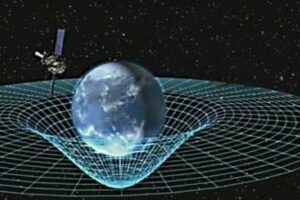
Provides potential empirical evidence supporting theories of quantum gravity and the unification of fundamental forces. - Planetary Science and Astrobiology:
Suggests environments that could harbor precursors to life or unknown biological mechanisms beyond Earth.
Technological Innovations Enabling the Discovery
This breakthrough was made possible by advancements in space instrumentation and data analysis techniques. Highly sensitive detectors calibrated to capture faint cosmic signals across billions of light-years, combined with sophisticated algorithms capable of identifying anomalies within massive datasets, have been crucial. These technological strides not only enhance observational capabilities but also facilitate the interpretation of complex cosmic phenomena.
Visual and Interactive Exploration
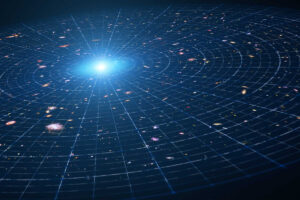
Accompanying the scientific data are stunning visual representations captured in infrared and X-ray wavelengths. These images reveal intricate cosmic landscapes and molecular structures, providing a vivid glimpse into the newly discovered phenomena. Interactive models and visual galleries allow enthusiasts and researchers alike to engage deeply with the data, fostering a more immersive understanding of the universe’s hidden facets.
Philosophical and Existential Reflections
Beyond empirical science, this discovery invites profound contemplation about humanity’s place in the cosmos. It raises questions about the possibility of extraterrestrial life forms or consciousness and challenges our perceptions of existence. Such reflections bridge the gap between scientific inquiry and human curiosity, enriching the broader discourse on our universal significance.
Educational Outreach and Community Engagement
To disseminate these findings widely, educational initiatives are being developed to cater to diverse audiences-from students to professional astronomers. Simplified yet accurate explanations of complex phenomena will make the science accessible without compromising depth. Workshops, seminars, and virtual events aim to inspire and cultivate the next generation of space explorers and innovators.
Interdisciplinary Collaboration and Cultural Impact
This discovery acts as a catalyst for cross-disciplinary partnerships, involving fields such as computational science, materials engineering, and the arts. Interpreting cosmic data through various perspectives enriches collective understanding and appreciation. Documentaries, podcasts, and expert interviews will further illuminate the human stories and scientific endeavors behind this cosmic breakthrough.
Conclusion: A New Chapter in Cosmic Exploration
The recent NASA revelation marks a transformative milestone in humanity’s quest to comprehend the universe. It exemplifies the powerful synergy between advanced technology, persistent scientific inquiry, and the innate human desire to explore the unknown. Each new finding not only answers existing questions but also opens doors to deeper mysteries, encouraging us to expand our horizons and dream beyond the stars.
FAQ
What did NASA discover in deep space?
NASA discovered unusual electromagnetic signals and exotic molecular compounds that challenge existing theories in astrophysics.
What are the implications of this discovery?
The findings could reshape our understanding of high-energy cosmic phenomena, quantum gravity, and the potential for extraterrestrial life.



Leave a Reply