

Short Answer
Understanding the Cosmic Unknown
The universe’s immense scale has long inspired human curiosity and exploration. Despite centuries of scientific progress and observation, much about the cosmos remains shrouded in mystery. These unknowns are not just academic puzzles; they highlight the boundaries of human understanding and often evoke a sense of awe and unease. The mysteries span a wide range of phenomena, including the elusive nature of dark matter and dark energy, the origins of the cosmos, the fundamental structure of space and time, and the potential existence of extraterrestrial intelligence. Each enigma challenges our perception of reality, revealing the universe as a complex and often unsettling realm rather than a simple, orderly expanse.
Dark Matter and Dark Energy: The Invisible Majority
One of the most perplexing cosmic mysteries is the predominance of dark matter and dark energy, which together make up approximately 95% of the universe’s total mass-energy content. Dark matter, though invisible and undetectable by emitted or absorbed light, exerts gravitational forces that shape galaxies and large-scale cosmic structures. Dark energy, even more enigmatic, drives the accelerating expansion of the universe, potentially leading to a future where galaxies and matter are torn apart. These phenomena defy explanation within the framework of current physics, leaving scientists grappling with incomplete models of cosmic evolution. Humanity exists within a vast, barely comprehended environment dominated by forces beyond direct perception.
The Multiverse Hypothesis: Expanding Cosmic Horizons
The concept of the multiverse proposes that our universe is just one among countless others, each governed by distinct physical laws. This idea dramatically broadens the scope of cosmic diversity and uncertainty. If accurate, it suggests that the conditions enabling life and matter in our universe may be coincidental rather than fundamental. This challenges the anthropic principle, which posits that the universe’s properties are finely tuned for life, and introduces the possibility of infinite realities where familiar physical laws may not apply. The multiverse theory thus confronts us with an overwhelming array of unknowns and questions about the uniqueness of our cosmic environment.
Quantum Mechanics and the Fabric of Reality
The quantum domain further deepens the strangeness of the universe. Quantum mechanics, though experimentally validated, presents paradoxes that defy classical intuition. For example, quantum entanglement suggests instantaneous connections between particles separated by vast distances, challenging traditional ideas of locality and causality. At the Planck scale, the concept of quantum foam envisions space as a turbulent, fragmented medium rather than a smooth continuum. These insights imply that spacetime itself may be intricately linked with information and far more complex than previously imagined, revealing a cosmic foundation stranger than fiction.
The Origins of the Universe: The Cosmic Dawn
The birth of the universe, often described by the Big Bang theory, remains enveloped in profound uncertainty. While the Big Bang explains many observed cosmic features, what preceded this event is unknown. Various hypotheses exist, including cyclical models suggesting an eternal universe and inflationary theories proposing rapid expansion that shaped space and time. However, none have definitive empirical support. This gap in knowledge points to a beginning that may lie beyond scientific reach, raising fundamental questions about causality and existence itself.
Black Holes and Singularities: Cosmic Abysses
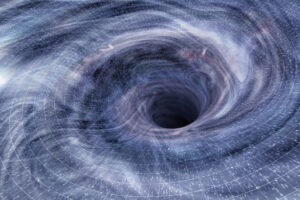
Black holes represent another frontier of cosmic mystery. These regions of extreme gravity distort spacetime and consume matter and light, harboring singularities where known physics breaks down. The event horizon marks a boundary beyond which information appears lost, conflicting with quantum mechanics’ principle that information is preserved. Resolving this paradox, known as the black hole information problem, could revolutionize our understanding of physics or confirm the existence of irretrievable cosmic voids. Additionally, the possibility of primordial or microscopic black holes challenges current concepts of mass, gravity, and the early universe’s conditions.
The Search for Extraterrestrial Life and the Fermi Paradox
Despite extensive efforts to detect life beyond Earth, the universe remains eerily silent. The Fermi paradox encapsulates this dilemma: if intelligent life is common, why have we not observed any signs? This silence raises unsettling possibilities. Advanced civilizations might self-destruct before achieving interstellar communication, exist in forms or dimensions beyond our detection capabilities, or intelligent life may be extraordinarily rare. Each scenario underscores humanity’s potential isolation in a vast, indifferent cosmos.
The Ultimate Fate of the Universe
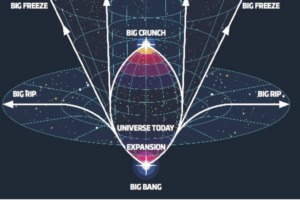
The long-term destiny of the cosmos is fraught with uncertainty and existential implications. Possible outcomes include eternal expansion leading to a “heat death” characterized by cold and darkness, a “big crunch” where the universe collapses and time reverses, or a “big rip” in which dark energy overwhelms all forces, tearing apart matter itself. These scenarios highlight the impermanence of cosmic structures and the fragile temporal window during which life and civilization can exist. The universe’s future remains an open question, emphasizing the transient nature of existence.
The Significance of Cosmic Mysteries
Modern cosmology and astrophysics reveal a universe defined by paradoxes and uncertainties. Far from being a passive backdrop, the cosmos actively participates in phenomena that challenge human comprehension. New discoveries continually disrupt established scientific paradigms, underscoring the provisional nature of our knowledge. As observational technologies advance, the unknown expands, presenting not just gaps to be filled but profound existential challenges. These mysteries invite humanity to confront the vast, often unsettling scope of what remains beyond our understanding.
Embracing the Cosmic Enigma
The vast unknown of the universe evokes a complex blend of wonder and apprehension. It is a realm where certainty dissolves into ambiguity and where the fundamental frameworks of existence are perpetually questioned. The fear inspired by the cosmos stems not only from what is known but from the immense, unknowable possibilities hidden in its depths. This realization humbles us, reminding humanity that the universe is not a conquered domain but a mysterious expanse where enigma and uncertainty prevail, highlighting our fragile and fleeting place within the infinite.
FAQ
What is dark matter?
Dark matter is an invisible substance that makes up approximately 27% of the universe and exerts gravitational forces but does not emit or absorb light.
What is the Fermi paradox?
The Fermi paradox questions why, if intelligent life is common in the universe, we have not yet observed any signs of it.
What are the potential fates of the universe?
Possible outcomes include eternal expansion, a big crunch, or a big rip, each highlighting the impermanence of cosmic structures.


Leave a Reply