
Short Answer
Understanding Space Missions
Space missions represent humanity’s ambitious efforts to explore beyond our planet, combining awe-inspiring spectacle with rigorous scientific investigation. These endeavors extend far beyond mere public entertainment; they are complex scientific projects designed to expand our knowledge of the universe and our place within it.
The Dual Nature of Space Exploration: Spectacle and Science
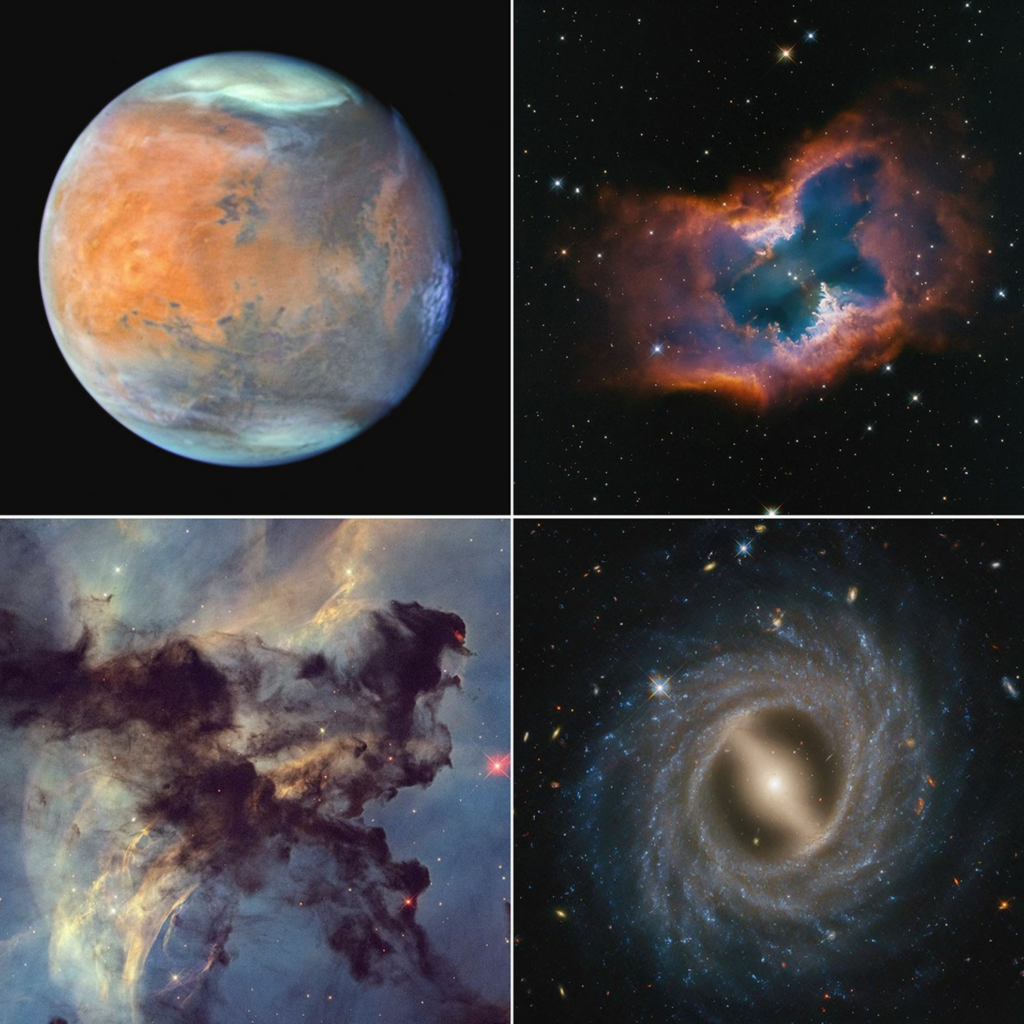
At first glance, space missions captivate audiences with dramatic rocket launches, breathtaking images of distant galaxies, and announcements of new celestial discoveries. While these elements create a powerful visual and emotional impact, they also serve as gateways to deeper scientific inquiry. The grandeur of space exploration often invites skepticism, with critics questioning whether the substantial financial investments yield practical benefits or simply generate hype.
Scientific Foundations of Space Missions
Beyond their visual appeal, space missions function as critical scientific platforms. Operating above Earth’s atmosphere, space-based observatories and probes avoid atmospheric interference, enabling precise measurements and observations impossible from the ground.
- Space Telescopes:
Instruments like the Hubble Space Telescope provide unparalleled views of the cosmos, allowing astronomers to study the universe’s origins, structure, and evolution. Hubble’s data have refined estimates of the universe’s age and deepened understanding of dark matter and dark energy. - Robotic Explorers:
Mars rovers and other robotic missions conduct detailed geological and chemical analyses, searching for signs of past or present life and contributing to planetary science and astrobiology.
Technological Innovations Driven by Space Research
Space exploration has historically been a catalyst for technological advancement with broad applications on Earth. The challenges of operating in space have spurred developments in materials science, telecommunications, robotics, and more, fueling economic growth and technological progress beyond the space sector.
Cultural and Collaborative Significance
Space missions also hold a unique place in human culture and international cooperation. Projects like the International Space Station exemplify global collaboration, fostering diplomatic ties and shared human aspirations. These missions inspire a collective sense of curiosity and unity, encouraging future generations to pursue science and innovation.
Addressing Criticisms and Resource Allocation
Critics often argue that the funds dedicated to space exploration could be better spent addressing urgent terrestrial issues such as climate change, poverty, and healthcare. While these concerns are valid, it is important to recognize that space missions and Earth-based challenges are interconnected rather than mutually exclusive.
- Environmental Monitoring:
Satellites provide critical data on deforestation, ice-sheet dynamics, and atmospheric pollution, informing environmental policies and disaster preparedness. - Scientific Uncertainty:
The exploratory nature of space science means that not all missions yield immediate results, but the pursuit of knowledge often leads to unexpected breakthroughs that transform our understanding.
The Scientific Process and Serendipitous Discoveries
Scientific exploration inherently involves uncertainty and risk. Many landmark discoveries in astrophysics and planetary science have emerged serendipitously from missions initially designed for other purposes. Examples include detailed cosmic microwave background radiation maps, gravitational wave detections, and the identification of unusual planetary atmospheres-all outcomes of sustained, methodical space research.
Public Engagement and Educational Impact
The narratives and imagery generated by space missions play a vital role in inspiring public interest and nurturing the next generation of scientists, engineers, and innovators. This cultural investment, though difficult to quantify, is essential for sustaining long-term scientific progress and intellectual growth.
Balancing Wonder and Accountability
The question of whether space missions are mere hype or genuine science is not a simple dichotomy. Instead, it reflects a spectrum where inspiration and empirical research coexist and reinforce each other. Maintaining transparent communication, rigorous methodologies, and responsible funding allocation ensures that the excitement surrounding space exploration translates into meaningful scientific advancement.
Conclusion: The Enduring Value of Space Exploration
Humanity’s quest to explore the cosmos is one of the most profound intellectual endeavors undertaken. Far from being empty spectacle, space missions are purposeful ventures that expand scientific knowledge, drive technological innovation, and inspire cultural unity. They embody the spirit of inquiry and the desire to transcend earthly limitations, weaving a rich narrative of discovery from the vast expanse of the universe.
FAQ
What are the main goals of space missions?
The main goals include exploring celestial bodies, conducting scientific research, and advancing technology.
How do space missions contribute to scientific knowledge?
They provide unique data and insights that help us understand the universe, including phenomena like dark matter and planetary formation.


Leave a Reply