
Short Answer
Understanding Gravitational Waves
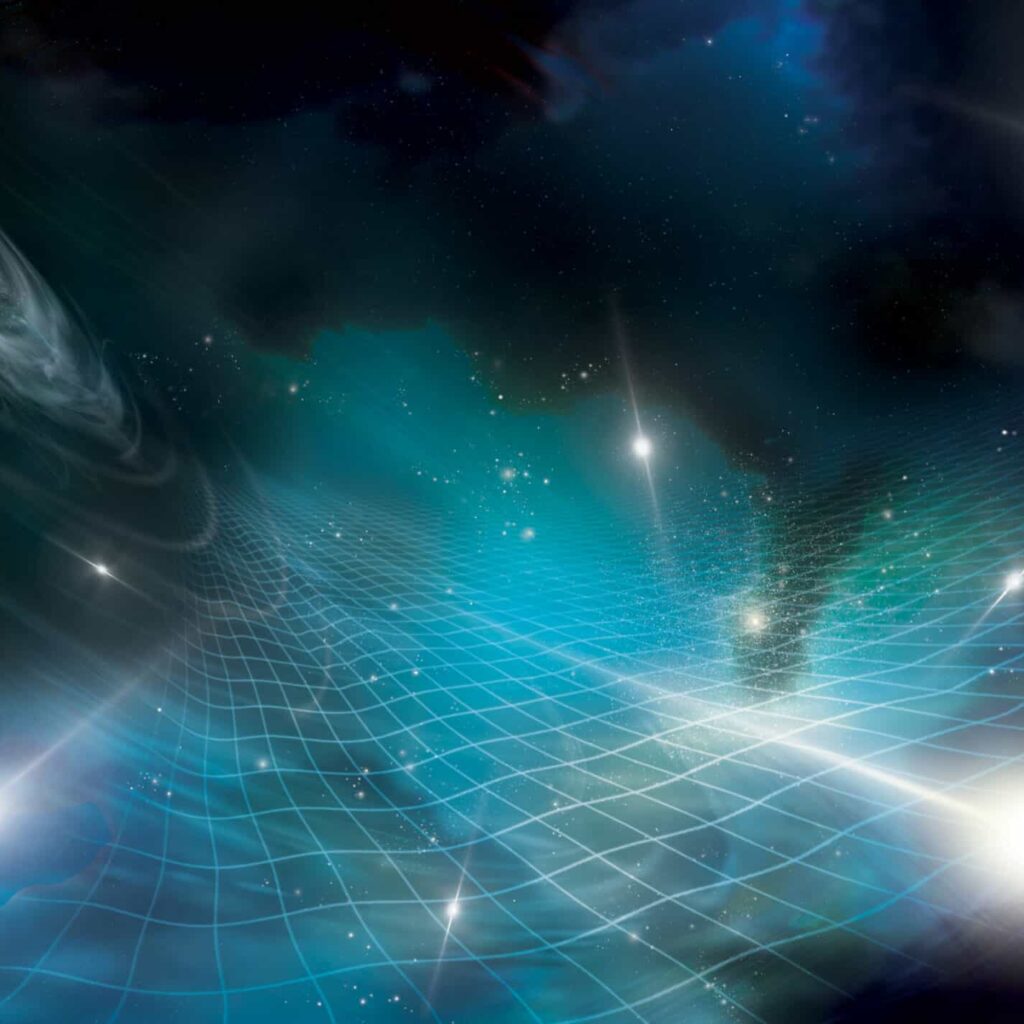
Gravitational waves are disturbances that ripple through the fabric of spacetime, first theorized by Albert Einstein over a century ago. These waves emerge from some of the universe’s most violent and energetic events, such as the collision of black holes or neutron stars. Unlike electromagnetic waves, gravitational waves provide a unique channel to observe cosmic phenomena that are otherwise invisible to traditional telescopes, offering profound insights into the workings of the cosmos.
Fundamentals of Gravitational Wave Detection
The detection of gravitational waves hinges on the use of highly sensitive instruments known as laser interferometers. Facilities like the Laser Interferometer Gravitational-Wave Observatory (LIGO) and the Virgo interferometer exemplify this technology, capable of measuring distortions in spacetime smaller than the diameter of a proton. The core principle involves monitoring the relative distances between mirrors suspended at the ends of two perpendicular arms. When a gravitational wave passes through, it causes tiny expansions and contractions in spacetime, altering these distances. Laser beams traveling along the arms create interference patterns that reveal these minute changes, signaling the presence of a gravitational wave.
Challenges and Noise Mitigation Techniques
Detecting gravitational waves is an extraordinary challenge due to the incredibly subtle nature of the distortions they produce-fractions of a proton’s width. To overcome this, scientists employ a variety of noise reduction strategies:
- Seismic Isolation:
Mirrors are suspended using advanced systems that act like shock absorbers, minimizing vibrations from ground movements such as earthquakes. - Vacuum Environments:
The interferometer arms operate within vacuum chambers to eliminate disturbances caused by air molecules. - Quantum Noise Reduction:
Techniques like squeezed light reduce quantum uncertainty in laser photons, enhancing measurement precision beyond classical limits.
Space-Based Gravitational Wave Observatories
Expanding beyond Earth-bound detectors, space-based observatories represent the next frontier in gravitational wave astronomy. The Laser Interferometer Space Antenna (LISA) is a pioneering mission planned to deploy three spacecraft millions of kilometers apart in space. This vast separation allows LISA to detect lower-frequency gravitational waves, such as those produced by supermassive black hole mergers, which are difficult to observe from the ground due to terrestrial noise. This shift to a space environment broadens the spectrum of detectable gravitational wave sources and enhances our understanding of the universe.
Pulsar Timing Arrays: An Alternative Detection Method
In addition to interferometers, pulsar timing arrays offer a complementary approach to gravitational wave detection. Millisecond pulsars act as highly stable cosmic clocks, emitting radio pulses at precise intervals. Gravitational waves passing through the galaxy cause slight variations in the arrival times of these pulses. By monitoring a network of pulsars distributed across the sky, scientists can detect long-wavelength gravitational waves, particularly those generated by massive black hole mergers. This method probes frequency ranges inaccessible to interferometric detectors, enriching the gravitational wave observation landscape.
Data Analysis and Signal Extraction
Transforming raw data into confirmed gravitational wave detections requires sophisticated computational techniques. The signals are often buried within noise from various sources, demanding advanced algorithms to identify genuine events:
- Matched Filtering:
This technique compares observed data against a library of predicted waveforms to find matches indicative of real gravitational waves. - Machine Learning:
Emerging artificial intelligence methods improve the ability to distinguish true signals from noise, increasing detection efficiency and reliability.
Decoding Gravitational Waveforms
Once detected, gravitational wave signals are analyzed to extract detailed information about their astrophysical origins. The waveforms encode parameters such as the masses, spins, and orbital characteristics of merging compact objects like black holes and neutron stars. Aggregating data from multiple detections enables scientists to build comprehensive models of stellar evolution, black hole populations, and cosmological phenomena. Additionally, combining gravitational wave observations with electromagnetic and neutrino data-known as multi-messenger astronomy-provides a richer, multidimensional understanding of cosmic events.
Significance of Gravitational Wave Astronomy
The advent of gravitational wave detection has revolutionized our approach to studying the universe. By “listening” to spacetime itself, researchers can explore regions and events hidden from conventional observation methods, including the interiors of black holes. This new observational window complements traditional astronomy and promises to deepen our knowledge of fundamental physics, cosmology, and astrophysics. Future improvements in detector sensitivity and coverage will further expand the scope and impact of gravitational wave science.
Summary and Future Outlook
The successful detection of gravitational waves stands as a landmark achievement in modern science, showcasing the synergy of cutting-edge laser interferometry, quantum technology, pulsar timing, and advanced data analytics. Each discovery opens a new chapter in our cosmic understanding, revealing phenomena previously beyond reach. As detection methods evolve and diversify, the subtle symphony of gravitational waves will become an increasingly vital tool for unraveling the mysteries of the universe.
FAQ
What are gravitational waves?
Gravitational waves are disturbances in spacetime caused by some of the universe's most violent events, such as black hole mergers.
How are gravitational waves detected?
They are detected using laser interferometers like LIGO, which measure tiny changes in distances caused by passing gravitational waves.
What is the significance of detecting gravitational waves?
Detecting gravitational waves opens a new observational window into the universe, allowing scientists to study phenomena that are otherwise invisible.

Leave a Reply