
Short Answer
Definition of Dark Matter
Dark matter is a mysterious and invisible form of matter that does not emit, absorb, or reflect light, making it undetectable by conventional electromagnetic observations. It is estimated to make up about 27% of the universe’s total mass-energy composition. Although it cannot be seen directly, its presence is inferred through its gravitational influence on visible matter, radiation, and the large-scale structure of the cosmos.
- Non-luminous nature:
Dark matter does not interact with electromagnetic forces, rendering it invisible to telescopes that detect light or other electromagnetic radiation. - Gravitational effects:
Its existence is deduced from phenomena such as the unexpected rotational speeds of stars in galaxies and the bending of light from distant objects, known as gravitational lensing.
Significance of Dark Matter in Astrophysics
Dark matter plays a crucial role in explaining discrepancies between theoretical predictions and astronomical observations. Without accounting for dark matter, the observed velocities of stars within galaxies and the gravitational lensing effects cannot be adequately explained. It is a fundamental component in models of cosmic structure formation and evolution, influencing how galaxies and clusters develop over billions of years.
Discovery of the Ghostly Dark Matter Ring
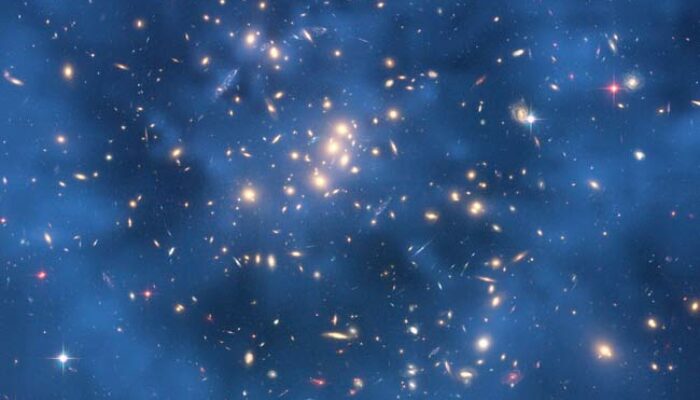
One of the most remarkable recent findings in the study of dark matter is the detection of an enormous, faint ring-like structure composed of dark matter, observed through the Hubble Space Telescope. This ghostly ring provides compelling evidence of the complex and large-scale distribution of dark matter in the universe.
- Observation details:
The ring’s intricate shape suggests a sophisticated gravitational interplay across vast cosmic distances. - Implications:
It offers new insights into how dark matter clusters and interacts, potentially reshaping our understanding of cosmic evolution.
Formation Mechanisms of Dark Matter Structures
The ghostly ring is believed to have formed through hierarchical structure formation, a process where smaller cosmic entities merge to create larger ones over time. Dark matter, influenced by its own gravity, aggregates into increasingly massive structures. The ring may be the residual signature of a past collision or merger between galaxy clusters, illustrating the dynamic and evolving nature of dark matter halos.
- Hierarchical clustering:
Dark matter clumps together, forming progressively larger structures through gravitational attraction. - Merger remnants:
The ring could represent the aftermath of a cosmic collision, where intersecting dark matter halos create ring-like formations.
Insights into Dark Matter Particle Candidates
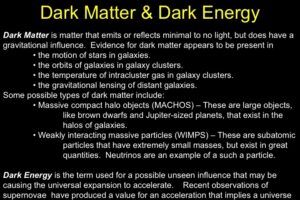
The discovery of such a structure raises important questions about the fundamental properties of dark matter particles. Scientists debate whether dark matter consists of weakly interacting massive particles (WIMPs), axions, sterile neutrinos, or other exotic candidates. Understanding the behavior and distribution of dark matter in formations like the ghostly ring may provide clues to its particle nature and interactions.
Role of Gravitational Lensing in Dark Matter Research
Gravitational lensing, the bending of light caused by massive objects, is a powerful tool for mapping dark matter. The ghostly ring serves as a unique case study for refining lensing models, enhancing our comprehension of how dark matter distorts spacetime. These observations contribute to testing and expanding the framework of general relativity and gravitational physics.
Broader Implications and Paradigm Shifts
This discovery challenges traditional views of dark matter as a passive placeholder for unexplained phenomena. Instead, it highlights dark matter as an active and dynamic component shaping the universe’s structure. The ghostly ring exemplifies the tangible influence of dark matter in cosmic evolution, prompting a reevaluation of astrophysical theories and models.
Challenges and Future Directions in Dark Matter Research
The persistent mystery surrounding dark matter underscores the limitations of current observational techniques and theoretical models. It encourages the development of innovative detection methods and interdisciplinary collaboration among physicists, astronomers, and experimentalists. Upcoming missions targeting cosmic microwave background radiation and advanced particle accelerators may provide breakthroughs in identifying dark matter’s true nature.
Collaborative Efforts in Unraveling Cosmic Mysteries
The ghostly ring acts as a focal point for uniting diverse scientific disciplines in the quest to decode dark matter. By integrating theoretical insights with observational data and experimental results, researchers aim to construct a comprehensive understanding of dark matter’s role in the universe’s fabric.
Conclusion: The Transformative Impact of the Ghostly Dark Matter Ring
The identification of the vast ghostly ring of dark matter by the Hubble Space Telescope marks a pivotal moment in astrophysics. Far from being a mere observational curiosity, it offers a transformative perspective on the universe’s composition and evolution. This discovery revitalizes scientific inquiry into dark matter, encouraging a reassessment of fundamental concepts in matter and energy. As research progresses, the insights gained from this phenomenon will continue to shape the future of cosmology and deepen humanity’s understanding of the cosmos.
FAQ
What is dark matter?
Dark matter is an invisible form of matter that does not emit or absorb light, making it detectable only through its gravitational effects.
What is the significance of the ghostly ring of dark matter?
The ghostly ring provides evidence of the distribution of dark matter and enhances our understanding of cosmic evolution.
How is dark matter detected?
Dark matter is detected through its gravitational influence on visible matter and phenomena like gravitational lensing.




Leave a Reply