
Short Answer
Definition of Graphene and Graphene Bubbles
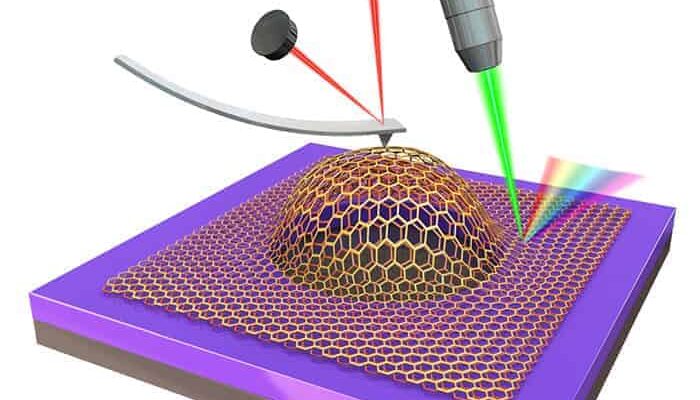
Graphene is a single layer of carbon atoms arranged in a two-dimensional honeycomb lattice. Renowned for its extraordinary electrical and thermal conductivity, it also boasts exceptional mechanical strength and flexibility, surpassing many conventional materials such as steel. A fascinating phenomenon associated with graphene is the formation of “graphene bubbles,” which are localized deformations on the graphene surface caused by interactions with liquids. These bubbles serve as innovative tools for probing shear forces at micro and nanoscale levels, offering valuable insights into the mechanical behavior of materials under various conditions.
Formation and Characteristics of Graphene Bubbles
Graphene bubbles emerge when a liquid droplet interacts with a graphene sheet, inducing a deformation due to surface tension effects. This deformation creates a bubble-like structure that is highly sensitive to external forces. Shear forces-forces that act tangentially along the surface-can alter the shape and size of these bubbles, making them effective sensors for detecting and measuring such forces. The bubble’s response to applied shear stress provides critical information about the mechanical properties of graphene, including its shear modulus, which quantifies the material’s resistance to deformation.
Understanding Shear Forces in Materials Science
Shear forces play a pivotal role in determining how materials respond to applied stresses. These forces act parallel to a material’s surface and influence its deformation and failure mechanisms. In the context of graphene bubbles, the interaction between shear forces and the bubble’s structure reveals the material’s stiffness and elasticity. Experimental setups typically involve monitoring the formation, deformation, and deflation of graphene bubbles under controlled shear stress, allowing researchers to observe the molecular-scale interactions that govern material behavior.
Sensitivity and Measurement Capabilities of Graphene Bubbles
Due to graphene’s atomic-scale thickness, graphene bubbles exhibit exceptional sensitivity to minute changes in force. This sensitivity enables precise detection and quantification of shear forces, making graphene bubbles analogous to highly refined sensors. Much like a seismograph records subtle earth tremors, graphene bubbles capture the delicate vibrations and distortions caused by shear stress, providing a detailed picture of the forces at play within the material.
Applications of Graphene Bubbles in Science and Engineering
The unique ability of graphene bubbles to measure shear forces has promising implications across multiple disciplines:
- Biomedical Engineering:
Understanding shear forces at the nanoscale can improve drug delivery systems by optimizing how nano-carriers respond to mechanical stresses within the body, enhancing targeted therapy effectiveness. - Nanocomposite Materials:
Insights into shear force interactions help in designing composites with tailored mechanical properties, leading to materials that perform better under specific load conditions.
Challenges and Experimental Considerations
Despite their potential, studying graphene bubbles involves several challenges. Precise control over environmental factors such as temperature, humidity, and contamination is essential, as these can affect bubble stability and formation. Additionally, interpreting experimental data requires sophisticated analytical models and computational tools to accurately link observed bubble behavior with the underlying physical forces. Ongoing advancements in experimental techniques and simulations are vital to overcoming these hurdles.
Scalability and Future Research Directions
While current research primarily focuses on nanoscale phenomena, extending the principles of graphene bubble mechanics to larger, macroscopic systems remains a significant challenge. Achieving this scale-up will demand interdisciplinary collaboration, integrating knowledge from materials science, physics, and engineering. Success in this area could unlock new applications and technologies that leverage the unique properties of graphene and its interactions with shear forces on a broader scale.
Significance of Graphene Bubble Research
The investigation of graphene bubbles as a method for measuring shear forces represents a critical convergence of fundamental physics and materials science. This approach provides unprecedented access to the mechanical properties of materials at the atomic level, deepening our understanding of the forces that dictate material behavior. As graphene continues to captivate researchers worldwide, the insights gained from studying graphene bubbles hold the promise of driving innovations in fields ranging from healthcare to advanced materials development, ultimately pushing the frontiers of technology and scientific knowledge.
FAQ
What are graphene bubbles?
Graphene bubbles are localized deformations on the graphene surface caused by interactions with liquids, which can be used to measure shear forces at micro and nanoscale levels.
How do graphene bubbles measure shear forces?
The response of graphene bubbles to applied shear stress alters their shape and size, providing critical information about the mechanical properties of graphene.
What are the applications of graphene bubbles?
Applications include improving drug delivery systems in biomedical engineering and designing nanocomposite materials with tailored mechanical properties.




Leave a Reply