
Short Answer
Definition of Galactic Morphological Evolution
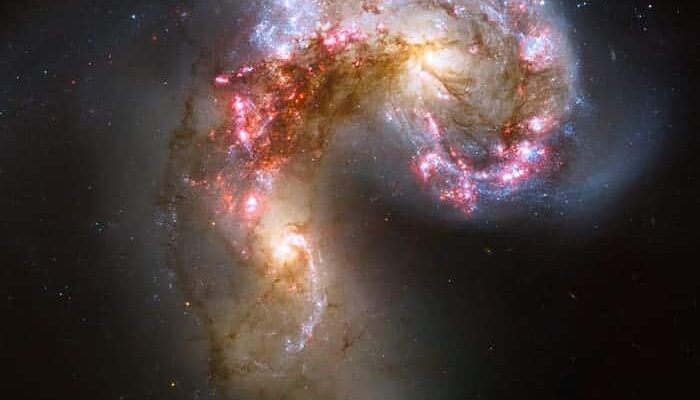
Galactic morphological evolution refers to the dynamic process through which galaxies alter their shapes and structures over cosmic time. These changes are not merely superficial but are deeply connected to the internal and external factors influencing the galaxies, including their star formation activities and interactions with their surroundings.
- Galaxies:
Massive systems composed of stars, gas, dust, and dark matter, exhibiting diverse shapes such as spirals, ellipticals, and lenticulars. - Morphological Evolution:
The transformation in the physical appearance and structure of galaxies driven by internal dynamics and environmental effects. - Star Formation:
The process of creating new stars from interstellar gas, closely linked to a galaxy’s morphology and evolutionary state.
Mechanisms Behind Galactic Shape Transformations
Galaxies undergo shape changes as adaptive responses to various internal and external influences. These transformations are often triggered by gravitational interactions, depletion of star-forming material, and environmental pressures within galaxy clusters.
- Gravitational Interactions:
Encounters and mergers with neighboring galaxies can distort shapes and redistribute stellar and gaseous components. - Gas Depletion:
The gradual exhaustion of interstellar gas, the essential fuel for star formation, leads to diminished stellar birth and structural changes. - Environmental Effects:
Dense cosmic neighborhoods exert tidal forces that strip gas and reshape galaxies, accelerating morphological evolution.
Understanding Morphological Quenching
Morphological quenching is a key process where the buildup of stellar mass within a galaxy suppresses its star formation activity. This phenomenon often results in the transition of spiral galaxies, rich in star-forming regions, into lenticular galaxies characterized by reduced star formation and smoother structures.
- Stellar Mass Accumulation:
Increased mass stabilizes the galactic disk, preventing gas from collapsing to form new stars. - Structural Reorientation:
Changes in the internal dynamics lead to a more passive galaxy with diminished spiral arms and star-forming regions.
Role of Environment in Galactic Evolution
The surroundings of a galaxy significantly influence its morphological changes. Galaxies embedded in dense clusters experience stronger gravitational forces that can strip away their gas reservoirs, thereby halting star formation and altering their shapes.
- Tidal Stripping:
Gravitational forces remove gas and stars, reshaping the galaxy’s structure. - Ram Pressure:
Movement through the intracluster medium can strip gas from galaxies, further suppressing star formation.
Cosmic Context: Galactic Evolution and the Universe
The morphological evolution of galaxies is a crucial aspect of the broader cosmic narrative. Early in the universe’s history, galaxies experienced intense star formation and rapid assembly. Over time, as the universe expanded, star formation rates declined, leading to a predominance of older, more evolved galaxies.
- Hierarchical Structure Formation:
The universe’s large-scale structures formed through the merging and growth of smaller galaxies. - Declining Star Formation:
A universal trend where star birth rates decrease as galaxies mature and gas supplies dwindle. - Dark Matter and Dark Energy:
These components influence galaxy dynamics and the expansion of the universe, indirectly affecting galactic evolution.
Scientific Techniques for Studying Galactic Evolution
Advanced observational methods, such as spectroscopy, allow astronomers to analyze the light emitted by galaxies across vast distances. By decomposing this light, researchers can infer current and past star formation rates, providing insights into the evolutionary trajectories of galaxies.
- Spectroscopic Analysis:
Examines the spectral lines to determine stellar populations and star formation history. - Light Decomposition:
Separates contributions from young and old stars to understand the galaxy’s developmental stage.
Common Misconceptions About Galactic Morphology
Galaxies maintain fixed shapes throughout their existence.
Galaxies continuously evolve, changing their morphology in response to internal processes and environmental factors.
Star formation is unrelated to a galaxy’s shape.
Star formation activity is closely linked to morphology, with changes in shape often reflecting shifts in star-forming rates.
Significance of Galactic Morphological Evolution
Understanding how galaxies change shape and star formation activity is vital for comprehending the universe’s history and future. These processes illuminate the life cycles of galaxies, the influence of cosmic environments, and the fundamental forces shaping the cosmos. Moreover, they provide critical clues about the ultimate fate of the universe, including the transition toward a quieter, star-formation-poor cosmic era.
Real-World Examples of Galactic Transformations
Observations of nearby galaxy clusters reveal numerous instances of morphological evolution. For example, spiral galaxies in dense clusters often exhibit signs of gas stripping and reduced star formation, transitioning into lenticular galaxies. These real-world cases exemplify the theoretical frameworks and highlight the dynamic nature of galactic life cycles.
FAQ
What is galactic morphological evolution?
Galactic morphological evolution is the process through which galaxies change their shapes and structures over time, influenced by internal dynamics and external factors.
What causes galaxies to change shape?
Galaxies change shape due to gravitational interactions, gas depletion, and environmental pressures that affect their star formation activities.
What is morphological quenching?
Morphological quenching is when the buildup of stellar mass within a galaxy suppresses its star formation, often leading to a transition from spiral to lenticular shapes.




Leave a Reply