
Short Answer
Definition of Galaxy Classification
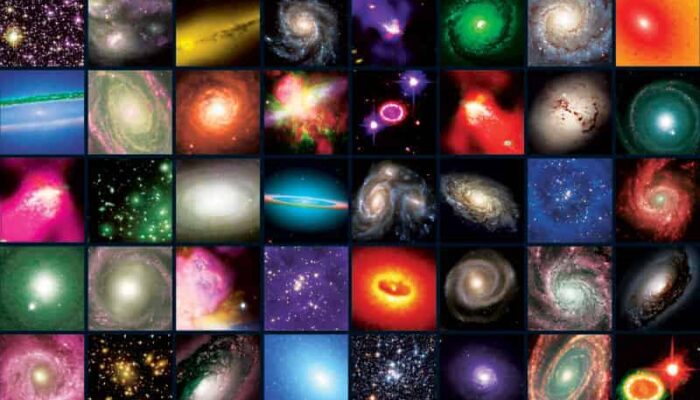
Galaxy classification refers to the systematic categorization of galaxies based on their observable characteristics, such as shape, structure, and composition. This classification helps astronomers organize the vast diversity of galaxies in the universe and understand their formation and evolution.
- Elliptical Galaxies:
Smooth, featureless light profiles with a range of sizes, often found in dense galaxy clusters. - Spiral Galaxies:
Recognizable by their distinct spiral arms and disk-like structure, these are among the most familiar galaxy types. - Irregular Galaxies:
Galaxies lacking a defined shape or symmetry, often exhibiting chaotic appearances.
Historical Background and Traditional Frameworks
Since the early days of astrophysics, galaxies have been primarily divided into three main groups: elliptical, spiral, and irregular. This tripartite system emerged from initial telescopic observations and has long served as the foundation for understanding galactic forms. These categories provided a straightforward way to classify galaxies based on their morphology, aiding in the study of their properties and distribution across the cosmos.
Challenges to Conventional Classification
With the advancement of observational technology, including high-resolution telescopes and enhanced imaging methods, astronomers have uncovered a far more intricate variety of galactic features than previously recognized. Many galaxies exhibit characteristics that do not fit neatly into the traditional categories, revealing the limitations of the classical classification system. This complexity has sparked ongoing debates about the adequacy of existing frameworks to capture the true diversity of galactic forms.
Galaxy Evolution and Its Impact on Classification
Galaxies are dynamic, evolving systems influenced by numerous astrophysical processes. Their morphology changes over time due to factors such as gravitational interactions, inflows of cosmic gas, and the influence of dark matter. Evolutionary stages include active star formation, periods of dormancy, and galactic mergers, each imparting distinct features that complicate simple classification. Recognizing galaxies as evolving entities challenges the notion of fixed categories and calls for more flexible classification approaches.
The Continuum Model: A New Perspective
Emerging research supports viewing galaxy classification as a continuum rather than discrete groups. This spectrum-based approach acknowledges transitional forms and hybrid characteristics, allowing galaxies to be described by a range of morphological traits rather than confined to rigid classes. Such a model better reflects the fluid and complex nature of galactic evolution and morphology.
Peculiar Galaxies and Their Significance
Among the galaxies that defy traditional classification are peculiar galaxies, which display unusual or atypical features. These may include asymmetric structures, exceptionally high rates of star formation, or uncommon chemical compositions. The study of these galaxies highlights the diverse outcomes of astrophysical processes and underscores the need for classification systems that can accommodate such anomalies.
Beyond Morphology: Incorporating Formation and Chemical History
Modern classification efforts increasingly consider factors beyond mere shape, such as a galaxy’s formation history, chemical evolution, and interaction record. For instance, metallicity-the abundance of elements heavier than hydrogen and helium-provides valuable clues about a galaxy’s star formation history and past interactions. Integrating these parameters enriches our understanding of galactic nature and evolution, offering a more holistic classification framework.
Technological Advances Driving New Insights
Recent technological breakthroughs are pivotal in reshaping galaxy classification. The James Webb Space Telescope and other next-generation observatories enable astronomers to observe galaxies at earlier cosmic epochs, revealing formative stages previously inaccessible. Additionally, the application of machine learning and artificial intelligence to vast astronomical datasets allows for the detection of subtle patterns and relationships in galactic structures, facilitating more sophisticated and nuanced classification schemes.
Real-World Examples of Evolving Classification
Observations of distant galaxies with irregular or transitional features illustrate the continuum model in practice. For example, some galaxies exhibit both spiral arms and elliptical-like bulges, challenging their placement in traditional categories. Peculiar galaxies such as starburst galaxies, which undergo intense star formation, demonstrate how dynamic processes influence morphology and classification.
Common Misconceptions About Galaxy Classification
Galaxies fit neatly into one of three fixed categories.
Many galaxies exhibit mixed or transitional features, making rigid categories insufficient.
Galaxy morphology is static.
Galaxies evolve over time, changing their structure and properties due to various astrophysical processes.
Classification depends solely on visual appearance.
Modern classification also considers formation history, chemical composition, and interaction effects.
Importance of Updated Galaxy Classification
Refining galaxy classification systems is crucial for advancing our comprehension of cosmic evolution and the underlying physical processes shaping the universe. Improved frameworks enable more accurate modeling of galaxy formation and interactions, enhancing our understanding of the large-scale structure of the cosmos. Moreover, these developments enrich public knowledge and appreciation of the universe’s complexity, inspiring continued exploration and discovery.
Conclusion: The Ongoing Quest to Understand Galaxies
The evolving landscape of galaxy classification reflects the dynamic and intricate nature of the universe itself. Moving beyond traditional categories toward a more fluid and comprehensive understanding allows astronomers to better capture the diversity and complexity of galactic phenomena. This paradigm shift not only advances scientific knowledge but also deepens humanity’s connection to the cosmos, reminding us that each discovery opens new questions about our place in the vast universe.
FAQ
What are the main types of galaxies?
The main types of galaxies include elliptical, spiral, and irregular galaxies, distinguished by their shape and structure.
Why is galaxy classification important?
Galaxy classification is crucial for understanding cosmic evolution and the physical processes that shape the universe.
How has technology impacted galaxy classification?
Advancements like the James Webb Space Telescope allow for observations of galaxies at earlier epochs, revealing previously unknown features and complexities.



Leave a Reply