
Short Answer
Definition of Positrons and Their Significance
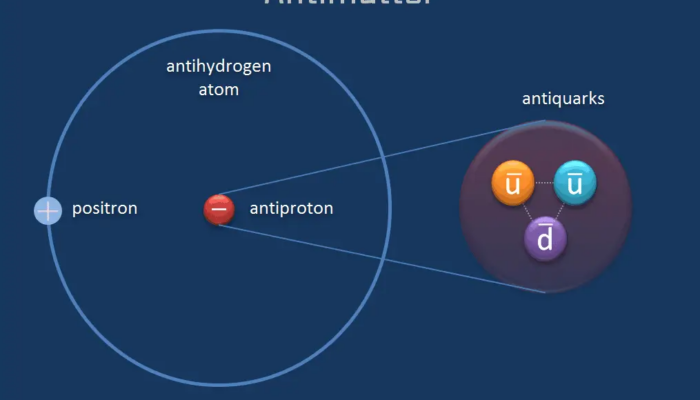
Positrons are the antimatter counterparts of electrons, identical in mass but carrying a positive electric charge. As fundamental particles, they play a vital role in the study of particle physics and astrophysics, offering insights into the symmetry between matter and antimatter in the universe. Their interactions with ordinary matter often result in annihilation events that emit gamma-ray photons, making positrons crucial probes for understanding cosmic phenomena and the nature of antimatter.
- Positron Characteristics:
Positrons have the same mass as electrons but possess a positive charge, enabling unique interactions with matter. - Role in Cosmic Phenomena:
Their annihilation with electrons produces gamma rays, which are detectable and provide information about high-energy processes in space.
Origins and Detection of Positrons in Cosmic Rays
Since their discovery, positrons detected in cosmic rays have intrigued scientists due to their unexpected abundance. Cosmic rays are high-energy particles traveling through space, and the presence of an excess of positrons compared to electrons challenges existing astrophysical models. This anomaly was notably highlighted by the PAMELA satellite, which recorded a higher-than-anticipated positron-to-electron ratio, sparking debates about the sources responsible for this surplus.
- PAMELA Satellite Findings:
Detected an unusual increase in positron counts relative to electrons in cosmic rays. - Scientific Implications:
Raised questions about the astrophysical or exotic origins of these antiparticles.
Geminga Pulsars as Potential Positron Sources
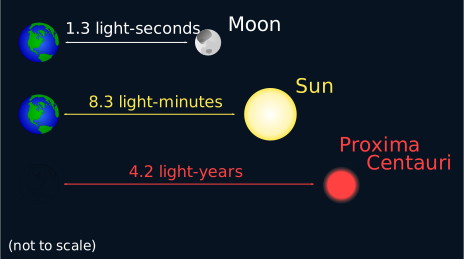
Among the proposed explanations for the positron excess, Geminga pulsars have emerged as compelling candidates. Pulsars are rapidly spinning neutron stars formed from supernova remnants, characterized by intense magnetic fields and extreme densities. The Geminga pulsar, situated roughly 800 light-years from Earth, exhibits properties conducive to accelerating particles to high energies, potentially producing large quantities of positrons.
- Nature of Geminga Pulsars:
Neutron stars with rapid rotation and strong magnetic fields capable of particle acceleration. - Particle Emission Mechanism:
Emit beams of radiation and energetic particles, including electrons and positrons, through magnetospheric processes.
Mechanisms Behind Positron Production in Pulsars
The generation of positrons in pulsars involves complex interactions within their magnetospheres. As pulsars spin, their magnetic fields accelerate charged particles, leading to high-energy emissions across multiple wavelengths, including gamma rays. These energetic particles can interact with surrounding matter, triggering pair production processes that create electron-positron pairs. This cascade effect results in a significant output of positrons into the surrounding space.
- Magnetospheric Acceleration:
Charged particles gain energy from the pulsar’s magnetic field and rotation. - Pair Production:
High-energy photons interact with matter to produce electron-positron pairs. - Emission of Positrons:
Positrons escape the pulsar environment, contributing to cosmic ray populations.
Alternative Theories: Dark Matter and Positron Excess
While pulsars like Geminga offer a plausible explanation, alternative hypotheses suggest that dark matter annihilation could be responsible for the surplus of positrons. Dark matter, which makes up about 27% of the universe’s mass-energy content, remains largely undetected except through gravitational effects. Theoretical models propose that when dark matter particles annihilate, they may produce high-energy positrons, providing an exotic source for the observed cosmic ray anomalies.
- Dark Matter Composition:
Invisible matter that influences cosmic structure but is not directly observed. - Annihilation Hypothesis:
Dark matter particles colliding and annihilating could emit positrons detectable in cosmic rays.
Observational Evidence and Scientific Debates
Data from space-based observatories like the Fermi Large Area Telescope (Fermi LAT) and ground-based detectors have been instrumental in studying the emissions from pulsars and searching for dark matter signatures. These observations support the idea that pulsars contribute significantly to the positron population, yet the possibility of dark matter involvement remains open. The ongoing debate reflects the complexity of cosmic ray sources and the challenges in distinguishing between astrophysical and exotic origins.
- Fermi LAT Observations:
Detect gamma rays consistent with emissions from pulsars and potential dark matter interactions. - Scientific Controversy:
Difficulty in conclusively attributing positron excess to a single source due to overlapping signals.
Importance of Understanding Positron Origins
Deciphering the source of excess positrons is pivotal for advancing knowledge in both particle physics and cosmology. It enhances comprehension of fundamental forces, the behavior of antimatter, and the composition of the universe. Moreover, resolving this puzzle could shed light on the elusive nature of dark matter and the mechanisms powering some of the most energetic astrophysical objects.
- Fundamental Physics:
Insights into matter-antimatter symmetry and particle interactions. - Cosmological Impact:
Better understanding of dark matter and cosmic ray propagation. - Technological Advances:
Drives development of sophisticated detectors and observational techniques.
Common Misconceptions About Positrons and Their Sources
Positrons are rare and insignificant in cosmic rays.
Positrons are a notable component of cosmic rays, and their unexpected abundance challenges existing astrophysical models.
Dark matter is the only possible source of excess positrons.
While dark matter annihilation is a candidate, pulsars like Geminga provide a well-supported astrophysical explanation.
Future Directions in Positron Research
Advancements in observational technology and data analysis promise to clarify the origins of positrons in cosmic rays. Upcoming missions and improved ground-based detectors will enhance sensitivity to gamma rays and charged particles, enabling more precise discrimination between pulsar emissions and potential dark matter signals. This progress is expected to deepen our understanding of high-energy astrophysics and the fundamental constituents of the universe.
- Enhanced Observatories:
Next-generation telescopes will provide higher resolution and broader energy range coverage. - Data Integration:
Combining multi-wavelength and multi-messenger data to build comprehensive models. - Theoretical Developments:
Refining particle acceleration and dark matter interaction models to match observations.
FAQ
What are positrons?
Positrons are antimatter counterparts of electrons, significant in particle physics and astrophysics.
How do Geminga pulsars produce positrons?
Geminga pulsars accelerate particles in their magnetic fields, leading to high-energy emissions that include positrons.
What alternative theories exist for positron origins?
Some theories suggest that dark matter annihilation could also account for the excess of positrons observed in cosmic rays.

Leave a Reply