
Short Answer
Definition of Condensed Matter Physics and Dirac Materials
Condensed matter physics is a dynamic branch of physics focused on investigating the large-scale physical properties of matter, especially at atomic and subatomic levels. This field integrates principles from quantum mechanics and crystallography to understand a wide spectrum of phenomena. A particularly intriguing subset within this discipline is the study of Dirac materials, which are distinguished by their relativistic electronic behaviors and unique band structures.
- Condensed Matter Physics:
The study of physical properties of solids and liquids, emphasizing atomic-scale interactions and emergent macroscopic phenomena. - Dirac Materials:
Materials whose electronic band structures feature Dirac cones, enabling electrons to behave as massless quasiparticles, often exhibiting relativistic effects.
Electronic Structure and Characteristics of Dirac Materials
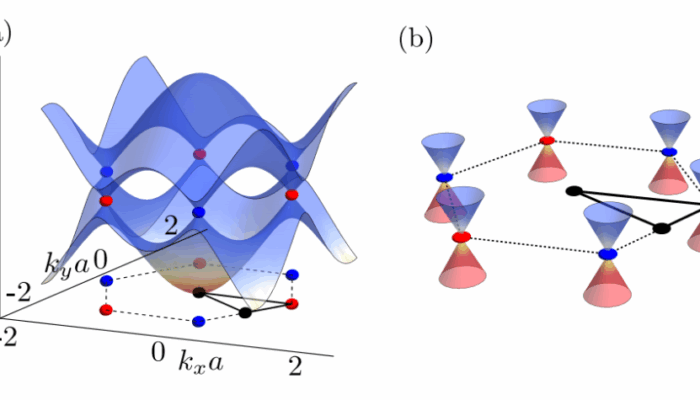
Dirac materials are characterized by their distinctive electronic band structure, where conduction and valence bands intersect at discrete points known as Dirac points or cones in momentum space. This intersection allows electrons to mimic relativistic particles with zero effective mass, leading to exceptional electrical properties. Graphene, a two-dimensional carbon allotrope arranged in a honeycomb lattice, is the prototypical Dirac material, renowned for its extraordinary electron mobility. Beyond graphene, three-dimensional analogs such as topological insulators and Weyl semimetals have been experimentally confirmed to host Dirac-like electronic states, broadening the scope of this research area.
Fundamental Principles and Quantum Phenomena
The exploration of Dirac materials has catalyzed a paradigm shift in condensed matter physics by merging concepts from particle physics with solid-state systems. This fusion challenges conventional models and introduces new quantum phenomena, including topological order-a property describing states that remain invariant under continuous transformations. Topologically protected states in these materials allow electrons to move through imperfections without scattering, which could revolutionize the design and efficiency of electronic devices.
Applications and Technological Implications
Dirac materials hold significant promise for advancing technology, particularly in fields such as quantum computing and spintronics. Spintronics exploits the intrinsic spin of electrons, rather than their charge, to develop devices with novel functionalities. The unique electronic properties of Dirac materials make them ideal candidates for such applications, although practical implementation remains a challenge. Researchers are actively investigating how to translate theoretical insights into functional technologies that could redefine computing and electronics.
Interdisciplinary Research and Experimental Advances
The pursuit of understanding and utilizing Dirac materials has fostered unprecedented collaboration among physicists, chemists, and materials scientists. Achieving stable quantum states within these materials requires innovative experimental techniques and precise material synthesis. Cutting-edge methods such as atomic-scale fabrication and advanced laser characterization are essential tools in this endeavor, enabling the discovery and manipulation of new Dirac materials with exotic properties.
Ethical Considerations and Societal Impact
As research into Dirac materials accelerates, ethical questions arise regarding the balance between rapid technological development and foundational scientific understanding. The pressure to commercialize breakthroughs may risk overshadowing fundamental theory, while funding dynamics and potential misuse of technology necessitate careful oversight. The scientific community must navigate these challenges responsibly to ensure that advancements benefit society without compromising ethical standards.
Philosophical Reflections on the Nature of Reality
The study of Dirac materials extends beyond practical applications, prompting profound philosophical inquiries about the nature of matter and the universe. The relativistic behavior of electrons in these materials challenges traditional perceptions of physical reality and invites contemplation on the limits of human knowledge. This intersection of physics and philosophy underscores the broader significance of Dirac materials in shaping our understanding of existence itself.
Future Directions and Challenges
The horizon for Dirac materials research is filled with exciting possibilities, including the discovery of new materials exhibiting unprecedented quantum behaviors. However, significant challenges remain, particularly in the synthesis and precise characterization of these materials. Continued innovation in fabrication techniques and analytical tools will be critical to unlocking the full potential of Dirac materials and translating their unique properties into practical technologies.
Summary: The Significance of Dirac Materials in Condensed Matter Physics
Condensed matter physicists have earned distinguished recognition through their dedicated investigation of Dirac materials, which embody a fusion of theoretical depth and practical relevance. Their work not only advances technological frontiers but also deepens our fundamental understanding of the quantum world and the fabric of reality. The ongoing exploration of Dirac materials represents a collective intellectual journey that bridges scientific disciplines and challenges our conception of the universe, marking a transformative chapter in modern physics.
FAQ
What are Dirac materials?
Dirac materials are materials where the electronic band structure features Dirac cones, allowing electrons to behave as massless quasiparticles with unique electrical properties.
What is condensed matter physics?
Condensed matter physics is the study of the physical properties of solids and liquids, focusing on atomic-scale interactions and emergent phenomena.
What are the applications of Dirac materials?
Dirac materials have potential applications in quantum computing and spintronics, exploiting their unique electronic properties for advanced technological solutions.




Leave a Reply