
Short Answer
Definition of Logic Gates
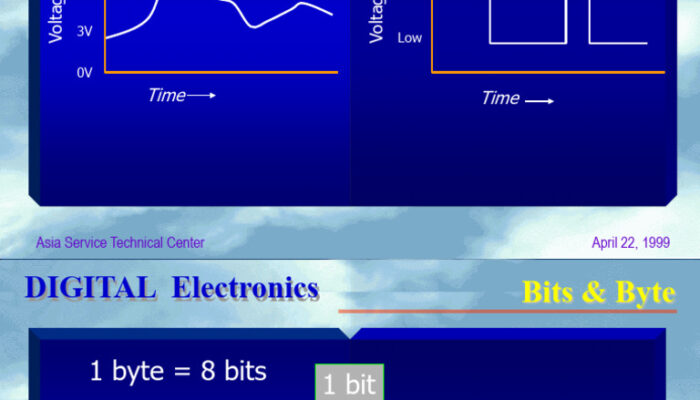
Logic gates are the essential components of digital electronics that perform fundamental logical operations on one or more binary inputs to produce a single output. These gates operate on binary values, typically represented as 0s and 1s, and form the backbone of digital circuits found in computers and various electronic devices. Much like neurons in the human brain, logic gates process information by making decisions based on input signals, enabling complex computational tasks.
- Binary Inputs:
Logic gates receive inputs in binary form, where 0 usually denotes false or off, and 1 denotes true or on. - Logical Operations:
Each gate performs a specific logical function such as AND, OR, NOT, NAND, NOR, XOR, or XNOR. - Output:
The output is a single binary value determined by the gate’s logic rule applied to the inputs.
Fundamental Types of Logic Gates
There are several basic types of logic gates, each with unique truth tables and functions:
- AND Gate: Outputs 1 only if all inputs are 1.
- OR Gate: Outputs 1 if at least one input is 1.
- NOT Gate (Inverter): Outputs the opposite of the input.
- NAND Gate: Outputs 0 only if all inputs are 1 (inverse of AND).
- NOR Gate: Outputs 1 only if all inputs are 0 (inverse of OR).
- XOR Gate: Outputs 1 if inputs are different.
- XNOR Gate: Outputs 1 if inputs are the same.
How Logic Gates Operate
Logic gates function by applying Boolean algebra principles to binary inputs. Each gate evaluates the input signals according to its logical rule and produces an output that reflects the result of this evaluation. This process is instantaneous and forms the basis for decision-making in digital circuits. By combining multiple gates, complex operations such as arithmetic calculations, data storage, and signal processing can be achieved.
Mathematical Representation and Formulas
Logic gates are mathematically described using Boolean expressions, where variables represent binary inputs:
- AND Gate: ( Y = A cdot B ) (Output Y is true if both A and B are true)
- OR Gate: ( Y = A + B ) (Output Y is true if A or B is true)
- NOT Gate: ( Y = overline{A} ) (Output Y is the complement of A)
- NAND Gate: ( Y = overline{A cdot B} )
- NOR Gate: ( Y = overline{A + B} )
- XOR Gate: ( Y = A oplus B ) (Output Y is true if A and B differ)
- XNOR Gate: ( Y = overline{A oplus B} )
Logic Gates in Modern Technology
Logic gates are integral to a wide array of technological advancements, extending far beyond traditional computing:
- Artificial Intelligence (AI):
Logic gates underpin the binary computations that enable AI systems to simulate human reasoning. As AI algorithms grow more sophisticated, the role of logic gates in neural network architectures becomes increasingly critical. - Quantum Computing:
Quantum logic gates leverage principles like superposition to process multiple states simultaneously, vastly enhancing computational speed and efficiency compared to classical gates. - Internet of Things (IoT):
In IoT ecosystems, logic gates facilitate decision-making within interconnected devices, ensuring seamless data processing and communication across diverse platforms. - Human-Computer Interaction:
Advanced interfaces such as virtual reality (VR) and augmented reality (AR) rely on logic gates to process user inputs instantly, creating immersive and responsive experiences. - Smart Cities:
Urban infrastructures utilize logic gates within sensor networks to optimize resource management, traffic control, energy consumption, and public safety in real time.
Real-World Applications of Logic Gates
Logic gates are foundational in numerous practical scenarios, including:
- Computing Devices:
CPUs and memory units use logic gates to perform calculations and store data. - Consumer Electronics:
Smartphones, televisions, and gaming consoles incorporate logic gates for processing signals and user commands. - Automotive Systems:
Modern vehicles employ logic gates in control systems for engine management, safety features, and navigation. - Industrial Automation:
Factories use logic gates in programmable logic controllers (PLCs) to automate machinery and monitor processes.
Common Misunderstandings About Logic Gates
- Misconception: Logic gates are only relevant to computers.
Correction: Logic gates are fundamental to all digital electronics, including IoT devices, smart infrastructure, and embedded systems. - Misconception: Quantum logic gates function the same as classical gates.
Correction: Quantum gates operate on quantum bits (qubits) and exploit quantum phenomena like superposition and entanglement, enabling vastly different computational capabilities. - Misconception: Logic gates make decisions like humans.
Correction: While logic gates perform binary decision-making, they lack consciousness or understanding; they execute predefined logical operations without awareness.
Significance of Logic Gates in Technology and Society
Logic gates are pivotal in shaping the digital era, serving as the fundamental units that enable complex computations and data processing. Their influence permeates various domains, from powering artificial intelligence and quantum computing to facilitating smart city infrastructures and enhancing human-computer interactions. By enabling precise and efficient decision-making at the electronic level, logic gates bridge human creativity with machine execution, driving innovation and transforming everyday life. As technology continues to evolve, the role of logic gates remains central to unlocking new possibilities and addressing emerging challenges in science, industry, and society.
FAQ
What are logic gates?
Logic gates are basic digital components that perform logical operations on binary inputs to produce a single binary output.
How do quantum logic gates differ from classical logic gates?
Quantum logic gates use quantum phenomena such as superposition and entanglement to operate on qubits, enabling more complex computational capabilities than classical gates.
Where are logic gates commonly used?
They are used in computing devices, AI, quantum computers, IoT devices, automotive control systems, and smart city technologies.
Are logic gates only relevant to computers?
No, logic gates are fundamental to all digital electronics, including embedded systems and smart infrastructure beyond traditional computers.





Leave a Reply