
Short Answer
Definition of Radiation
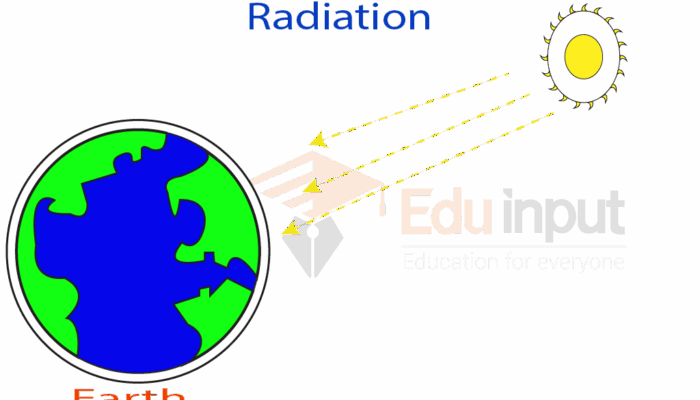
Radiation broadly refers to the process by which energy is emitted and transmitted through space or a medium. This energy can take multiple forms, including electromagnetic waves and particles. The electromagnetic spectrum encompasses a wide range of radiation types, from low-frequency radio waves to high-frequency gamma rays. Central to understanding radiation is recognizing its dual nature, which quantum mechanics reveals as both wave-like and particle-like.
- Energy Transmission:
Radiation involves the movement of energy across distances without the need for a physical medium. - Forms of Radiation:
Includes electromagnetic waves (light, radio waves, X-rays) and particle emissions (alpha particles, beta particles). - Electromagnetic Spectrum:
A continuous range of radiation frequencies, illustrating the diversity of radiation types.
Historical Background and Discovery of Wave-Particle Duality
The early 20th century marked a transformative period in physics, where classical views of light and radiation were challenged. Pioneers like Max Planck and Albert Einstein played crucial roles in reshaping our understanding. Einstein’s explanation of the photoelectric effect introduced the concept of photons-discrete packets of energy-demonstrating that light exhibits particle-like properties. This was a significant departure from the traditional wave-only perspective.
Simultaneously, experiments such as Thomas Young’s double-slit experiment provided compelling evidence of light’s wave characteristics by producing interference patterns. These findings raised fundamental questions about the true nature of radiation, ultimately leading to the realization that it cannot be confined to a single description but instead embodies both wave and particle aspects.
Wave-Particle Duality Explained
Wave-particle duality is a cornerstone of quantum mechanics, describing how entities like light and electrons exhibit both wave-like and particle-like properties depending on the context. This duality defies classical intuition, as particles traditionally have fixed positions, while waves are spread out and exhibit interference.
- Wave Behavior:
Radiation can display interference and diffraction, hallmark traits of waves. - Particle Behavior:
Radiation can also behave as discrete packets of energy or matter, such as photons or electrons. - Quantum Superposition:
Particles exist in a probabilistic state, described by a wave function, until measured.
Mathematical Framework: The Wave Function and Quantum Mechanics
Quantum mechanics provides the mathematical tools to describe wave-particle duality. The wave function, typically denoted by the Greek letter ψ (psi), encapsulates all information about a quantum system’s state. It represents a probability amplitude, where the square of its magnitude gives the likelihood of finding a particle in a particular location.
The wave function evolves according to the Schrödinger equation, a fundamental formula in quantum theory:
iħ ∂ψ/∂t = Ĥψ
- i: Imaginary unit
- ħ: Reduced Planck’s constant
- ∂ψ/∂t: Time derivative of the wave function
- Ĥ: Hamiltonian operator representing total energy
- ψ: Wave function of the system
Upon measurement, the wave function collapses, and the system assumes a definite particle-like state. This phenomenon, known as the observer effect, highlights the interplay between observation and reality in quantum mechanics.
Wave-Particle Duality Beyond Light: Electrons and Matter Waves
Wave-particle duality is not exclusive to light. Electrons and other subatomic particles also exhibit this dual nature. Louis de Broglie proposed that every moving particle has an associated wavelength, given by:
λ = h / p
- λ (lambda): Wavelength associated with the particle
- h: Planck’s constant
- p: Momentum of the particle
This concept, known as matter waves, has profound implications in quantum mechanics and underpins technologies such as electron microscopy and semiconductor devices.
Practical Applications of Radiation’s Dual Nature
The understanding of radiation’s wave-particle duality has led to numerous technological advancements across various fields:
- Medical Treatments:
Radiation therapy utilizes both particle and wave properties to target cancer cells precisely while minimizing damage to healthy tissue. - Telecommunications:
Wave behavior enables the transmission of information across different frequencies, forming the backbone of modern communication systems. - Quantum Computing:
Exploits superposition and wave-particle duality to perform complex computations beyond classical capabilities.
Common Misconceptions About Radiation
Radiation is either a wave or a particle, but not both.
Quantum mechanics shows that radiation exhibits both wave-like and particle-like properties depending on the experimental context.
The wave function represents a physical wave in space.
The wave function is a mathematical tool representing probabilities, not a tangible wave.
Observation creates reality.
Measurement affects the system’s state, but whether it creates or reveals reality remains a philosophical debate.
Significance of Wave-Particle Duality in Science and Technology
Wave-particle duality is fundamental to modern physics, shaping our understanding of the microscopic world. It challenges classical concepts and introduces a probabilistic framework that has revolutionized science and technology. This duality enables the development of cutting-edge technologies such as lasers, transistors, and quantum computers, profoundly impacting daily life and future innovations.
Future Perspectives and Ongoing Research
As research delves deeper into quantum phenomena, the interplay between wave and particle characteristics continues to inspire new discoveries. Quantum computing, quantum cryptography, and advanced imaging techniques are just a few areas benefiting from this understanding. The ongoing exploration of wave-particle duality promises to unlock further mysteries of the universe and expand the horizons of human knowledge.
Conclusion
Radiation embodies a remarkable duality that defies simple classification. It simultaneously behaves as both a wave and a particle, a concept that lies at the core of quantum mechanics. This dual nature enriches our comprehension of the universe, bridging the gap between classical and quantum worlds. Embracing this complexity not only deepens scientific insight but also fuels technological progress, underscoring the profound elegance of nature’s design.
FAQ
What is wave-particle duality?
Wave-particle duality is the concept that entities like light and electrons exhibit both wave-like and particle-like properties.
Who proposed the concept of matter waves?
The concept of matter waves was proposed by Louis de Broglie.
How does radiation apply to technology?
Radiation's dual nature is utilized in technologies like medical imaging, telecommunications, and quantum computing.






Leave a Reply