
Short Answer
Definition of Missiles and Nuclear Weapons
At the crossroads of military technology and scientific advancement lies a critical question: what fundamentally differentiates a missile from a nuclear weapon? Understanding this distinction requires a detailed examination of missile technology, the nature of nuclear arms, and the key factors that separate these two powerful entities.
What is a Missile?
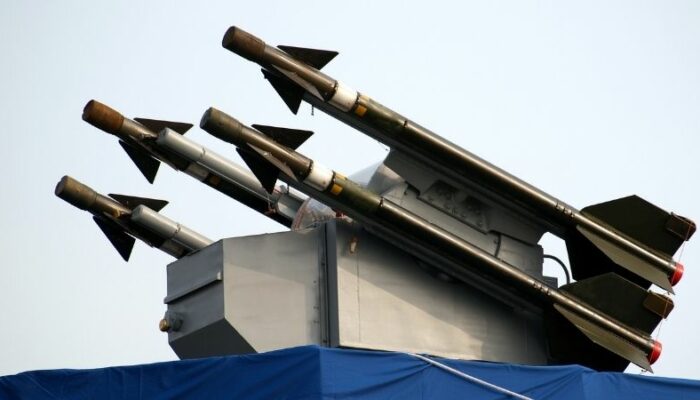
A missile is essentially a self-propelled projectile designed to be launched toward a specific target. It is equipped with guidance systems that enhance its precision. Missiles are broadly classified into two main types:
- Ballistic Missiles:
These follow a high-arc, suborbital trajectory, similar to a celestial object traveling through space before descending sharply onto the target. - Cruise Missiles:
These maintain controlled flight at various altitudes, using aerodynamic lift and propulsion to navigate until impact.
What Defines a Nuclear Weapon?
The term “nuke” specifically refers to weapons that derive their destructive power from nuclear reactions-either fission, fusion, or a combination of both. These reactions release immense energy, resulting in massive explosions, intense thermal radiation, and lingering radioactive fallout. A nuclear missile is a missile designed to deliver such a nuclear warhead, distinguishing it from conventional missile systems.
Types of Nuclear Missiles
Nuclear missiles come in several forms, with the two most prominent being:
- Intercontinental Ballistic Missiles (ICBMs):
Launched from land-based silos or mobile platforms, ICBMs can travel distances exceeding 3,500 kilometers with high accuracy, enabling global strike capabilities. - Submarine-Launched Ballistic Missiles (SLBMs):
These are launched from underwater submarines, providing strategic advantages such as stealth and a second-strike capability, which is vital for nuclear deterrence.
Missile Payloads: Conventional vs. Nuclear
Not all missiles are designed to carry nuclear warheads. Many are equipped with conventional explosives or other types of payloads such as chemical agents. Conventional missiles serve tactical purposes in warfare, targeting enemy forces, vehicles, or fortified positions without the catastrophic consequences associated with nuclear weapons.
Conventional missile systems vary widely, from short-range tactical missiles to longer-range platforms, and are integral to modern military operations. Their destructive power, while significant, does not carry the existential threat posed by nuclear ordnance.
Operational Doctrine and Strategic Importance
Nuclear missiles are more than just weapons; they are central to the doctrine of nuclear deterrence. The concept of mutually assured destruction (MAD) underpins much of international nuclear strategy, positing that the use of nuclear weapons by any party would lead to total annihilation for all involved. This precarious balance acts as a deterrent against nuclear conflict but also intensifies the need for arms control and non-proliferation efforts.
Common Misconceptions About Missiles and Nuclear Weapons
All missiles are nuclear weapons.
Only missiles equipped with nuclear warheads are nuclear weapons; many missiles carry conventional or other types of payloads.
The term “nuke” applies to all missile technology.
“Nuke” specifically refers to nuclear weapons and does not encompass conventional missile systems.
Historical and Geopolitical Impact
The existence of nuclear missiles has profoundly shaped global military strategies and international relations. Their presence influences diplomatic negotiations, arms control treaties, and the balance of power among nations. The psychological weight of nuclear weapons extends beyond their physical capabilities, instilling both fear and a deterrent effect that has defined much of modern history.
Why Understanding the Difference Matters
Recognizing the distinction between missiles and nuclear weapons is crucial for comprehending modern warfare, defense policies, and global security dynamics. Conflating the two overlooks the complex technological, ethical, and strategic considerations involved. This clarity is essential not only for military professionals and policymakers but also for the public’s informed awareness of the responsibilities and risks associated with these powerful technologies.
FAQ
Are all missiles nuclear weapons?
No, only missiles equipped with nuclear warheads are nuclear weapons; many missiles carry conventional or other payloads.
What distinguishes a nuclear missile from a conventional missile?
A nuclear missile carries a warhead powered by nuclear reactions, while conventional missiles carry explosives or other non-nuclear payloads.
What are the primary types of nuclear missiles?
Intercontinental Ballistic Missiles (ICBMs) and Submarine-Launched Ballistic Missiles (SLBMs) are the most prominent nuclear missile types.
Why is nuclear deterrence important?
Nuclear deterrence prevents nuclear conflict by ensuring mutual destruction if nuclear weapons are used.





Leave a Reply