
Short Answer
Definition of an Atom
An atom is widely recognized as the fundamental unit of matter, serving as the essential building block from which all substances are formed. It is a complex structure that has intrigued scientists, philosophers, and inquisitive thinkers for centuries. Beyond its practical significance in the physical world, the atom’s intricate internal composition provides a profound window into the fundamental nature of the universe itself. Exploring the atom’s makeup and behavior offers deep insights into the essence of existence.
Fundamental Components of the Atom
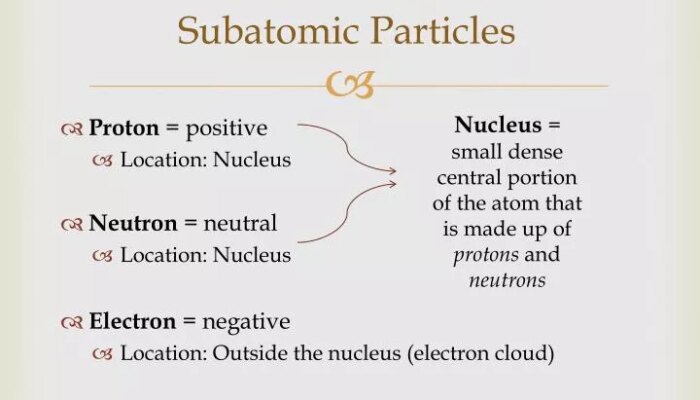
At the heart of every atom lie three key subatomic particles: protons, neutrons, and electrons. These particles are not passive elements but actively determine the chemical and physical characteristics of matter. A thorough understanding of each particle is essential to grasp the complexities of atomic structure.
Protons: The Definers of Elemental Identity
Protons are positively charged particles situated within the nucleus of an atom. Each proton carries a charge of +1 elementary charge, a basic unit of electric charge. The total number of protons, known as the atomic number, uniquely identifies the element. For example, hydrogen contains a single proton, whereas carbon has six. This direct correlation between proton count and elemental identity forms the foundation of the periodic table.
Protons also play a vital role in chemical reactions by influencing electromagnetic forces that govern atomic interactions. The strong nuclear force binds protons and neutrons tightly within the nucleus, balancing the repulsive electromagnetic forces among protons. This equilibrium is critical for maintaining atomic stability.
Neutrons: Stabilizers and Isotope Contributors
Neutrons, electrically neutral particles, coexist with protons in the nucleus. Their primary function is to stabilize the nucleus by offsetting the repulsive forces between positively charged protons. Neutrons are also responsible for the existence of isotopes-variants of elements differing in neutron number. For instance, carbon-12 has six neutrons, while carbon-14 contains eight, the latter being instrumental in radiocarbon dating techniques.
While neutrons do not alter an element’s chemical identity, they significantly affect nuclear properties and stability. Atoms with disproportionate neutron-to-proton ratios may become unstable and undergo radioactive decay, emitting radiation. This phenomenon provides valuable insights into nuclear physics, stellar processes, and the dating of ancient materials.
Electrons: Architects of Chemical Behavior
Electrons are negatively charged particles with negligible mass that orbit the nucleus in defined energy levels or shells. Their arrangement around the nucleus dictates an atom’s chemical reactivity, bonding capabilities, and overall behavior. Electrons are held by electromagnetic attraction to the nucleus but occupy discrete energy states, a concept central to quantum mechanics.
The spatial distribution of electrons is governed by quantum principles, determining how atoms interact and bond. Chemical bonds arise from the sharing or transfer of electrons, leading to molecule formation-the basis of chemical reactions. This electron-driven bonding underpins the complexity of chemistry and material science.
Quantum Mechanics and Atomic Behavior
The study of atomic structure culminates in quantum mechanics, a framework that introduces probability and uncertainty into the behavior of subatomic particles. The Heisenberg Uncertainty Principle states that it is impossible to simultaneously know an electron’s exact position and momentum. This principle challenges classical deterministic views and highlights the probabilistic nature of atomic phenomena.
Quantum mechanics is not merely theoretical; it underlies many modern technologies such as semiconductors, lasers, and emerging quantum computers. Thus, the atom is a dynamic entity, rich with potential and governed by complex forces that shape the universe.
The Atom’s Significance in the Cosmos
Atoms serve as miniature representations of the universe’s vast complexity. Each atom, with its unique composition, contributes to the formation of everything from simple gases to complex living organisms. Understanding atomic structure is fundamental across multiple scientific disciplines, including chemistry, physics, biology, and materials science, highlighting the interconnectedness of natural phenomena.
Ongoing research continues to reveal the atom’s central role in deciphering the mysteries of existence. From the quantum scale to cosmic events, atomic interactions provide profound insights into nature’s laws. This intricate balance of subatomic particles inspires awe and invites continual exploration into the fabric of reality.
Summary
- Atom:
The smallest unit of matter, composed of protons, neutrons, and electrons. - Protons:
Positively charged particles defining the element’s identity and contributing to nuclear stability. - Neutrons:
Neutral particles that stabilize the nucleus and create isotopic diversity. - Electrons:
Negatively charged particles that determine chemical properties through their arrangement and energy states. - Quantum Mechanics:
The scientific framework explaining the probabilistic behavior of subatomic particles. - Importance:
Atoms are foundational to understanding matter, chemical reactions, and the universe’s structure.
FAQ
What is an atom?
An atom is the smallest unit of matter that retains properties of an element, made up of protons, neutrons, and electrons.
What defines the chemical properties of an atom?
The arrangement and number of electrons determine an atom's chemical properties and reactivity.
Why are neutrons important in an atom?
Neutrons stabilize the nucleus and contribute to the existence of isotopes, which affect nuclear properties.
How does quantum mechanics affect our understanding of atoms?
Quantum mechanics introduces principles like uncertainty and probabilistic electron positions, refining the model of atomic behavior.






Leave a Reply