
Short Answer
Definition of the Casimir Effect
The Casimir effect is a quantum mechanical phenomenon that manifests as an attractive force between two closely spaced conductive surfaces, arising from fluctuations in the electromagnetic vacuum. This subtle force emerges due to the alteration of vacuum energy density when conductive plates are placed in close proximity within a vacuum. Initially predicted in the context of idealized parallel plates, the Casimir effect has since been recognized as a significant factor influencing micro- and nanoscale systems.
- Quantum Vacuum Fluctuations:
The electromagnetic field in a vacuum is never truly empty but exhibits constant fluctuations, which give rise to measurable forces between objects. - Attractive Force:
When two conductive plates are separated by a very small distance, these vacuum fluctuations result in a net force pulling the plates together. - Dependence on Geometry and Distance:
The magnitude of the Casimir force is highly sensitive to the separation between surfaces and their shape and material properties.
Fundamental Principles and Mechanism
The Casimir effect originates from the modification of allowed electromagnetic modes between two conductive surfaces. In a vacuum, the electromagnetic field can be described as a superposition of modes with various wavelengths. When two plates are placed close together, only certain wavelengths fit between them, reducing the vacuum energy density in that region compared to the outside. This energy difference creates a pressure that pushes the plates toward each other.
In the simplest case of two perfectly parallel, uncharged plates, the force per unit area (pressure) is inversely proportional to the fourth power of the distance between the plates, making the effect especially pronounced at nanometer to micrometer scales.
Mathematical Description of the Casimir Force
The Casimir force between two ideal, perfectly conducting parallel plates separated by a distance d in vacuum at zero temperature is given by the formula:
F = -frac{pi^2 hbar c}{240 d^4} A
- F: Casimir force (Newtons)
- ħ (h-bar): Reduced Planck’s constant (~1.0545718 × 10⁻³⁴ Js)
- c: Speed of light in vacuum (~3 × 10⁸ m/s)
- d: Separation distance between the plates (meters)
- A: Surface area of the plates (square meters)
The negative sign indicates that the force is attractive. This formula assumes ideal conditions; real-world materials and geometries require more complex models.
Extensions Beyond Idealized Models
While the parallel plate model provides foundational insight, practical applications involve more intricate geometries and material properties. Researchers have expanded the theory to include:
- Non-Parallel and Curved Surfaces:
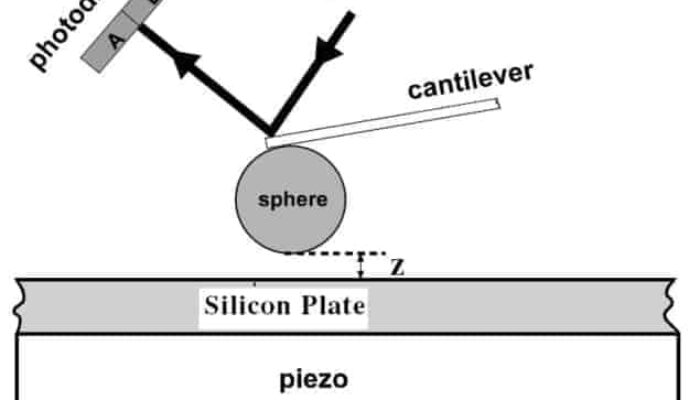
Shapes such as spheres, cylinders, and irregular microstructures can modify both the magnitude and direction of the Casimir force, sometimes even producing repulsive interactions under specific conditions. - Material Effects:
Real materials exhibit finite conductivity, surface roughness, and dielectric properties, all of which influence the strength and behavior of the Casimir force. - Environmental Factors:
Temperature, humidity, and external electromagnetic fields can alter the vacuum fluctuations and thus the resulting force.
Applications in Microelectromechanical Systems (MEMS)
The Casimir effect plays a pivotal role in the design and operation of MEMS, which are devices integrating mechanical elements, sensors, actuators, and electronics on a microscale. Due to the small dimensions involved, Casimir forces can significantly impact device behavior.
- Actuation Enhancement:
By leveraging the Casimir force, MEMS actuators can achieve more efficient movement with reduced power consumption, improving speed and precision. - Miniaturized Switches and Relays:
Incorporating Casimir forces allows for smaller, more reliable switching devices that operate at lower voltages and with longer lifespans compared to traditional electromechanical components. - Force Balancing and Stability:
Understanding both attractive and repulsive Casimir interactions enables engineers to design MEMS with optimized stability, preventing unwanted stiction or collapse of components.
Challenges in Harnessing the Casimir Effect
Despite its promising applications, several obstacles must be addressed to effectively utilize the Casimir force in MEMS:
- Material Selection:
The electrical and surface properties of materials critically affect the Casimir interaction, necessitating precise control over conductivity, roughness, and dielectric constants. - Fabrication Precision:
Manufacturing processes must achieve nanoscale accuracy to ensure the intended force magnitudes and directions are realized. - Environmental Sensitivity:
External factors such as temperature fluctuations and contamination can alter device performance by modifying Casimir forces.
Future Directions and Research Outlook
Ongoing interdisciplinary collaboration between physicists and engineers is vital to bridge theoretical understanding and practical implementation of the Casimir effect in MEMS. Key areas of focus include:
- Advanced Computational Models:
Developing simulations that incorporate complex geometries, material properties, and environmental conditions to predict Casimir forces accurately. - Experimental Validation:
Designing experiments to measure Casimir forces in realistic MEMS configurations, validating theoretical predictions. - Innovative Device Architectures:
Creating MEMS that exploit both attractive and repulsive Casimir forces to achieve novel functionalities and improved performance.
Significance of the Casimir Effect in Technology
The integration of the Casimir effect into MEMS design represents a transformative step in micro- and nanotechnology. By harnessing quantum vacuum forces, engineers can develop devices with enhanced sensitivity, reduced energy consumption, and greater durability. This quantum-mechanical influence extends beyond academic interest, offering practical benefits in consumer electronics, industrial sensors, and emerging quantum technologies. As research advances, the Casimir effect is poised to become a fundamental consideration in the engineering of next-generation microsystems.
Common Misconceptions About the Casimir Effect
The Casimir force only occurs between perfectly parallel plates.
While the original model involves parallel plates, the Casimir effect also exists between various shapes and materials, with forces that can be attractive or repulsive depending on configuration.
The Casimir effect is negligible and irrelevant for practical devices.
At micro- and nanoscales, the Casimir force can dominate other forces, significantly impacting the operation and reliability of MEMS and nanoscale devices.
The Casimir force is purely theoretical and cannot be measured.
Numerous experiments have confirmed the existence of the Casimir effect, and ongoing research continues to quantify and utilize it in practical applications.
FAQ
What is the Casimir effect?
The Casimir effect is a quantum mechanical phenomenon where two closely spaced conductive surfaces experience an attractive force due to vacuum fluctuations.
How does the Casimir effect apply to MEMS?
In MEMS, the Casimir effect can enhance actuation efficiency, reduce power consumption, and improve device stability.
What challenges exist in utilizing the Casimir effect?
Challenges include material selection, fabrication precision, and environmental sensitivity affecting the Casimir force.




Leave a Reply