

Short Answer
Overview of Atomic, Molecular, and Optical (AMO) Physics and Condensed Matter (CM) Physics
Physics encompasses a wide array of specialized fields, each focusing on different aspects of the natural world. Among these, Atomic, Molecular, and Optical (AMO) physics and Condensed Matter (CM) physics stand out as two distinct yet complementary disciplines. Understanding their differences enhances our grasp of the microscopic mechanisms that influence macroscopic phenomena and highlights the diverse approaches scientists use to explore the physical universe.
Definition and Scope
Atomic, Molecular, and Optical (AMO) Physics
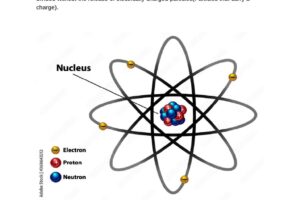
AMO physics centers on the detailed study of individual atoms, molecules, and their interactions with electromagnetic radiation. This field investigates fundamental quantum mechanical behaviors, including phenomena such as laser cooling, high-resolution spectroscopy, and quantum state manipulation. Researchers aim to comprehend the intrinsic properties of isolated particles-neutral atoms, ions, and photons-before examining their collective effects.
Condensed Matter (CM) Physics
In contrast, CM physics focuses on the collective properties of large ensembles of atoms and molecules, primarily within solids and liquids. This branch explores emergent phenomena that arise from complex interactions among vast numbers of particles, such as superconductivity, magnetism, and crystallographic structures. CM physics seeks to explain how macroscopic material characteristics emerge from microscopic constituents, often involving quantum effects that cannot be inferred by studying individual particles alone.
Fundamental Differences in Scale and Focus
The primary distinction between AMO and CM physics lies in the scale at which they operate. AMO experiments typically manipulate single atoms or small groups, allowing precise control over experimental conditions and isolation of variables. This granularity facilitates probing quantum mechanical principles under near-idealized conditions. Conversely, CM physics deals with systems containing enormous numbers of particles, where interactions lead to complex, emergent behaviors that are challenging to dissect at the individual particle level.
Experimental Techniques and Methodologies
AMO Physics Methods
AMO research employs highly specialized tools such as lasers, atom traps, and advanced spectroscopic instruments. Techniques like laser cooling enable scientists to reach temperatures approaching absolute zero, where quantum effects become pronounced. These methods provide deep insights into fundamental particle properties and have paved the way for innovations including quantum computing and ultra-precise atomic clocks.
Condensed Matter Physics Techniques
CM physics primarily utilizes experimental approaches that probe bulk material properties. Techniques such as X-ray diffraction and neutron scattering are common for investigating crystal structures, phase transitions, and other collective phenomena. These methods focus on understanding how large-scale interactions influence the physical characteristics of materials.
Theoretical Foundations
The theoretical frameworks guiding AMO and CM physics differ significantly. AMO physics is grounded in quantum mechanics, especially quantum electrodynamics, which describes the interaction between light and matter. Key concepts include quantum states, coherence, and entanglement, enabling exploration of phenomena like Bose-Einstein condensates and quantum information processing.
In contrast, CM physics integrates both classical and quantum theories. It often combines thermodynamics and statistical mechanics with quantum statistics to explain the behavior of large particle ensembles, addressing the complex interplay between microscopic interactions and macroscopic properties.
Technological Impact and Applications
AMO physics has driven technological advancements in areas such as laser technology, atomic clocks, and optical manipulation tools like optical tweezers. These innovations have far-reaching applications in telecommunications, navigation systems, and biomedical research.
Similarly, CM physics has been instrumental in developing new materials and technologies, particularly in materials science and nanotechnology. Discoveries related to superconductors and novel electronic materials have transformed energy systems and electronic devices.
Interdisciplinary Connections and Emerging Research
Despite their differences, AMO and CM physics increasingly intersect, fostering interdisciplinary research that leverages the strengths of both fields. This synergy is particularly evident in quantum technology, where precise control at the atomic scale merges with the complex behaviors of condensed matter systems. Such collaborations are driving the development of advanced quantum sensors, super materials, and next-generation quantum computing platforms.
Why Understanding AMO and CM Physics is Crucial
Each discipline offers a unique perspective on the physical world: AMO physics elucidates fundamental interactions at the quantum level, while CM physics reveals the rich complexity arising from collective behavior. Together, they deepen our understanding of nature’s laws and fuel technological progress. Embracing the diversity of approaches in these fields is essential for advancing scientific knowledge and exploring new frontiers in physics.
Summary
The study of AMO and CM physics highlights the complementary nature of examining both isolated particles and large-scale systems. By appreciating their distinct methodologies, theoretical bases, and applications, we gain a more comprehensive view of the physical universe. This dual perspective not only enriches fundamental science but also catalyzes innovations that impact everyday life and future technologies.
FAQ
What distinguishes AMO physics from Condensed Matter physics?
AMO physics focuses on single atoms and molecules and their interaction with light, emphasizing quantum phenomena, while Condensed Matter physics studies large groups of particles and emergent properties in materials.
Why are lasers important in AMO physics?
Lasers enable precise control and manipulation of atoms, allowing experiments such as laser cooling to explore quantum effects near absolute zero.
What are some common experimental techniques in Condensed Matter physics?
X-ray diffraction and neutron scattering are widely used to probe crystal structures and phase transitions in materials.
How do AMO and CM physics collaborate in quantum technology?
They combine AMO’s atomic-scale precision with CM’s understanding of collective phenomena to develop advanced quantum sensors, materials, and computing architectures.




Leave a Reply