

Short Answer
Understanding Condensed Matter Physics
Condensed matter physics is a branch of physics focused on investigating the physical properties of matter in its solid and liquid states. This field explores both macroscopic and microscopic characteristics, delving into phenomena such as superconductivity, magnetism, and phase transitions. It seeks to unravel the fundamental behaviors of materials by combining theoretical frameworks with experimental observations.
Educational Pathway to Becoming a Condensed Matter Physicist
Embarking on a career in condensed matter physics begins with a solid academic foundation in physics and mathematics. Typically, this journey starts with earning a Bachelor’s degree in Physics, where students study essential subjects like classical mechanics, electromagnetism, and quantum mechanics. These core areas provide the groundwork necessary for understanding complex material behaviors.
Advancing further usually involves pursuing graduate studies, such as a Master’s or Ph.D. program. Graduate coursework often includes specialized topics like statistical mechanics, solid state physics, and advanced quantum theory. These studies deepen one’s comprehension of condensed matter systems and often incorporate research components, allowing students to develop expertise under the mentorship of experienced physicists.
Research Experience: Connecting Theory with Experimentation
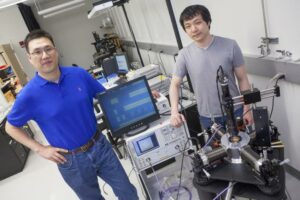
Hands-on research is a critical element in the development of a condensed matter physicist. Participating in research projects during undergraduate and graduate studies helps bridge theoretical knowledge with practical experimentation. Mastery of sophisticated experimental techniques-such as X-ray diffraction, optical spectroscopy, and neutron scattering-is essential for probing the properties of materials.
Exploring new materials often involves synthesizing novel compounds, a process that demands both creativity and precision. Laboratory environments foster collaboration and innovation, enabling significant scientific advancements. Engaging in research not only enhances technical skills but also cultivates critical thinking and problem-solving abilities vital for addressing complex scientific challenges.
Interdisciplinary Approach in Condensed Matter Physics
Condensed matter physics thrives at the crossroads of multiple scientific disciplines, including mathematics, chemistry, and materials science. Aspiring physicists benefit from adopting an interdisciplinary perspective, which enriches their understanding of complex phenomena.
- Mathematical Tools:
Proficiency in advanced mathematical concepts such as group theory, topology, and differential equations is crucial for analyzing and interpreting physical systems. - Computational Techniques:
The integration of computational physics has transformed research methodologies. Skills in programming languages like Python, C++, and Fortran enable physicists to simulate and model material behaviors, enhancing predictive capabilities.
Building a Professional Network and Collaborative Opportunities
Success in condensed matter physics is often supported by active participation in the scientific community. Attending conferences, seminars, and workshops provides platforms for sharing research findings and staying informed about emerging trends. These events facilitate networking with established researchers and peers, fostering mentorship and collaborative partnerships.
Engagement in collaborative projects broadens perspectives and encourages the exchange of innovative ideas, which are essential for advancing the field. Such interactions often extend beyond formal education, contributing significantly to professional growth.
Career Prospects in Condensed Matter Physics
After acquiring the necessary academic qualifications and research experience, condensed matter physicists have access to a wide array of career paths. Opportunities exist in academia, national research laboratories, and the private sector, particularly in areas like materials science, nanotechnology, semiconductor industries, and quantum computing.
These diverse roles offer unique challenges and the chance to contribute to cutting-edge technological developments. The field’s interdisciplinary nature allows physicists to collaborate across sectors, applying their expertise to solve real-world problems and drive innovation.
Common Misconceptions About Condensed Matter Physics
Condensed matter physics is purely theoretical.
While theory is fundamental, experimental techniques and practical applications are equally vital components of the field.
It only deals with solids.
The discipline studies both solids and liquids, examining their physical properties and behaviors.
Significance of Condensed Matter Physics
Condensed matter physics plays a pivotal role in advancing scientific knowledge and technological innovation. Understanding the properties of materials at fundamental levels enables the development of new technologies, from superconductors to quantum devices. This field not only enriches our comprehension of the physical universe but also drives progress in electronics, energy solutions, and materials engineering, impacting everyday life and future scientific endeavors.
Summary: The Journey of a Condensed Matter Physicist
Becoming a condensed matter physicist involves a blend of rigorous education, immersive research, and active engagement with a multidisciplinary scientific community. This path demands intellectual curiosity, technical proficiency, and collaborative spirit. As practitioners delve deeper into the complexities of matter, they contribute to transformative discoveries that expand both theoretical understanding and practical applications, shaping the future of science and technology.
FAQ
What is condensed matter physics?
Condensed matter physics is a branch of physics that studies the physical properties of matter in solid and liquid states, including phenomena like superconductivity and magnetism.
What educational background is needed to become a condensed matter physicist?
A Bachelor’s degree in Physics is typically required, followed by graduate studies such as a Master’s or Ph.D. in specialized topics.
What are common career paths for condensed matter physicists?
Career opportunities include roles in academia, national laboratories, and the private sector, particularly in materials science, nanotechnology, and quantum computing.



Leave a Reply