
Short Answer
Understanding the Visualization of Atoms
The question of whether atoms can be seen using visible light is a pivotal topic in scientific research. Atoms, the fundamental building blocks of matter, exist at scales that challenge our observational tools. This article delves into the nature of visible light, the physical constraints posed by atomic dimensions, the advanced imaging technologies developed to overcome these barriers, and the broader implications for science and technology.
Definition of Visible Light and Atomic Scale
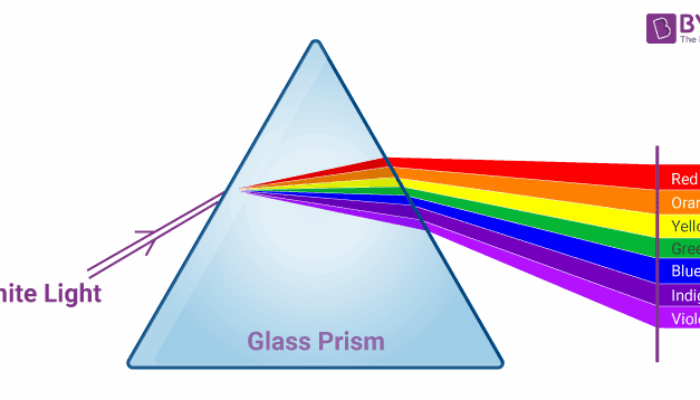
Visible light is a portion of the electromagnetic spectrum detectable by the human eye, with wavelengths ranging roughly from 400 to 700 nanometers. This spectrum encompasses all colors from violet to red and is distinct from other electromagnetic waves such as ultraviolet or infrared radiation. The wavelength of visible light is a critical factor that limits the resolution of optical instruments.
- Visible Light Wavelength:
Approximately 400-700 nm, determining the smallest detail that can be resolved by optical methods. - Atomic Size:
Atoms typically measure between 0.1 and 0.5 nanometers in diameter, significantly smaller than visible light wavelengths.
Optical Resolution and Rayleigh’s Criterion
The ability to distinguish two separate points in an image depends on the wavelength of the light used, as described by Rayleigh’s criterion. This principle states that if the wavelength exceeds the size of the object, resolving that object becomes impossible. Since atoms are much smaller than the wavelength of visible light, they cannot be directly imaged using conventional optical microscopes.
Advanced Microscopy Techniques for Atomic Imaging
To circumvent the limitations of visible light, scientists have developed alternative imaging methods capable of probing atomic structures indirectly. Electron microscopy is a prime example, utilizing electrons with much shorter wavelengths than photons to achieve atomic-scale resolution.
Electron Microscopy
Electron microscopes, such as Transmission Electron Microscopy (TEM) and Scanning Electron Microscopy (SEM), exploit the wave-like properties of electrons. The de Broglie wavelength of electrons is significantly smaller than that of visible light, enabling these instruments to resolve features at the nanoscale and even at the level of individual atoms.
- Transmission Electron Microscopy (TEM):
Achieves resolutions below 1 angstrom (0.1 nanometers), allowing visualization of atomic arrangements and crystal defects. - Scanning Electron Microscopy (SEM):
Provides detailed surface images by scanning a focused electron beam across the sample.
Scanning Probe Microscopy
Other innovative techniques include Scanning Tunneling Microscopy (STM) and Atomic Force Microscopy (AFM), which enable imaging and manipulation of atoms on surfaces.
- Scanning Tunneling Microscopy (STM):
Uses quantum tunneling of electrons between a conductive tip and the sample to map surface electron density at atomic resolution. - Atomic Force Microscopy (AFM):
Measures forces between a sharp tip and the sample surface to generate high-resolution topographical maps, useful for studying molecular and atomic-scale features.
Spectroscopic Techniques in Atomic Analysis
While spectroscopy does not provide direct images of atoms, it offers valuable insights into atomic and molecular properties by analyzing interactions with electromagnetic radiation.
- X-ray Photoelectron Spectroscopy (XPS):
Investigates electronic states and chemical composition by measuring the kinetic energy of electrons emitted from a material’s surface. - Nuclear Magnetic Resonance (NMR) Spectroscopy:
Explores atomic-scale magnetic environments, revealing information about molecular structure and dynamics.
Why Visible Light Cannot Directly Image Atoms
The fundamental reason visible light cannot directly visualize atoms lies in the mismatch between atomic dimensions and the wavelength of visible photons. Since atoms are smaller than the wavelength of visible light, the light waves cannot resolve their structure, resulting in a blurred or indistinguishable image. This limitation underscores the necessity for alternative imaging modalities that operate at shorter wavelengths or utilize different physical principles.
Significance of Atomic-Scale Imaging
Understanding atomic structures is crucial for numerous scientific and technological fields. High-resolution imaging techniques have propelled advancements in nanotechnology, materials science, chemistry, and physics by revealing atomic arrangements, defects, and interactions that govern material properties and chemical behavior. These insights enable the design of novel materials, improve electronic devices, and deepen our comprehension of fundamental physical phenomena.
Common Misconceptions About Atomic Visualization
Atoms can be seen directly with a light microscope.
Due to their size being smaller than the wavelength of visible light, atoms cannot be resolved by traditional optical microscopes.
Electron microscopes produce direct photographs of atoms.
Electron microscopy images are indirect representations based on electron interactions, requiring interpretation to understand atomic structures.
Conclusion: The Ongoing Quest to Visualize the Atomic World
Although direct observation of atoms using visible light remains impossible, the development of sophisticated microscopy and spectroscopic techniques has dramatically expanded our ability to study and manipulate matter at the atomic scale. These tools continue to drive scientific discovery and innovation, highlighting the intricate and fascinating nature of the atomic realm that forms the foundation of all material existence.
FAQ
Why can't visible light microscopes see atoms?
Because atoms are smaller than the wavelength of visible light, which prevents visible light microscopes from resolving them.
What is Rayleigh's criterion?
Rayleigh’s criterion is a principle that defines the minimum resolvable detail based on the wavelength of light used; if the object is smaller than this limit, it cannot be resolved.
What alternative methods are used to image atoms?
Electron microscopy (TEM, SEM) and scanning probe microscopy (STM, AFM) are used to image atoms by using shorter wavelengths or physical probes.





Leave a Reply