

Short Answer
Definition of Cosmic Dust
Cosmic dust consists of tiny particles dispersed throughout space, primarily made up of silicates, carbon-based compounds, and various ices. These microscopic grains originate from diverse cosmic phenomena such as the remnants of dying stars, supernova explosions, and material accumulation within protoplanetary disks. Far from being insignificant debris, cosmic dust forms a vital component of the interstellar medium, serving as the foundational elements for larger cosmic structures.
- Composition:
Silicates, carbonaceous materials, and ices. - Origin:
Produced by stellar death, supernovae, and accretion in young star systems. - Role:
Building blocks for stars, planets, and ultimately, life.
Cosmic Dust Aggregation (CODAG): Formation and Evolution
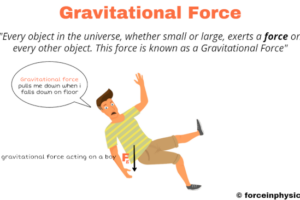
The process known as Cosmic Dust Aggregation (CODAG) describes how these tiny particles cluster together over vast periods, gradually forming larger structures. Gravity acts as the primary force driving the coalescence of dust grains into dense clumps. Within molecular clouds, these aggregations can trigger gravitational collapse, leading to the birth of new stars. This stellar formation is crucial because stars synthesize heavier elements through nuclear fusion, elements essential for planet formation and the emergence of life.
Stages of Dust Aggregation
- Initial Clumping:
Dust grains collide and stick together, forming small aggregates. - Growth into Planetesimals:
Aggregates grow into larger bodies within protoplanetary disks. - Star Formation:
Dense dust clouds collapse under gravity, igniting nuclear fusion in protostars.
Human Fascination with Cosmic Dust
Our deep interest in cosmic dust stems from the profound connection between these particles and our own origins. Since the atoms in our bodies were forged in the cores of ancient stars, cosmic dust symbolizes a tangible link between humanity and the universe. This connection transcends time and space, making dust not just a physical substance but a metaphorical bridge between the microcosm of human existence and the vast macrocosm of the cosmos.
Cosmic Dust in Galactic Evolution
Studying dust within different galactic environments provides valuable insights into the life cycles of galaxies. Variations in dust distribution influence star and planet formation rates, galactic cooling processes, and even the behavior of dark matter. Observations from telescopes, both terrestrial and space-based, reveal that dust patterns differ widely among galaxies, reflecting diverse evolutionary paths. These differences help explain why some galaxies thrive with active star formation while others remain dormant.
Role of Cosmic Dust in Planetary System Formation
In the context of exoplanetary science, cosmic dust is indispensable for the creation of planetary systems. Dust grains within protoplanetary disks collide and merge to form planetesimals, the precursors to planets. Additionally, dust influences the thermal environment and chemical composition of these disks, setting the stage for the synthesis of organic molecules-key ingredients for life.
Cosmic Dust and the Origins of Life
Astrobiology highlights the significance of cosmic dust as a carrier of organic compounds such as amino acids and hydrocarbons. These molecules can form on dust grain surfaces and, upon delivery to planetary bodies via impacts, may contribute to abiogenesis-the emergence of life from non-living matter. This connection between dust and life’s beginnings intensifies human curiosity, linking cosmic processes directly to our own existence.
Challenges in Studying Cosmic Dust
Despite its importance, cosmic dust is notoriously difficult to observe due to its minuscule size and widespread distribution. To overcome these challenges, scientists employ advanced methods like infrared spectroscopy and light scattering techniques. These tools enable detailed analysis of dust composition and structure, enhancing our understanding of cosmic formation and evolution while revising earlier scientific assumptions.
Why Cosmic Dust Matters
Cosmic dust is fundamental to the universe’s ongoing cycle of creation and transformation. It plays a central role in star and planet formation, galactic evolution, and potentially the origin of life itself. By studying these tiny particles, we gain insight into the interconnectedness of all cosmic phenomena and our place within this grand narrative. Each grain of dust carries a story of cosmic forces at work, reminding us of the profound relationship between humanity and the universe.
FAQ
What is cosmic dust?
Cosmic dust is a mixture of microscopic particles, including silicates, carbonaceous materials, and ices, originating from cosmic processes such as stellar death and supernova explosions.
What does CODAG stand for?
CODAG stands for Cosmic Dust Aggregation, referring to the process and study of cosmic dust particles clustering and forming larger cosmic structures.
Why is cosmic dust important in astrophysics?
Cosmic dust acts as the fundamental building blocks for stars and planets and contributes to the chemical complexity necessary for life.
How is cosmic dust linked to the origins of life?
Cosmic dust grains can synthesize organic molecules that may be delivered to planets, providing ingredients essential for the emergence of life.
What challenges do scientists face studying cosmic dust?
Due to their tiny size and widespread distribution, cosmic dust particles are difficult to observe, necessitating advanced observational techniques such as infrared spectroscopy.


Leave a Reply