
Short Answer
Definition of the James Webb Space Telescope
The James Webb Space Telescope (JWST) is a cutting-edge astronomical observatory designed to explore the universe with unprecedented depth and clarity. It represents a monumental advancement in space telescope technology, aiming to observe the earliest galaxies, study star formation, and analyze exoplanet atmospheres. Unlike its predecessor, the Hubble Space Telescope, JWST operates primarily in the infrared spectrum, enabling it to peer through cosmic dust and capture faint signals from the distant past.
Technological Innovations Behind JWST
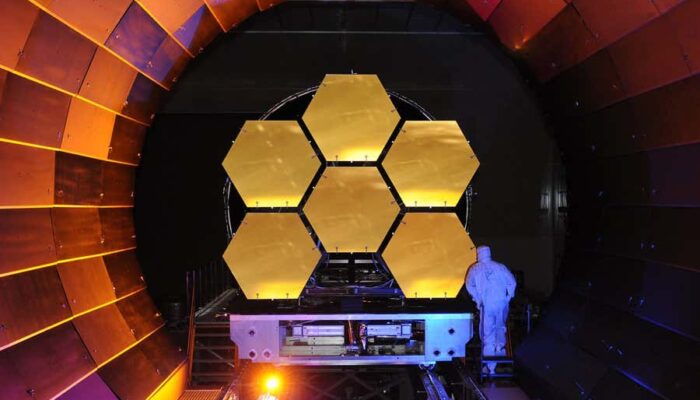
The JWST is not merely an upgraded version of previous telescopes but a revolutionary leap in observational capability. Central to its design is a massive primary mirror measuring 6.5 meters in diameter-nearly three times larger than Hubble’s 2.4-meter mirror. This mirror consists of 18 hexagonal segments made from ultra-lightweight beryllium, each polished to an extraordinary degree of smoothness to ensure optimal light reflection. The assembly and alignment of these segments require state-of-the-art manufacturing and engineering precision.
Additionally, the telescope is equipped with a vast sunshield roughly the size of a tennis court. This multi-layered shield protects the instruments from heat and light emitted by the Sun, Earth, and Moon, maintaining the telescope’s instruments at cryogenic temperatures essential for infrared observations. The deployment of this sunshield in space is a complex, delicate process that was rigorously rehearsed on Earth to guarantee flawless operation.
Operational Environment and Challenges
Positioned nearly one million miles from Earth at the Sun-Earth L2 Lagrange point, JWST operates in an environment characterized by extreme cold, intense radiation, and complete darkness. This location offers a stable gravitational balance, allowing the telescope to maintain a consistent position relative to Earth and the Sun. However, the remoteness of this orbit means that any technical issues cannot be repaired by astronauts, unlike the servicing missions conducted for Hubble. Consequently, JWST underwent exhaustive testing-including acoustic, vibration, and thermal simulations-to ensure it can withstand the rigors of launch and function reliably in deep space.
Scientific Instruments and Capabilities
The JWST hosts a suite of sophisticated instruments designed to capture and analyze infrared light with exceptional sensitivity. These include near-infrared cameras, spectrometers, and coronagraphs, which enable detailed examination of celestial phenomena. For example, the spectrometers can detect chemical signatures in the atmospheres of exoplanets, potentially identifying markers of habitability or life. The integration of these instruments involved international collaboration, adding layers of complexity and cost to the project.
Financial Considerations and Justifications
The JWST’s budget, which extends into the tens of billions of dollars, often raises questions about its cost-effectiveness. This substantial investment reflects the telescope’s ambitious goals, technological complexity, and the extensive testing required to mitigate mission risks. Every component was meticulously selected for durability and weight efficiency to survive launch stresses and operate flawlessly in space. The high cost also encompasses years of development, international partnerships, and the creation of novel technologies that push the boundaries of current engineering.
Scientific Impact and Importance
The JWST is poised to transform our understanding of the cosmos by providing insights into the formation of stars and galaxies, the evolution of planetary systems, and the potential for life beyond Earth. Its ability to detect molecular compositions in distant atmospheres could revolutionize planetary science and astrobiology. Beyond pure science, the technological advancements driven by JWST’s development have broader applications, influencing fields such as materials science and telecommunications.
Common Misconceptions About JWST
The JWST is just a more expensive version of the Hubble Space Telescope.
JWST operates primarily in the infrared spectrum with a much larger mirror and advanced instruments, enabling it to observe phenomena inaccessible to Hubble.
The funds for JWST could be better spent on Earth-based problems.
While terrestrial issues are critical, investments in space exploration drive technological innovation and expand fundamental knowledge, often yielding unforeseen benefits across multiple sectors.
The telescope can be repaired if something goes wrong.
JWST’s distant orbit makes servicing missions impossible, necessitating rigorous pre-launch testing and reliability.
Why the JWST Investment Matters
The James Webb Space Telescope embodies humanity’s relentless curiosity and determination to explore the unknown. Its development is a testament to international cooperation and scientific ambition. The knowledge gained from JWST will deepen our understanding of the universe’s origins and our place within it, inspiring future generations and fostering technological progress. Although its cost is significant, the potential scientific breakthroughs and technological advancements justify this bold investment, marking a pivotal moment in the history of space exploration.
Conclusion: The Legacy of JWST
The JWST’s substantial price tag mirrors the scale of its scientific aspirations and engineering challenges. It represents a daring gamble on human ingenuity and the pursuit of knowledge, promising to unveil cosmic secrets that have eluded humanity for millennia. As it unfolds its golden mirror and peers into the depths of time and space, the telescope invites us all to partake in a journey of discovery that transcends borders and generations. This extraordinary endeavor, while costly, stands as a beacon of hope and progress in our quest to understand the universe.
FAQ
Why is the James Webb Space Telescope so expensive?
The JWST's high cost is due to its complex technology, extensive testing, and the ambitious scientific goals it aims to achieve.
How does JWST differ from Hubble?
Unlike Hubble, JWST primarily operates in the infrared spectrum, allowing it to observe phenomena that are not accessible to Hubble.
Can JWST be repaired?
No, JWST's remote orbit makes servicing impossible, necessitating rigorous pre-launch testing for reliability.



Leave a Reply