

Short Answer
Understanding Pulsar and Atomic Clocks
Timekeeping has evolved through various innovative methods, with pulsar clocks and atomic clocks standing out as two prominent approaches. Both aim to achieve exceptional precision, yet they operate on fundamentally different principles and exhibit distinct levels of accuracy. This article explores the nature of these clocks, their mechanisms, and the reasons why atomic clocks surpass pulsar clocks in precision.
Definition and Characteristics of Pulsar Clocks
Pulsar clocks utilize the natural timing signals emitted by pulsars-highly magnetized, rapidly spinning neutron stars. These stars emit beams of electromagnetic radiation that sweep across space like cosmic lighthouses, producing pulses at remarkably consistent intervals.
- Pulsars:
Neutron stars with intense magnetic fields that rotate at high speeds, emitting periodic radiation pulses. - Timing Stability:
Some pulsars maintain pulse regularity with microsecond-level stability over long durations. - Environmental Influences:
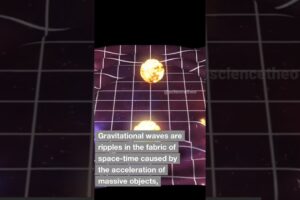
Their timing can be affected by gravitational waves, rotational changes, and interactions with surrounding matter.
Definition and Characteristics of Atomic Clocks
Atomic clocks derive their precision from the consistent oscillations of atoms, most commonly cesium or rubidium. These clocks measure the frequency of electromagnetic radiation emitted or absorbed during atomic energy state transitions, which occur at highly stable and reproducible rates.
- Atomic Transitions:
Cesium-133 atoms transition between energy states at a fixed frequency, serving as a reliable timekeeping standard. - Accuracy:
Atomic clocks can maintain time with an error margin of less than one second over millions of years. - Controlled Environment:
Atoms are isolated in laboratory settings to minimize external disturbances, enhancing stability.
How Pulsar and Atomic Clocks Function
Pulsar clocks operate by detecting the periodic pulses emitted by neutron stars. These pulses serve as natural cosmic time markers, but their intervals can vary due to astrophysical phenomena. In contrast, atomic clocks rely on the intrinsic properties of atoms, measuring the frequency of radiation associated with electron transitions between energy levels. This atomic frequency is governed by fundamental physical constants, making it exceptionally stable and less prone to external interference.
Factors Affecting Accuracy
The precision of pulsar clocks is limited by several factors:
- Variability in Pulsar Emissions:
Pulsar signals can fluctuate due to gravitational waves, rotational irregularities, and interactions with interstellar matter. - Complex Modeling:
Accurate pulsar timing requires sophisticated models to correct for relativistic effects and environmental influences, introducing potential errors.
Atomic clocks, however, benefit from controlled laboratory conditions and rigorous calibration, which significantly reduce sources of error and enhance their reliability.
Mathematical Basis of Atomic Clock Precision
The operation of atomic clocks is grounded in the precise measurement of the frequency of electromagnetic radiation emitted during atomic transitions. The fundamental formula is:
f = ΔE / h
- f: Frequency of the radiation emitted or absorbed
- ΔE: Energy difference between two atomic states
- h: Planck’s constant
This frequency serves as the standard for defining the second in the International System of Units (SI), ensuring uniformity and precision in time measurement worldwide.
Real-World Applications
Atomic clocks are integral to numerous technologies and scientific endeavors:
- Global Positioning System (GPS):
Precise timing from atomic clocks enables accurate location tracking by synchronizing satellite signals. - Telecommunications:
Synchronization of data transmission relies on atomic clock accuracy. - Scientific Research:
Atomic clocks facilitate experiments requiring exact time measurement, such as tests of fundamental physics.
Meanwhile, pulsar timing contributes to astrophysics by providing insights into gravitational waves, dark matter, and the structure of space-time through the observation of pulse irregularities.
Common Misconceptions About Pulsar and Atomic Clocks
Pulsar clocks are more accurate than atomic clocks.
While pulsars exhibit remarkable regularity, atomic clocks surpass them in precision due to controlled conditions and fundamental atomic properties.
Pulsar timing is unaffected by external factors.
Pulsar signals are influenced by gravitational waves, rotational changes, and interstellar matter, which introduce timing variations.
Significance of Precision Timekeeping
Accurate time measurement is crucial across scientific disciplines and everyday technologies. Atomic clocks provide the foundation for global navigation, telecommunications, and fundamental physics research. Pulsar clocks, though less precise, offer a unique window into cosmic phenomena and the behavior of the universe at large. Together, these timekeeping methods enrich our understanding of both the microscopic and cosmic scales, highlighting humanity’s quest to measure and comprehend time with ever-increasing accuracy.
FAQ
Why are atomic clocks considered the most accurate timekeepers?
Because they measure the frequency of atomic transitions that are governed by fundamental physical constants in highly controlled environments, minimizing errors.
Can pulsar clocks be used for practical timekeeping?
Pulsar clocks are mainly used in astrophysics research rather than practical timekeeping due to their susceptibility to external cosmic factors.
What makes pulsar pulses less stable than atomic transitions?
Astrophysical influences like gravitational waves, star rotation irregularities, and interstellar matter interactions cause variability in pulsar pulse timing.





Leave a Reply