
Short Answer
Understanding Astronomical Distance Measurement
Determining the vast distances between celestial objects is a complex and fascinating challenge within astrophysics. The immense scale of the universe raises profound questions about how observers on Earth can accurately gauge the spatial separations of stars, galaxies, and other cosmic entities. To address this, scientists have developed a variety of instruments and techniques, each with unique principles, strengths, and limitations. This article explores the principal methods used to measure astronomical distances, highlighting their theoretical foundations and practical implementations.
Definition of Astronomical Distance Measurement
Astronomical distance measurement refers to the set of techniques and tools used to estimate the space between Earth and celestial bodies. These measurements are crucial for mapping the universe, understanding cosmic structures, and studying the dynamics of celestial phenomena.
- Parallax:
The apparent shift in position of a nearby star against distant background stars when observed from different points in Earth’s orbit. - Standard Candles:
Objects with known intrinsic brightness used to infer distances based on their observed luminosity. - Redshift:
The increase in wavelength of light from galaxies moving away, used to estimate their distance and velocity. - Gravitational Wave Detection:
Advanced methods involving wave interference to indirectly measure cosmic distances.
The Parallax Method: Foundation of Distance Measurement
The parallax technique is a fundamental approach for gauging distances to nearby stars. It exploits the apparent displacement of a star’s position when viewed from two opposite points in Earth’s orbit around the Sun, typically six months apart. This displacement forms a small angle known as the parallax angle. By applying trigonometric principles to this angle and the known baseline of Earth’s orbital diameter, astronomers can calculate the star’s distance, commonly expressed in parsecs.
Measuring such tiny angles requires highly precise telescopes and sophisticated software capable of correcting for atmospheric interference and other observational distortions. This method remains the cornerstone for establishing the first rung of the cosmic distance ladder.
The Cosmic Distance Ladder: A Hierarchical Approach
As astronomers probe deeper into space, the parallax method becomes less effective due to the diminishing angular shifts of distant objects. To overcome this, the cosmic distance ladder employs a sequence of interrelated techniques, each applicable to different distance scales. This layered strategy begins with parallax for nearby stars, progresses to standard candles like Cepheid variables for intermediate distances, and extends to redshift measurements for the most remote galaxies.
Each step integrates empirical data with theoretical models, creating a cohesive framework for understanding the universe’s scale.
Standard Candles and Their Role
Standard candles are celestial objects whose intrinsic brightness is well-established, enabling distance estimation through their apparent brightness. Cepheid variable stars are a prime example, exhibiting a direct correlation between their pulsation period and true luminosity. This relationship, discovered by Henrietta Leavitt in the early 1900s, revolutionized distance measurement by allowing astronomers to determine distances within the Milky Way and to nearby galaxies with greater accuracy.
Redshift and the Expanding Universe
For galaxies situated at vast distances, redshift measurements become essential. Redshift occurs when the wavelength of light from an object stretches due to its motion away from the observer, a phenomenon explained by the Doppler effect. Hubble’s Law formalizes the proportionality between a galaxy’s redshift and its distance, providing a method to estimate how far away these galaxies are based on their recessional velocity.
Using spectroscopic instruments, astronomers analyze the light spectra of distant galaxies to determine their redshift, thereby gaining insights into the universe’s expansion and large-scale structure.
Advanced Technologies: Gravitational Wave Interferometry
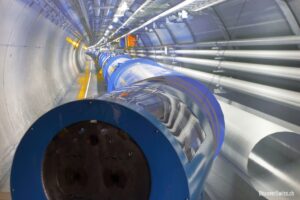
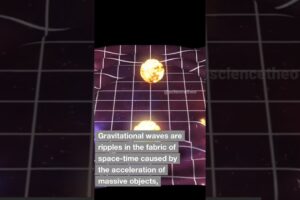
Recent advancements have introduced cutting-edge tools like laser interferometers, which detect gravitational waves-ripples in spacetime caused by massive cosmic events. The Laser Interferometer Space Antenna (LISA) exemplifies this technology, measuring infinitesimal changes in mirror spacing caused by passing gravitational waves. These measurements indirectly inform astronomers about distances to the sources of these waves, often billions of light-years away.
This innovative approach leverages wave interference principles to push the boundaries of distance measurement beyond traditional electromagnetic observations.
Challenges and Limitations in Measuring Cosmic Distances
Despite the sophistication of current methods, accurately determining astronomical distances remains fraught with difficulties. Interstellar dust can obscure and alter the light from distant stars, leading to errors in brightness-based measurements. Additionally, the dynamic nature of the expanding universe introduces complexities that require ongoing refinement of models and techniques.
Addressing these challenges demands a multidisciplinary approach, combining cosmology, advanced mathematics, and technological innovation to enhance precision and reliability.
Significance of Measuring Astronomical Distances
Accurate distance measurements are fundamental to astrophysics and cosmology. They enable the construction of three-dimensional maps of the universe, facilitate the study of stellar and galactic evolution, and underpin our understanding of cosmic expansion and the Big Bang. Moreover, these measurements inform the calibration of other astronomical observations, making them indispensable for both theoretical research and practical applications in space exploration.
Summary
The endeavor to measure distances across the cosmos employs a diverse array of techniques, from the geometric simplicity of parallax to the sophisticated detection of gravitational waves. Each method contributes uniquely to our comprehension of the universe’s vastness and structure. As technology advances and methodologies evolve, our cosmic perspective continues to expand, revealing the intricate tapestry of space and time that defines our existence.
FAQ
What is the primary instrument used for measuring nearby astronomical distances?
The primary instrument used for measuring nearby astronomical distances is a telescope capable of detecting stellar parallax, which involves measuring the apparent shift in a star’s position as Earth orbits the Sun.
How do standard candles help in measuring astronomical distances?
Standard candles, such as Cepheid variable stars, have known intrinsic brightness, allowing astronomers to calculate their distance by comparing their observed brightness to their true luminosity.
What role does redshift play in distance measurement?
Redshift measures the increase in wavelength of light from distant galaxies moving away due to the universe’s expansion, enabling estimation of their distance and velocity using Hubble’s Law.
How do gravitational waves contribute to measuring cosmic distances?
Gravitational wave interferometry detects ripples in spacetime caused by massive cosmic events, providing indirect measurements of distances to these sources, often billions of light-years away.
What are some challenges in measuring astronomical distances?
Challenges include interstellar dust obscuring light, measurement precision limits, and the dynamic nature of the expanding universe, which requires continuous refinement of models and methods.

Leave a Reply