
Short Answer
Understanding Classical Truth Tables
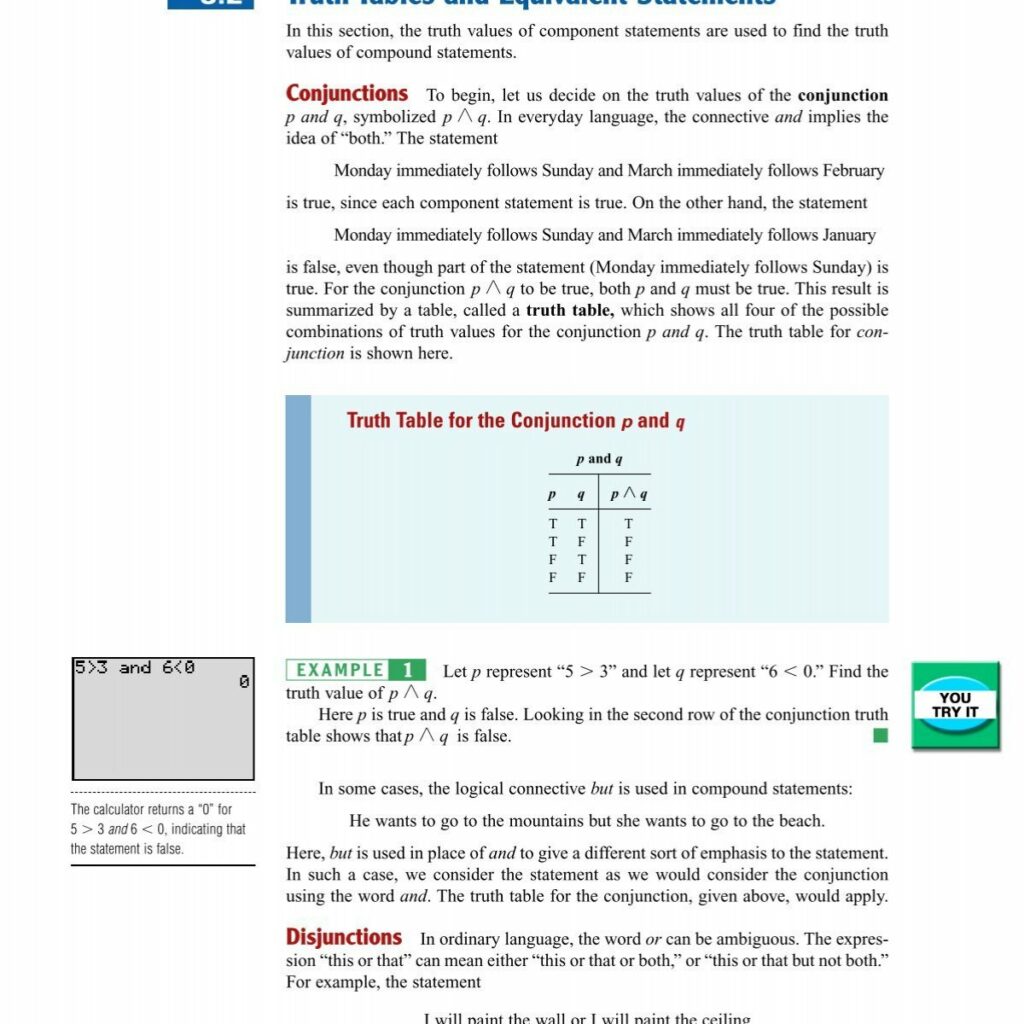
Classical truth tables form the backbone of traditional logic by assigning definitive truth values-true (1) or false (0)-to logical propositions. These tables systematically list every possible combination of input values to determine the corresponding output, providing a clear and deterministic framework for evaluating logical statements. Rooted in Aristotelian principles, classical logic operates on binary outcomes, reflecting a linear and predictable system where the order of operations does not affect the result.
Quantum Mechanics and the Challenge to Classical Logic
Quantum mechanics introduces phenomena that defy the straightforward binary logic of classical systems. Central to this is the principle of superposition, where quantum particles such as electrons exist simultaneously in multiple states until an observation collapses this ambiguity into a definite outcome. This inherent uncertainty challenges the applicability of classical truth tables, which cannot accommodate the probabilistic and non-deterministic nature of quantum states.
Quantum Logic: A New Framework
Quantum logic emerges as an alternative to classical reasoning, designed to handle the unique properties of quantum systems. Unlike classical logic, quantum logic incorporates non-commutative propositions, meaning the sequence in which measurements or operations occur can influence the results. This departure from commutativity highlights the inadequacy of traditional truth tables in representing quantum phenomena, necessitating more complex logical structures.
Quantum State Vectors as Analogues to Truth Tables
In the quantum realm, the concept closest to a classical truth table is the quantum state vector, denoted as |ψ⟩. This vector encapsulates the complete information about a quantum system, representing a superposition of all possible states with associated probability amplitudes. The Born rule governs the measurement process, stating that the probability of observing a particular outcome equals the square of the amplitude’s magnitude. Thus, instead of binary true/false values, quantum truth is expressed as a spectrum of probabilities embedded within the state vector.
Non-Commutativity and Its Implications
One of the defining features of quantum logic is the non-commutative nature of certain operations. In classical logic, the order of evaluating propositions does not change the outcome (commutativity). However, in quantum mechanics, measuring one property before another can yield different results, reflecting the complex interplay of quantum observables. This characteristic further complicates the construction of a straightforward truth table equivalent.
Illustrative Thought Experiments
- Schrödinger’s Cat:
This famous paradox illustrates a cat simultaneously existing in alive and dead states until observed, defying classical binary logic. The scenario exemplifies the limitations of deterministic truth tables and suggests the need for multidimensional or probabilistic representations of quantum states. - Quantum Entanglement:
Entangled particles exhibit correlations that transcend classical intuition, where the measurement of one instantly affects the state of another, regardless of distance. This phenomenon challenges the isolated proposition model of classical truth tables and points toward interconnected logical frameworks, such as lattice structures, to capture these relationships.
Quantum Gates and Circuit Representations
Quantum gates perform unitary transformations on quantum states, enabling the construction of quantum circuits that process information in ways unattainable by classical systems. These gates serve as functional analogues to classical logic gates, but their operations reflect the probabilistic and entangled nature of quantum information. Quantum gate diagrams illustrate the flow and transformation of quantum states, offering a conceptual counterpart to truth tables by mapping input states to output probabilities through complex networks.
Why Quantum Truth Tables Matter
The exploration of quantum equivalents to classical truth tables is crucial for advancing our understanding of quantum computation, information theory, and the fundamental nature of reality. As classical logic fails to capture the nuances of quantum phenomena, developing new logical frameworks enables scientists and engineers to harness quantum mechanics for practical applications, such as quantum computing and secure communication. Moreover, these insights deepen our philosophical grasp of truth, measurement, and the structure of the universe.
Summary
While classical truth tables provide a clear-cut method for evaluating logical propositions, their binary and deterministic nature falls short in the quantum domain. Quantum mechanics demands a more sophisticated approach, incorporating state vectors, probabilistic outcomes, non-commutative operations, and entanglement. These elements collectively form a rich tapestry of quantum logic that transcends traditional frameworks, inviting ongoing research and discovery into the profound complexities of quantum truth.
FAQ
What is a classical truth table?
A classical truth table is a systematic representation of all possible combinations of input values that determine the corresponding outputs for logical propositions.
How does quantum logic differ from classical logic?
Quantum logic incorporates non-commutative propositions and probabilistic outcomes, reflecting the complexities of quantum mechanics, unlike the deterministic nature of classical logic.
What is a quantum state vector?
A quantum state vector, denoted as |ψ⟩, encapsulates all possible states of a quantum system along with their probabilities, serving as an analogue to classical truth tables.






Leave a Reply