
Short Answer
Understanding a Two-Dimensional Planet
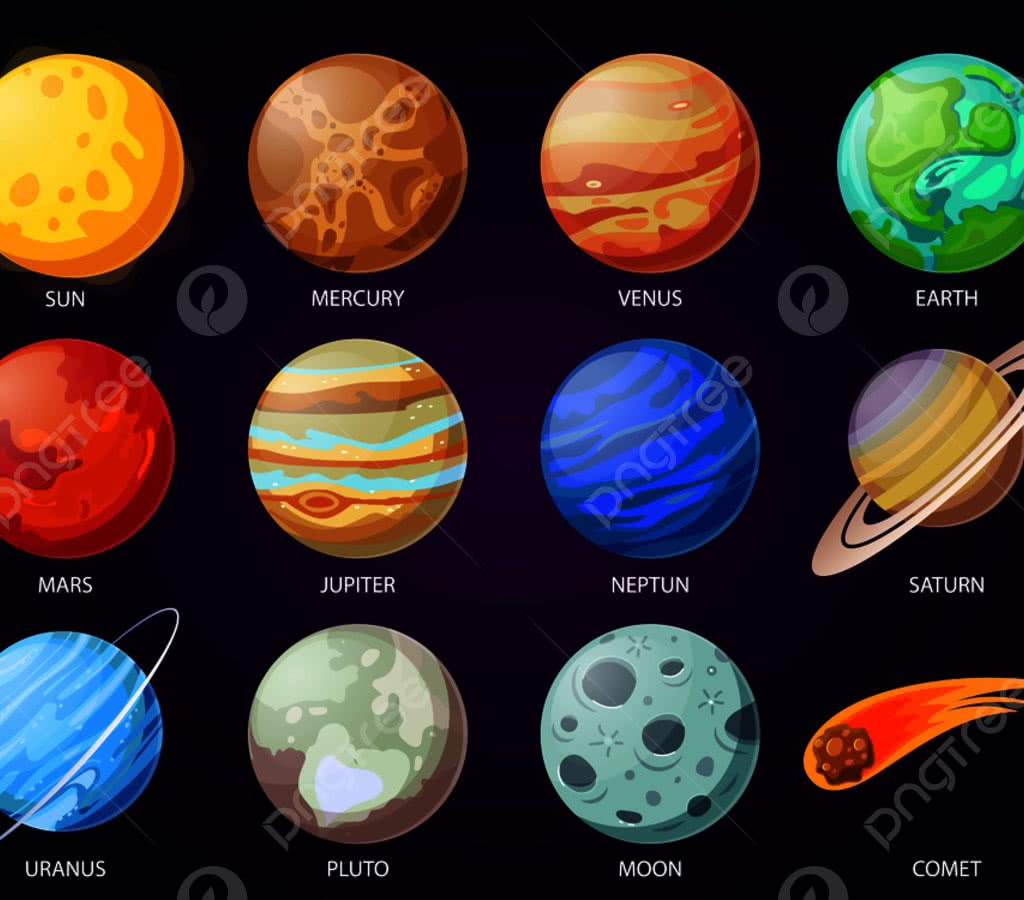
Imagining a planet confined to two dimensions challenges our fundamental grasp of space, matter, and life. Unlike the familiar three-dimensional planets characterized by mass, volume, and gravity, a two-dimensional world exists solely with length and width, lacking any true height. This conceptual shift invites profound implications across physics, biology, and philosophy, prompting us to reconsider the nature of reality itself.
Conceptualizing the Structure and Gravity of a 2D Planet
Visualizing a two-dimensional planetary body requires us to abandon the spherical form and instead picture a flat disk or a simple circular shape. Gravity, as we understand it in three dimensions, pulls objects toward a central mass. In a two-dimensional setting, gravitational attraction would operate radially, drawing all matter toward the disk’s center. This unique gravitational behavior would eliminate the conventional notions of “up” and “down,” as every point on the surface experiences a pull toward the center, creating a paradoxical environment for inhabitants.
Matter and Physical States in Two Dimensions
The composition of matter on a two-dimensional planet would differ drastically from our three-dimensional experience. Instead of solids, liquids, and gases as we know them, matter would exist as particles arranged strictly within a plane. Interactions would be limited to surface contacts rather than volumetric displacements, altering the nature of chemical bonds and molecular structures. Without depth, molecular interactions would be confined to interfaces, restricting the complexity of chemical reactions and the formation of diverse compounds.
Biological Life in a Flat World
Life forms on a two-dimensional planet would face significant evolutionary constraints. Organisms might appear as flat, self-replicating entities lacking the anatomical complexity necessary for three-dimensional mobility. Movement would require novel adaptations to navigate the plane, as vertical locomotion is impossible. Communication methods would also be limited to surface interactions, with light and sound propagating only within the two-dimensional plane.
Reproduction and Evolutionary Limitations
Reproductive processes would be adapted to the planar environment, likely occurring through direct contact or fission of flat organisms. The absence of a third dimension would restrict evolutionary pathways, potentially resulting in ecosystems with limited biodiversity and simplified species interactions.
Physics and Fundamental Forces in Two Dimensions
The laws of physics governing a two-dimensional planet would diverge from those in our three-dimensional universe. Fundamental forces such as electromagnetism and nuclear interactions would manifest differently. For example, electromagnetic fields would produce unique interaction patterns constrained to the plane. Additionally, the concept of an atmosphere would be radically altered, as the weak gravitational pull would prevent the retention of gaseous layers, leading to a near absence of atmospheric phenomena.
Geological Characteristics of a Two-Dimensional World
Traditional geological features like mountains and valleys rely on vertical displacement and tectonic activity, which would be impossible in two dimensions. Instead, geological formations might present as complex, contiguous patterns across the plane, shaped by lateral shifts rather than elevation changes. These formations could create visually intricate but structurally simple landscapes.
Philosophical and Existential Reflections
Contemplating a two-dimensional planet provokes deep questions about perception and existence. Beings confined to a flat world would have a fundamentally different understanding of their environment, potentially lacking any concept of depth or “height.” This raises intriguing considerations about how such entities might develop knowledge, beliefs, and philosophies. Would they yearn for an unseen third dimension, or would they find fulfillment within their planar reality?
Significance of Exploring Two-Dimensional Worlds
Studying the idea of a two-dimensional planet extends beyond theoretical curiosity; it provides a framework to examine the essence of dimensionality and its impact on physical laws and life. This exploration enriches our appreciation of the complexity inherent in our three-dimensional universe and stimulates ongoing inquiry into the fundamental principles that govern existence. By engaging with such thought experiments, we deepen our understanding of both the limitations and possibilities of life across all conceivable dimensions.
FAQ
What is a two-dimensional planet?
A two-dimensional planet is a hypothetical flat world existing only in length and width, without any height or depth, challenging conventional three-dimensional concepts of space and physics.
How would gravity work on a two-dimensional planet?
Gravity on a two-dimensional planet would pull matter radially toward the center of the flat disk, eliminating traditional up and down directions and creating a unique gravitational environment.
Could life exist on a two-dimensional planet?
Life on a two-dimensional planet would likely be flat organisms with limited complexity and evolutionary potential, adapting to movement and communication constrained to a plane.
Why is studying two-dimensional planets important?
Studying two-dimensional planets helps explore the nature of dimensionality, fundamental physical laws, and the limits of life and existence beyond our familiar three-dimensional universe.
Leave a Reply