
Short Answer
Definition of Quantum Chemistry Software
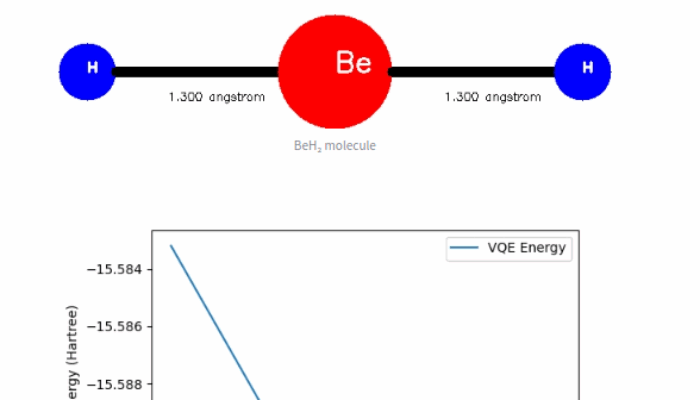
Quantum chemistry software refers to specialized computational tools designed to simulate and analyze molecular systems using the principles of quantum mechanics. These programs enable scientists to predict chemical properties, reaction mechanisms, and electronic structures with high precision, facilitating both theoretical research and practical applications in chemistry and related fields.
- Purpose:
To model molecular behavior at the quantum level, providing insights that are difficult or impossible to obtain experimentally. - Scope:
Includes calculations of energy states, molecular orbitals, electron correlation, and dynamic processes within molecules. - Users:
Chemists, physicists, material scientists, and researchers in drug discovery and nanotechnology.
Importance and Applications
Quantum chemistry software plays a crucial role in advancing scientific knowledge and technological innovation. By accurately simulating molecular interactions, these tools help in designing new materials, understanding biochemical pathways, and optimizing catalysts. Their impact spans multiple disciplines, including medicinal chemistry, materials science, and environmental chemistry, where precise molecular insights drive progress.
Core Functionalities and Computational Methods
These software packages employ a variety of quantum mechanical methods to analyze molecular systems:
- Hartree-Fock (HF):
A foundational approach that approximates the electronic structure of molecules by considering electron interactions in an averaged way. - Density Functional Theory (DFT):
A widely used method that balances accuracy and computational efficiency by focusing on electron density rather than wave functions. - Post-Hartree-Fock Methods:
Techniques such as Møller-Plesset perturbation theory (MP2) and coupled-cluster methods that improve accuracy by accounting for electron correlation effects. - Wave Function Analysis:
Generating detailed descriptions of electron distributions to study complex phenomena like excited states and reaction pathways.
Leading Quantum Chemistry Software Packages
Gaussian
Gaussian is a long-established and highly respected quantum chemistry software known for its broad applicability. It supports a wide range of molecular systems, from simple diatomic molecules to large biomolecules, using methods like Hartree-Fock and DFT. Gaussian excels in calculating molecular energies, electronic excitations, and reaction mechanisms, making it invaluable in fields such as material science and pharmaceutical research.
Its extensive user base contributes to a rich repository of tutorials and support resources, easing the learning process for newcomers. However, Gaussian’s commercial licensing fees can be a barrier for some users, prompting interest in alternative open-source solutions.
GAMESS (General Atomic and Molecular Electronic Structure System)
GAMESS offers a powerful open-source alternative that democratizes access to advanced quantum chemistry calculations. It supports a variety of computational methods, including MP2 and coupled-cluster techniques, and is optimized for parallel processing on multi-core systems. This makes GAMESS suitable for handling large-scale computations efficiently.
A notable strength of GAMESS is its ability to produce highly accurate wave functions, essential for studying electron correlation. The active online community fosters collaboration and knowledge exchange, while the software’s flexible input options allow users to tailor calculations to their specific research needs.
ORCA
ORCA is recognized for its fast computational performance and robust handling of quantum mechanical calculations, particularly DFT. It is well-suited for analyzing large molecular systems, offering a favorable balance between computational cost and accuracy. ORCA’s modular design enables integration with various quantum chemical methods, providing comprehensive analytical capabilities.
Users benefit from detailed documentation and ongoing software updates, which ensure that ORCA remains a cutting-edge tool in academic and research settings.
NWChem
NWChem is designed for high-performance computing environments and supports a broad spectrum of quantum chemical methods. Its modular architecture allows seamless interfacing with different computational platforms, enhancing adaptability across diverse research contexts.
One of NWChem’s distinctive features is its efficient treatment of periodic boundary conditions, making it particularly effective for studying solid-state materials. Additionally, it supports molecular dynamics simulations, enabling researchers to explore the temporal evolution of chemical systems.
Psi4
Psi4 is a modern, open-source quantum chemistry package emphasizing efficiency, accuracy, and accessibility. It is especially favored by researchers developing new quantum chemical methodologies, as it facilitates the implementation of novel algorithms.
Its capabilities extend to multi-reference wave functions and perturbation theory methods, which are critical for investigating systems with strong electron correlation. Psi4’s community-driven development model ensures continuous alignment with the latest scientific advancements.
How Quantum Chemistry Software Operates
Quantum chemistry software functions by numerically solving the Schrödinger equation or its approximations to determine the electronic structure of molecules. The process involves:
- Defining the molecular geometry and atomic composition.
- Selecting an appropriate quantum mechanical method based on the system and desired accuracy.
- Computing molecular orbitals, energies, and properties through iterative algorithms.
- Analyzing results to interpret chemical behavior, such as reaction pathways or spectroscopic characteristics.
Mathematical Foundations and Key Formulas
The core mathematical framework involves solving the electronic Schrödinger equation:
ĤΨ = EΨ
where:
- Ĥ (Hamiltonian operator): Represents the total energy of the system, including kinetic and potential energy terms.
- Ψ (Wave function): Describes the quantum state of electrons in the molecule.
- E (Energy eigenvalue): Corresponds to the energy associated with the wave function.
Approximate methods like Hartree-Fock simplify this equation by assuming independent electron motion, while post-Hartree-Fock methods incorporate electron correlation for improved accuracy. Density Functional Theory reformulates the problem in terms of electron density (ρ), using functionals to calculate energy:
E[ρ] = T[ρ] + V_ne[ρ] + V_ee[ρ]
where T is kinetic energy, V_ne is nuclear-electron attraction, and V_ee is electron-electron repulsion.
Practical Applications and Case Studies
Quantum chemistry software is instrumental in various real-world scenarios:
- Drug Design:
Predicting binding affinities and reaction mechanisms to develop effective pharmaceuticals. - Material Science:
Designing novel materials with desired electronic and structural properties. - Catalysis:
Understanding catalytic cycles to improve efficiency and selectivity. - Environmental Chemistry:
Modeling pollutant interactions and degradation pathways.
Common Misunderstandings About Quantum Chemistry Software
- Misconception: Quantum chemistry software always provides exact results.
Correction: These tools rely on approximations and computational methods that balance accuracy and feasibility; results should be interpreted with an understanding of their limitations. - Misconception: Only experts can use quantum chemistry software.
Correction: While expertise enhances effective use, many packages offer user-friendly interfaces and extensive documentation to support learners and non-specialists. - Misconception: Open-source software is less reliable than commercial options.
Correction: Open-source programs like GAMESS and Psi4 are rigorously developed and widely validated, often matching or exceeding commercial software capabilities.
Significance in Modern Science and Technology
The evolution of quantum chemistry software marks a transformative advancement in scientific research. By enabling detailed molecular simulations, these tools accelerate discovery, reduce experimental costs, and open new avenues for innovation. Their integration into research workflows enhances our understanding of chemical phenomena, ultimately contributing to breakthroughs in medicine, energy, and materials development.
FAQ
What is quantum chemistry software?
Quantum chemistry software refers to computational tools that simulate molecular systems using quantum mechanics.
Who uses quantum chemistry software?
It is used by chemists, physicists, material scientists, and researchers in various fields such as drug discovery.
What are some popular quantum chemistry software packages?
Notable packages include Gaussian, GAMESS, ORCA, NWChem, and Psi4.




Leave a Reply