
Short Answer
Definition of Particle Accelerators and Their Purpose
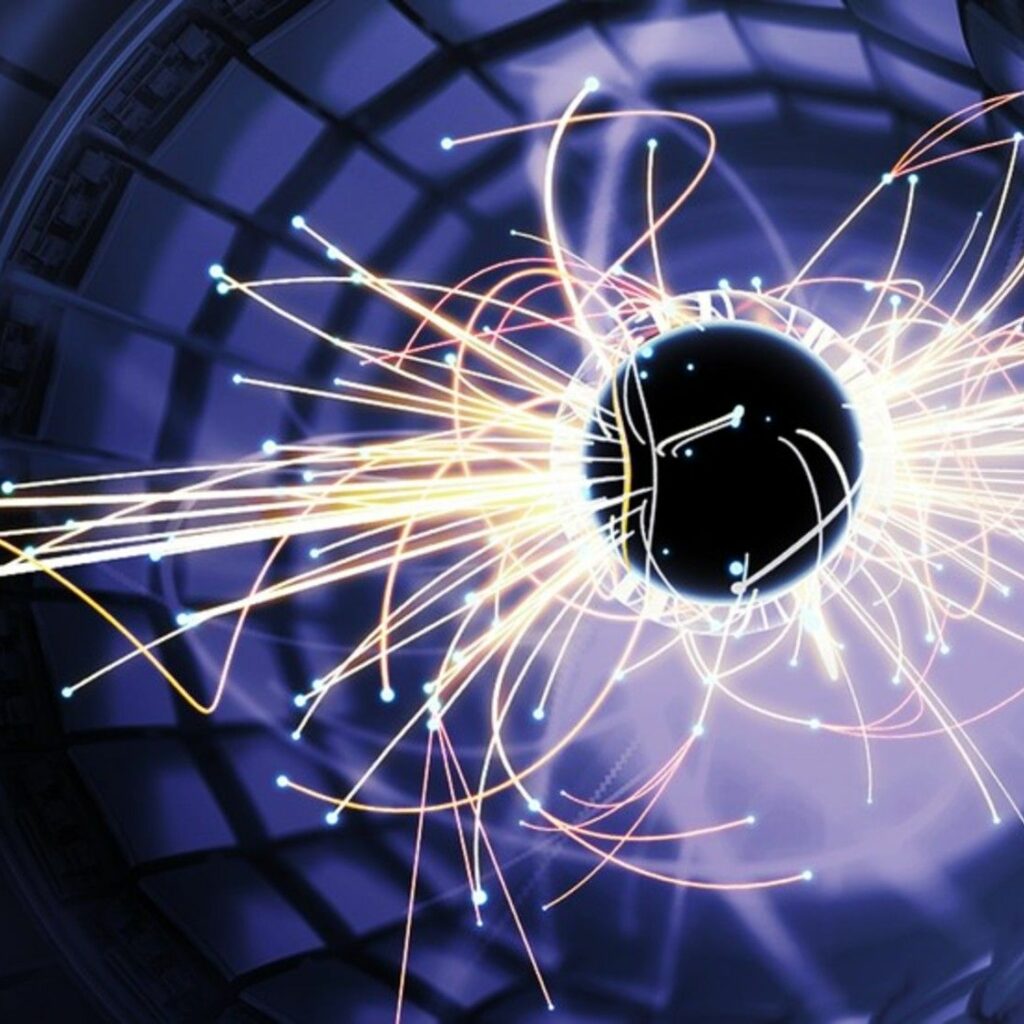
Particle accelerators are sophisticated machines designed to propel charged particles, such as protons, electrons, and heavy ions, to extremely high speeds-often nearing the speed of light. Their primary function is to explore the fundamental building blocks of matter by inducing high-energy collisions. These collisions generate a variety of subatomic particles and phenomena that deepen our understanding of the universe’s underlying structure.
Mechanism of Particle Acceleration and Collision
Within a vacuum chamber, particle accelerators use electromagnetic fields to accelerate particles to tremendous velocities. These particles are then directed to collide either with each other or with stationary targets. The immense energy released during these impacts transforms into mass, creating a diverse array of particles, some of which mirror those present shortly after the Big Bang. This process allows scientists to recreate and study conditions similar to the early universe.
Types of Particles Produced in Accelerators
- Fundamental Particles:
High-energy collisions can produce elementary particles such as the Higgs boson, which plays a crucial role in imparting mass to other particles through the Higgs field, a cornerstone of the Standard Model of particle physics. - Composite Particles:
Quark-antiquark pairs generated during collisions form mesons, while baryons-particles made of three quarks-also emerge. These particles often exist only fleetingly but provide valuable insights into strong nuclear interactions. - Short-lived Particles:
Particles like positrons and kaons, which decay rapidly, are produced in these collisions. Their transient existence offers a window into the conditions of the early cosmos and the forces at play during that epoch.
Energy-to-Mass Conversion in Particle Collisions
Einstein’s famous equation, E=mc², encapsulates the principle that energy can be converted into mass. In particle accelerators, the concentrated energy from collisions materializes as new particles, demonstrating this fundamental relationship in a tangible way. This phenomenon raises profound questions about the nature of matter and energy, and how the universe orchestrates such transformations at the quantum level.
Applications Beyond Fundamental Research
Particle accelerators extend their impact beyond pure physics by contributing to fields such as medicine and nuclear science. For example, they produce radioactive isotopes like iodine-131 and technetium-99m, which are vital for cancer treatments and diagnostic imaging. These medical applications highlight the practical benefits of accelerator technology in improving human health.
Challenges in Detecting and Analyzing Collision Products
The particles generated in accelerator collisions often decay almost instantaneously, creating complex decay chains that are difficult to track. Advanced detection systems, such as the Compact Muon Solenoid (CMS) and ATLAS detectors at the Large Hadron Collider (LHC), are employed to capture these fleeting events with high precision. Scientists then use sophisticated algorithms and data analysis techniques to interpret the vast amounts of information and identify meaningful patterns within the chaotic particle interactions.
Fundamental Forces Explored Through Particle Collisions
Particle accelerators provide a unique platform to study the four fundamental forces of nature: electromagnetic, weak, strong, and gravitational. By examining collision outcomes, physicists gain insights into how these forces operate at the subatomic scale. Discoveries such as new decay modes or unexpected interaction cross-sections can challenge existing theories and inspire new models, including hypotheses like supersymmetry, which predicts partner particles for every known particle.
Philosophical Implications of Particle Creation and Annihilation
The transient existence of particles produced in accelerators invites reflection on the nature of reality. The rapid creation and destruction of particles challenge traditional notions of permanence and raise questions about the role of observation in quantum mechanics. These phenomena suggest that particles may exist in states of potentiality until measured, linking empirical science with deeper philosophical inquiries about existence and the fabric of the universe.
Significance of Particle Accelerators in Modern Science
Particle accelerators act as gateways to the fundamental layers of matter, enabling scientists to probe the universe’s most profound mysteries. The continuous discovery of new particles and interactions fuels the advancement of physics, bridging theoretical predictions with experimental evidence. As research progresses, these machines will remain essential tools in unraveling the complexities of the cosmos, driving innovation and expanding our comprehension of reality.
Notable Real-World Examples
- Large Hadron Collider (LHC):
The world’s largest and most powerful particle accelerator, instrumental in discovering the Higgs boson and exploring physics beyond the Standard Model. - Medical Isotope Production:
Accelerators produce isotopes used in radiotherapy and diagnostic imaging, directly impacting patient care and treatment outcomes.
Common Misconceptions About Particle Accelerators
Particle accelerators create dangerous amounts of radiation that can harm the environment.
While accelerators do produce radiation, they are designed with extensive safety measures to contain it, ensuring minimal environmental impact.
Particle accelerators can create black holes that threaten Earth.
The energies produced are far too low to create stable black holes, and even if microscopic black holes were formed, they would evaporate instantly without posing any danger.
FAQ
What is the main purpose of a particle accelerator?
The main purpose of a particle accelerator is to propel charged particles to high speeds for the study of fundamental particles and forces through high-energy collisions.
What types of particles are produced in particle accelerators?
Particle accelerators can produce fundamental particles like the Higgs boson, composite particles like mesons and baryons, and short-lived particles like positrons.
How do particle accelerators contribute to medicine?
Particle accelerators are used to produce radioactive isotopes for medical applications, such as cancer treatments and diagnostic imaging.






Leave a Reply