
Short Answer
Definition of Astronomy
Astronomy is the ancient scientific discipline dedicated to studying celestial bodies and phenomena beyond Earth’s atmosphere. It encompasses the observation and analysis of stars, planets, galaxies, and the fundamental laws that govern their behavior. More than just cataloging cosmic objects, astronomy invites us to explore the vast universe, encouraging reflection on humanity’s place within this immense and mysterious expanse.
Exploring the Cosmos: The Essence of Astronomy
One of astronomy’s most fascinating aspects is its ability to extend human perception beyond everyday experience. By observing the night sky, astronomers decode information carried by light that has traveled across immense distances and epochs. Each photon acts as a time capsule, revealing events such as star formation, supernova explosions, and the intricate gravitational interplay of celestial bodies. This exploration fosters a humbling awareness that Earth is merely a tiny speck within the infinite cosmos.
Methodologies and Tools in Astronomy
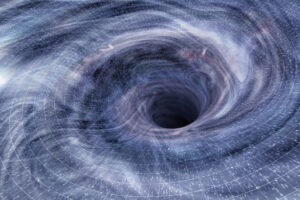
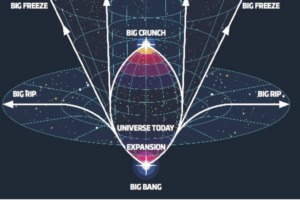
Astronomy is fundamentally an empirical science driven by observation and precise measurement. Utilizing advanced instruments-from terrestrial telescopes to space-based observatories-scientists analyze electromagnetic radiation, gravitational waves, and cosmic particles. This rigorous approach enables the study of phenomena like black holes, dark matter, and the cosmic microwave background, constructing a detailed picture of the universe’s origin, structure, and ultimate destiny.
Technological Innovations Inspired by Astronomy
The impact of astronomy extends well beyond scientific research, influencing numerous technological advancements that permeate daily life. For example:
- CCD Sensors:
Originally developed to detect faint starlight, these sensors revolutionized digital photography and imaging technologies worldwide. - Satellite Navigation:
Precise understanding of orbital mechanics, refined through astronomical studies, underpins GPS systems essential for global communication and transportation. - Medical Imaging:
Techniques derived from astronomical data analysis have contributed to advancements in medical diagnostic tools such as MRI and CT scans.
Thus, the pursuit of cosmic knowledge inadvertently drives innovations that transform society.
Philosophical and Cultural Significance
Astronomy also shapes profound philosophical perspectives by confronting fundamental questions about existence, time, and reality. The recognition that the elements composing our bodies-carbon, oxygen, iron-were forged in stellar interiors creates a poetic connection between humans and the stars. This cosmic kinship transcends cultural and political boundaries, highlighting a shared human narrative beneath the universal night sky.
Moreover, astronomy’s influence permeates art, literature, and culture. From Renaissance star charts to modern science fiction, celestial themes inspire creative expression, blending scientific inquiry with imagination and enriching human experience.
Educational and Intellectual Impact
Observing celestial events such as eclipses, meteor showers, and planetary alignments provides accessible opportunities for public engagement with science. Astronomy education promotes critical thinking, quantitative reasoning, and a scientific mindset, equipping individuals to address complex societal challenges with analytical rigor and an appreciation for evidence-based knowledge.
Interdisciplinary Expansion and Modern Frontiers
Recent technological advances have broadened astronomy’s scope, integrating disciplines like physics, chemistry, computer science, and biology. The emerging field of astrobiology investigates the possibility of extraterrestrial life, challenging assumptions about the universality of biological processes. Discoveries of exoplanets continually refine our understanding of habitability, suggesting the universe may harbor a multitude of diverse worlds.
At the same time, enigmatic phenomena such as dark matter and dark energy-comprising the majority of the cosmos-remain largely unexplained, pushing the boundaries of current theories. Concepts like the multiverse, the nature of spacetime, and quantum gravity fuel ongoing research and debate, ensuring astronomy remains a dynamic and evolving science.
Why Astronomy Is Important
Astronomy’s significance lies not only in the knowledge it generates but also in the transformative worldview it fosters. By expanding our perspective beyond local concerns, it cultivates humility, curiosity, and awe. This cosmic outlook can inspire a deeper environmental consciousness and a commitment to preserving Earth, our fragile “pale blue dot” adrift in the vast universe.
Summary: The Ongoing Journey of Discovery
In summary, astronomy represents an epic quest to understand the universe. It challenges existing beliefs, broadens intellectual horizons, and reveals the sublime structure of the cosmos. As humanity continues to explore the heavens, astronomy remains a guiding light, illuminating the endless mysteries beyond our skies and offering profound insights for all who seek to comprehend the universe.
FAQ
What are the main areas of study in astronomy?
Main areas include planetary science, cosmology, astrobiology, and observational astronomy.
How does astronomy impact daily life?
Discoveries in astronomy lead to technologies that enhance communication, navigation, and medical imaging.



Leave a Reply