
Short Answer
Definition of Fibre Optic Cables
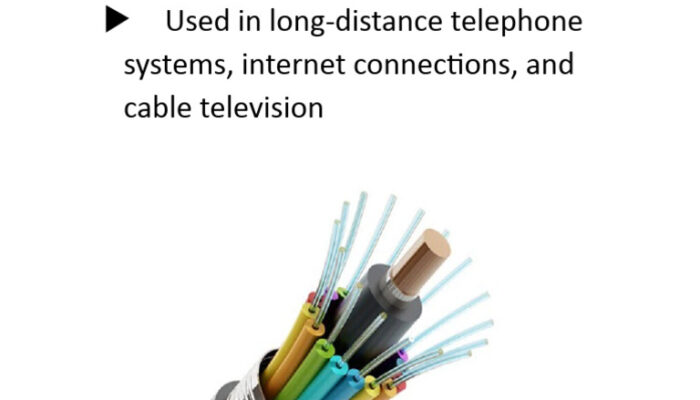
Fibre optic cables are slender strands made from glass or plastic designed to transmit data as pulses of light. These cables are fundamental components in modern communication systems, enabling rapid and reliable information exchange over vast distances. Their unique structure allows them to carry large volumes of data with minimal signal degradation, making them indispensable in various technological fields.
Fundamental Principles Behind Fibre Optic Technology
The operation of fibre optic cables is based on the principle of total internal reflection. Light signals introduced into the cable are confined within the core by reflecting off the internal surfaces, allowing the data to travel long distances without significant loss. This mechanism ensures high-quality transmission, free from the electromagnetic interference that commonly affects traditional metal cables.
Key Applications of Fibre Optic Cables
Telecommunications: The Core of Modern Connectivity
Fibre optic cables serve as the backbone of telecommunications networks, facilitating the transfer of voice and data across extensive distances. Unlike copper wires, fibre optics maintain signal integrity and support higher bandwidths, enabling services such as high-definition video calls, mobile communications, and expansive internet access. Their resistance to attenuation and interference makes them a superior choice for reliable communication infrastructure.
Internet Infrastructure: Meeting the Demand for Speed and Capacity
In today’s digital era, the demand for faster internet speeds and greater bandwidth is ever-increasing. Fibre optic networks address this need by supporting data transmission rates reaching terabits per second. This capability underpins essential services like cloud computing, online gaming, and streaming platforms, ensuring seamless user experiences and supporting the global digital economy.
Medical Field: Enhancing Diagnostics and Treatment
Beyond communication, fibre optic technology plays a vital role in healthcare. Medical instruments such as endoscopes utilize fibre optics to deliver high-resolution images from inside the human body, enabling minimally invasive diagnostics and surgeries. This technology improves patient care by reducing recovery times and increasing procedural precision.
Industrial Applications: Automation and Environmental Monitoring
Industries leverage fibre optic cables for their durability and immunity to electromagnetic interference, especially in harsh environments like factories and refineries. They are integral to sensor systems that monitor critical parameters such as temperature and pressure, facilitating real-time data exchange that enhances automation, safety, and operational efficiency.
Smart City Infrastructure: Enabling Intelligent Urban Systems
As urban centers evolve into smart cities, fibre optic cables become essential for supporting interconnected systems. They enable rapid communication between traffic controls, environmental sensors, and energy grids, optimizing urban management and improving residents’ quality of life. For example, dynamic traffic light adjustments based on real-time data are made possible through fibre optic networks.
Military and Aerospace: Secure and Reliable Communications
In defense and aerospace sectors, fibre optic cables are prized for their secure data transmission capabilities. They support encrypted communication systems critical for military operations and are used in aircraft for flight control and navigation, where reliability and resistance to interference are paramount.
Emerging Trends and Future Prospects
The future of fibre optic technology is closely tied to advancements in fields like quantum computing and the Internet of Things (IoT). Innovations in optical networking and integration with artificial intelligence promise to expand the capabilities of fibre optics, addressing the growing demands of data-intensive applications. These developments suggest a transformative impact on how information is transmitted and processed globally.
Importance of Fibre Optic Cables in Modern Society
Fibre optic cables are integral to the infrastructure that supports contemporary life, from communication and healthcare to industry and urban development. Their unparalleled speed, reliability, and capacity make them essential for sustaining the digital economy and advancing technological innovation. Ensuring their accessibility and sustainability is crucial as society continues to evolve in an increasingly connected world.
Common Misconceptions About Fibre Optic Technology
Fibre optic cables are fragile and easily damaged.
While delicate in appearance, fibre optic cables are engineered with protective coatings and robust materials to withstand environmental stresses and physical handling.
Fibre optics are only used for internet and phone services.
Fibre optic technology extends beyond telecommunications, playing vital roles in medicine, industry, military, and smart city infrastructure.
Summary
In summary, fibre optic cables are a cornerstone of modern communication and technology. Their ability to transmit vast amounts of data quickly and securely has revolutionized multiple sectors, from telecommunications to healthcare and beyond. As technological demands grow, fibre optics will continue to be a critical enabler of innovation and connectivity worldwide.
FAQ
What are the main uses of fibre optic cables?
Fibre optic cables are primarily used in telecommunications, internet infrastructure, healthcare, industrial applications, smart city systems, and military communications.
Are fibre optic cables fragile?
Despite their delicate appearance, fibre optic cables are designed with robust materials and protective coatings to withstand environmental stress.
Can fibre optics be used outside of telecommunications?
Yes, fibre optic technology is utilized in various fields, including medicine, industry, military, and smart city infrastructure.





Leave a Reply