
Short Answer
Definition of NASA’s Unexplained Cosmic Discoveries
NASA, the leading agency in space exploration, has uncovered a vast array of celestial phenomena over decades of research. Despite these advances, numerous cosmic mysteries persist, eluding full scientific explanation. These enigmatic findings span from distant exoplanets and cosmic radiation to dark matter, fast radio bursts, and anomalies within our own solar system. This article explores these unresolved phenomena, highlighting their significance and the questions they raise about our universe.
Exploration of Exoplanets and Their Mysteries
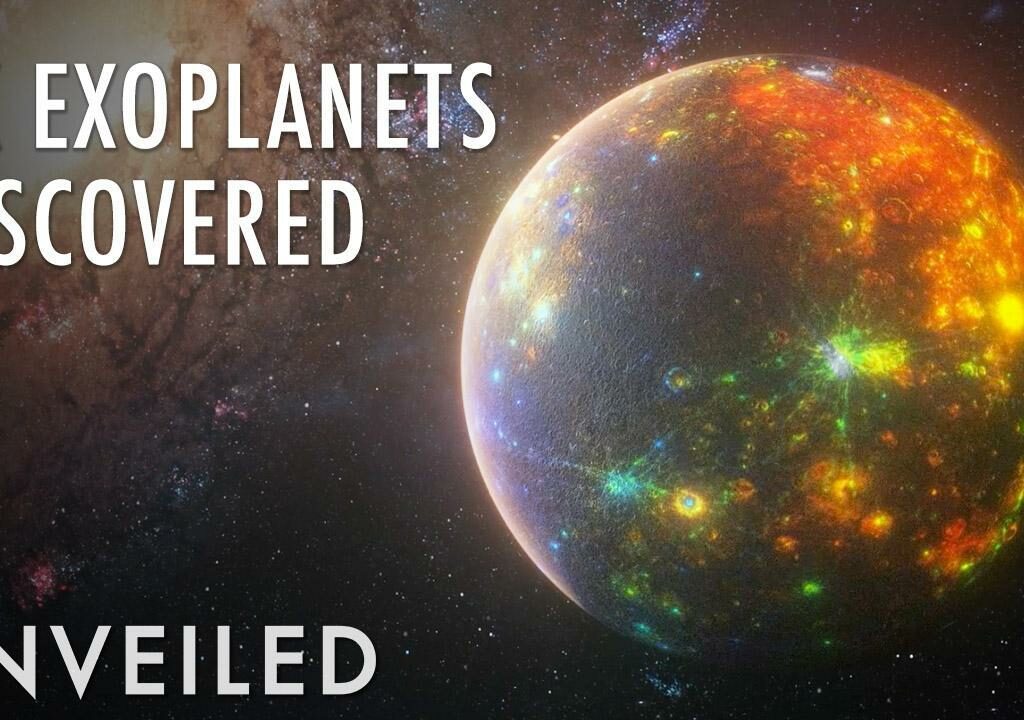
Exoplanets are planets orbiting stars outside our solar system, and NASA’s Kepler Space Telescope has identified over 5,000 such worlds. These planets exhibit remarkable diversity, ranging from scorching gas giants larger than Jupiter to icy, Earth-sized bodies that might support liquid water. However, some exoplanetary characteristics challenge current planetary formation theories.
- Hot Jupiters:
These are massive gas giants orbiting extremely close to their stars, completing orbits in just a few days. Their existence puzzles scientists because traditional models cannot easily explain how such large planets form and survive in such tight, hostile orbits without being destroyed or ejected.
Cosmic Radiation and High-Energy Particle Anomalies
NASA’s Voyager spacecraft, which have traveled beyond the heliosphere-the solar wind-influenced bubble surrounding our sun-have detected unexpectedly intense cosmic rays. These high-energy particles bombard the probes more heavily than predicted, raising questions about the galactic forces or structures responsible for this amplification. Understanding these interactions is crucial for comprehending the boundary between our solar system and the interstellar medium.
Dark Matter and Dark Energy: The Universe’s Hidden Components
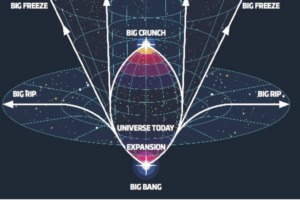
Dark matter and dark energy constitute about 95% of the universe’s total mass-energy content, yet they remain invisible to direct observation. NASA’s Hubble Space Telescope and the Wilkinson Microwave Anisotropy Probe (WMAP) have provided indirect evidence of dark energy by measuring the universe’s accelerating expansion. Despite these insights, the fundamental nature of dark matter and dark energy remains one of the most profound unsolved problems in astrophysics.
Fast Radio Bursts: Brief Cosmic Signals with Unknown Origins
Fast radio bursts (FRBs) are intense, millisecond-long flashes of radio waves originating from distant galaxies. NASA missions, including the Swift observatory, have cataloged several FRBs, but their exact causes are still debated. Hypotheses range from neutron star collisions to speculative ideas such as extraterrestrial communications. Each new detection deepens the mystery and suggests unknown energetic processes at work in the cosmos.
Black Holes: Unraveling Extreme Physics
NASA’s Chandra X-ray Observatory and collaborations like the Event Horizon Telescope have provided unprecedented views of black holes, revealing the extreme environments near these gravitational giants. Yet, fundamental questions remain:
- Rapid Growth:
How do black holes reach enormous sizes so quickly in the early universe? - Event Horizon Mysteries:
What occurs inside the event horizon, where classical physics breaks down and quantum effects dominate?
These questions highlight the need for new theoretical frameworks that reconcile quantum mechanics with general relativity.
Mars: Clues to Past or Present Life
NASA’s exploration of Mars has uncovered intriguing signs such as seasonal methane emissions, organic molecules in sedimentary rocks, and evidence of ancient water flows. These findings suggest the possibility of microbial life, past or present, but definitive proof remains elusive. Ongoing missions continue to investigate Mars’s geology and atmosphere to unlock its secrets.
Cosmic Microwave Background Anomalies
The cosmic microwave background (CMB) is the faint radiation left over from the Big Bang. NASA’s Planck observatory has mapped the CMB with exceptional detail, revealing subtle temperature irregularities and cold spots that challenge the assumption of a uniform universe. These anomalies may hint at new physics, such as multiverse theories or topological defects, inviting further investigation into the universe’s earliest moments.
The Pioneer Anomaly: Unexpected Spacecraft Trajectory Deviations
The Pioneer 10 and 11 spacecraft, launched in the 1970s, exhibited small but persistent deviations from predicted trajectories, known as the Pioneer anomaly. Despite extensive study, the cause remains debated-whether it is due to unknown physics or thermal forces from the spacecraft itself. This anomaly has implications for gravitational theory and spacecraft navigation accuracy.
Interstellar Visitor ‘Oumuamua: An Enigmatic Object
In 2017, NASA detected ‘Oumuamua, the first known interstellar object passing through our solar system. Its unusual shape and unexpected acceleration defied classification as a typical comet or asteroid. Scientists speculate it could be a fragment from another star system or an exotic object of unknown origin, sparking ongoing debate and curiosity.
Why These Unexplained Discoveries Are Crucial
NASA’s unresolved findings not only expand our understanding of the cosmos but also challenge existing scientific paradigms. They drive the development of new technologies, inspire theoretical innovation, and deepen humanity’s quest to comprehend the universe. Embracing these mysteries with curiosity fosters progress in physics, cosmology, and planetary science.
Common Misconceptions About NASA’s Cosmic Mysteries
All exoplanets fit neatly into existing planetary formation models.
Many exoplanets, such as hot Jupiters, defy current theories, indicating gaps in our understanding.
Dark matter and dark energy have been directly observed.
These components are inferred from indirect evidence and remain undetected by direct means.
Fast radio bursts are fully understood phenomena.
The origins of FRBs are still speculative, with multiple competing hypotheses.
Conclusion: The Ongoing Quest for Cosmic Understanding
NASA’s discoveries that remain unexplained serve as a testament to the vastness and complexity of the universe. Each mystery-from the peculiarities of distant planets to the elusive nature of dark matter-invites scientists and enthusiasts alike to push the boundaries of knowledge. As we continue to explore, these cosmic puzzles will inspire future generations to unravel the secrets of the cosmos and potentially rewrite the fundamental laws of physics.
FAQ
What is dark matter?
Dark matter is a form of matter that does not emit light or energy, making it invisible and detectable only through its gravitational effects.
What are fast radio bursts?
Fast radio bursts (FRBs) are brief, intense bursts of radio waves from distant galaxies, with unknown origins.
What is the Pioneer anomaly?
The Pioneer anomaly refers to the unexplained deviations in the trajectories of Pioneer spacecraft, leading to questions about gravitational theory.

Leave a Reply