
Short Answer
Definition of Gravity
Gravity is a fundamental force of nature that governs the attraction between objects with mass. It is an invisible influence that shapes the motion of celestial bodies, causes objects to fall toward the Earth, and controls phenomena such as ocean tides. This universal force is a cornerstone of our understanding of the physical universe, affecting everything from everyday experiences to cosmic events.
- Universal Attraction:
Gravity causes all masses to pull toward each other, regardless of their size or distance. - Omnipresence:
It acts everywhere in the universe, influencing objects from the smallest particles to the largest galaxies.
Historical Perspectives on Gravity
The concept of gravity has evolved significantly over centuries. Initially formalized by Sir Isaac Newton in the 17th century, gravity was described as a force acting at a distance. Newton’s law of universal gravitation stated that every mass attracts every other mass with a force proportional to their masses and inversely proportional to the square of the distance between them. This law provided a predictive framework for understanding planetary orbits and falling objects but did not explain the underlying cause of gravity.
Einstein’s Revolution: Gravity as Curved Spacetime
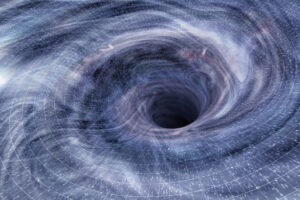
In the early 20th century, Albert Einstein transformed the understanding of gravity with his General Theory of Relativity. Instead of viewing gravity as a force, Einstein described it as the effect of mass and energy bending the fabric of spacetime. Imagine spacetime as a flexible sheet; when a massive object presses down on it, it creates a curvature that directs the motion of other objects. This geometric interpretation explains phenomena such as the bending of light around stars and the time dilation near massive bodies like black holes.
Quantum Gravity and Modern Theories
While General Relativity excels at describing gravity on large scales, it does not reconcile with quantum mechanics, which governs the microscopic world. Efforts to unify these frameworks have led to the pursuit of quantum gravity theories. One hypothesis suggests that gravity arises from the exchange of hypothetical particles called gravitons, though these remain undetected. Additionally, some theories propose that gravity is not fundamental but emergent, arising from the collective behavior of quantum particles, similar to how temperature emerges from molecular motion.
Entropic Gravity
One intriguing emergent gravity model is entropic gravity, which posits that gravitational attraction results from the universe’s tendency to increase entropy, or disorder. This approach links gravity to thermodynamics and information theory, suggesting that gravity may be a macroscopic effect of microscopic informational processes.
Gravity’s Role in the Cosmos
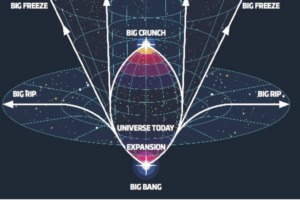
Gravity is the architect of the universe’s large-scale structure. It governs the formation and rotation of galaxies, the birth of stars, and the dynamics of black holes. The force’s influence extends to the very origin of the cosmos, with some theories proposing that gravity emerged alongside spacetime during the Big Bang, embedded in the universe’s initial conditions.
Common Misconceptions About Gravity
Gravity is simply a force pulling objects downward.
Gravity is a universal attraction between masses, not just a downward pull on Earth.
Gravity is a force like magnetism or electromagnetism.
According to General Relativity, gravity is the curvature of spacetime, not a force transmitted through space.
Gravity is fully understood and explained.
Despite advances, the fundamental origin of gravity, especially at quantum scales, remains an open question.
Why Understanding Gravity Is Important
Gravity is essential not only for explaining everyday phenomena like falling objects and tides but also for understanding the universe’s evolution and structure. It underpins technologies such as satellite navigation and space exploration. Moreover, studying gravity challenges and expands our comprehension of physics, pushing the boundaries of knowledge in cosmology, quantum mechanics, and fundamental science.
Gravity Beyond Science: Symbolism and Influence
Beyond its physical implications, gravity serves as a powerful metaphor in human culture, symbolizing connection, attraction, and inevitability. The term “gravity” is often used to describe social and emotional bonds, reflecting our intuitive sense of forces that draw entities together. This dual role enriches gravity’s significance, bridging scientific inquiry and human experience.
Conclusion: The Enduring Mystery of Gravity
The quest to uncover the true origin of gravity remains one of the most profound scientific challenges. From Newton’s laws to Einstein’s geometric vision, and from quantum hypotheses to emergent theories, gravity continues to inspire curiosity and investigation. It is a fundamental yet enigmatic force that shapes reality and invites us to explore the deepest questions about the nature of existence and the universe itself.
FAQ
What is gravity?
Gravity is a fundamental force of nature that attracts objects with mass toward one another.
How did our understanding of gravity change over time?
It evolved from Newton’s law of universal gravitation to Einstein’s General Theory of Relativity, which describes gravity as the curvature of spacetime.
What are some current theories about gravity?
Modern theories include quantum gravity and emergent gravity, which explore the nature of gravity at microscopic levels.


Leave a Reply