
Short Answer
Understanding X-Ray Astronomy
X-ray astronomy is a specialized branch of astrophysics that explores the universe through the detection of X-rays emitted by celestial objects and phenomena. Unlike visible light, X-rays are high-energy photons produced by some of the most extreme and energetic processes in space. This field allows scientists to investigate cosmic events and structures that remain invisible to traditional optical telescopes, offering a unique perspective on the dynamic and often violent nature of the cosmos.
Fundamentals of X-Ray Emission in Space
X-rays originate from environments characterized by extraordinarily high temperatures, intense magnetic fields, and powerful gravitational forces. These conditions are typically found in phenomena such as superheated gases reaching millions of degrees, magnetic turbulence, and regions where gravity significantly warps space-time. Since Earth’s atmosphere absorbs X-rays, observations must be conducted using space-based observatories positioned beyond atmospheric interference, enabling astronomers to capture these elusive signals.
Key Astrophysical Sources of X-Rays
- Black Holes:
Although black holes themselves emit no light, the accretion disks formed by matter spiraling into them heat up to extreme temperatures, producing intense X-ray radiation. Studying these emissions helps determine black hole characteristics like mass and spin, and reveals the behavior of matter under intense gravitational influence. - Neutron Stars and Pulsars:
These dense remnants of supernova explosions emit strong X-rays due to their rapid rotation and powerful magnetic fields. X-ray observations provide insights into their surface conditions and magnetospheric structures, making them natural laboratories for studying matter under extreme pressure and magnetism. - Galaxy Clusters:
Massive clusters containing hundreds or thousands of galaxies are enveloped by hot, diffuse gas known as the intracluster medium. This gas emits X-rays, which reveal the cluster’s gravitational structure and the distribution of dark matter, offering clues about the formation and evolution of large-scale cosmic structures. - Cosmic Explosions:
Events such as gamma-ray bursts and supernovae release enormous amounts of energy, including brief but intense X-ray flashes. Monitoring these transient phenomena sheds light on stellar death, black hole formation, and the creation of heavy elements essential for life.
The Cosmic X-Ray Background
Beyond discrete sources, the universe is permeated by a diffuse X-ray glow known as the cosmic X-ray background. This radiation arises from countless faint sources, including distant black holes and active galactic nuclei. Analyzing this background helps astronomers trace the growth of massive black holes over cosmic time and map the large-scale structure of the universe, revealing the invisible framework underlying cosmic evolution.
Scientific Challenges and Theoretical Questions
X-ray astronomy not only uncovers new phenomena but also raises complex theoretical questions. For instance, the processes responsible for accelerating cosmic rays and heating the intracluster medium remain subjects of active investigation. Researchers explore how mechanisms like magnetic reconnection, shock waves, and turbulence convert energy into X-ray emissions. Each new observation often prompts further inquiry, driving advancements in both instrumentation and theoretical modeling.
Technological Advances in X-Ray Observation
Progress in detector technology and space telescope design continually enhances the capabilities of X-ray astronomy. Modern instruments utilize advanced charge-coupled devices (CCDs), microcalorimeters, and high-resolution spectrometers to analyze X-ray spectra with remarkable precision. These tools enable detailed studies of celestial phenomena, fostering a synergy between observational techniques and analytical methods that push the boundaries of our cosmic understanding.
Significance of X-Ray Astronomy in Modern Science
X-ray astronomy is crucial for expanding our knowledge of the universe’s most energetic and enigmatic processes. By revealing phenomena dominated by gravity, magnetism, and explosive forces, it provides insights unattainable through other wavelengths. This field enriches our comprehension of star formation, black hole dynamics, galaxy evolution, and the large-scale structure of the cosmos, making it indispensable for both theoretical and observational astrophysics.
Common Misconceptions About X-Ray Astronomy
X-rays from space can be observed from the ground.
Earth’s atmosphere blocks X-rays, so observations require space-based telescopes.
Black holes emit X-rays directly.
Black holes themselves do not emit light; X-rays come from the hot material in the accretion disk around them.
X-ray astronomy only studies black holes.
It also investigates neutron stars, galaxy clusters, cosmic explosions, and the diffuse X-ray background.
Real-World Applications and Examples
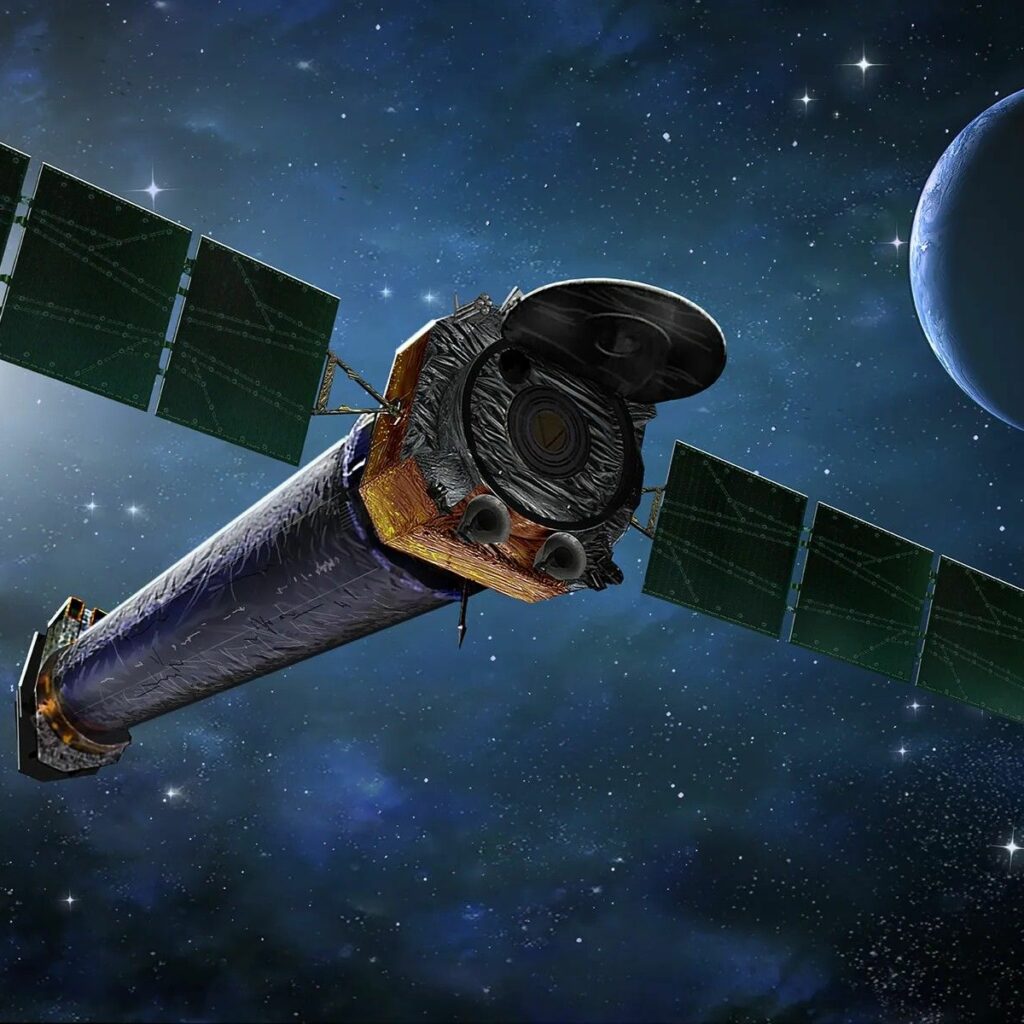
Space missions such as NASA’s Chandra X-ray Observatory and ESA’s XMM-Newton have revolutionized our understanding of high-energy astrophysics. For example, Chandra’s observations of the Perseus galaxy cluster have mapped the distribution of hot gas and dark matter, while studies of pulsars have provided insights into neutron star interiors. Rapid-response X-ray telescopes capture gamma-ray bursts, enabling real-time analysis of these fleeting cosmic events.
Future Prospects and Continuing Exploration
The ongoing development of more sensitive detectors and multi-wavelength observatories promises to deepen our exploration of the X-ray universe. As technology advances, astronomers anticipate uncovering new phenomena and refining models of cosmic processes. The quest to decode the universe’s high-energy secrets remains a vibrant and evolving frontier, continually reshaping our understanding of the cosmos.
FAQ
What is X-ray astronomy?
X-ray astronomy studies the universe through X-rays emitted by celestial objects, revealing high-energy processes that are not visible through optical telescopes.
Why can't X-rays be observed from the ground?
Earth’s atmosphere absorbs X-rays, necessitating the use of space-based telescopes for observation.
What are some key sources of X-rays in space?
Key sources include black holes, neutron stars, galaxy clusters, and cosmic explosions.

Leave a Reply