
Short Answer
Understanding the Cosmic Constituents
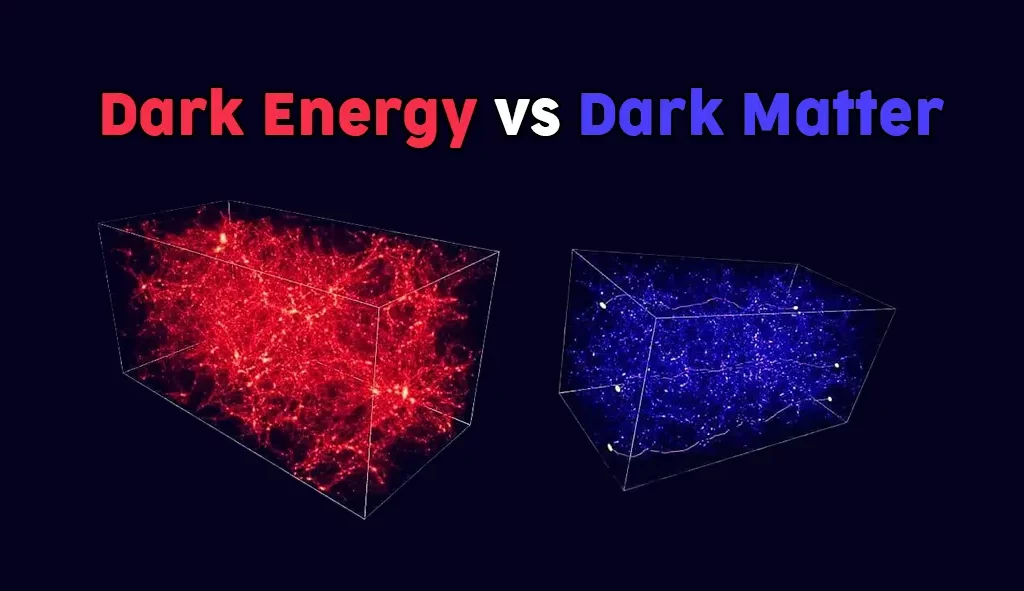
The universe is composed of three fundamental components: dark matter, dark energy, and normal matter. Each plays a crucial role in shaping the cosmos, yet their origins and interactions present a complex narrative that challenges our comprehension of the universe’s formation and evolution.
Definition of Key Cosmic Elements
- Normal Matter:
This is the familiar substance that makes up atoms, molecules, stars, planets, and living organisms. It is the visible matter that we interact with daily. - Dark Matter:
An invisible form of matter that does not emit, absorb, or reflect light, detectable only through its gravitational effects on visible matter and cosmic structures. - Dark Energy:
A mysterious force responsible for the accelerated expansion of the universe, acting as a repulsive pressure that influences the fabric of spacetime.
Chronology of Cosmic Formation
The timeline of the universe’s constituents begins with the Big Bang, approximately 13.8 billion years ago. Normal matter emerged shortly after during a phase called nucleosynthesis, when the universe cooled enough for protons and neutrons to combine into atomic nuclei. This process occurred within the first few minutes post-Big Bang. Subsequently, about 380,000 years later, electrons joined these nuclei to form neutral atoms in an event known as recombination, allowing photons to travel freely and creating the cosmic microwave background radiation.
The Emergence and Role of Dark Matter
Dark matter’s origin is less certain but is believed to have appeared fractions of a second after the Big Bang. Unlike normal matter, it does not interact with electromagnetic forces, making it invisible to direct observation. Its presence is inferred from gravitational influences on galaxies and large-scale structures. Dark matter provided the gravitational framework necessary for normal matter to clump together, facilitating the formation of galaxies and other cosmic structures.
Dark Energy and Its Influence on Cosmic Expansion
Dark energy constitutes about 68% of the universe’s total energy content and is responsible for the observed acceleration in cosmic expansion. According to the Lambda Cold Dark Matter (ΛCDM) model, dark energy became the dominant force only after billions of years, roughly five billion years ago. Prior to this, matter-both dark and normal-dominated the universe’s dynamics, slowing the expansion through gravitational attraction. As the universe expanded and matter became more diffuse, dark energy’s repulsive effect grew stronger, driving accelerated expansion.
Interconnectedness of Cosmic Components
The relationship between dark matter, dark energy, and normal matter is intricate and interdependent. Their emergence may not be isolated events but rather interconnected phenomena influenced by quantum field theory, general relativity, and inflationary cosmology. The rapid inflationary period following the Big Bang magnified tiny quantum fluctuations into large-scale density variations, seeding dark matter halos that guided the assembly of normal matter into the cosmic web.
Speculative Theories and Unified Models
Some hypotheses propose that dark matter and dark energy might be manifestations of a single underlying field or exotic particles yet to be discovered. Alternative theories include modifications to gravity or hidden symmetries that challenge the traditional distinctions between matter and energy. These ideas suggest that the question of which component came first may require a fundamental rethinking of cosmic physics.
Summary of the Cosmic Timeline
- Dark Matter:
Likely the earliest to form, providing the gravitational scaffolding for cosmic structure. - Normal Matter:
Emerged shortly after the Big Bang during nucleosynthesis and recombination, forming the visible universe. - Dark Energy:
Possibly present in subtle forms from the universe’s inception but only recently dominant, driving accelerated expansion.
Significance in Cosmology and Astrophysics
Understanding the origins and interplay of dark matter, dark energy, and normal matter is vital for unraveling the universe’s history and fate. These components govern the formation of galaxies, the large-scale structure of the cosmos, and its ultimate expansion trajectory. Insights into their nature could revolutionize physics, shedding light on fundamental forces and particles.
Common Misconceptions
Dark matter is just ordinary matter that is hidden.
Dark matter is fundamentally different from normal matter, as it does not interact electromagnetically and is not composed of atoms.
Dark energy has always dominated the universe.
Dark energy became dominant only in the recent cosmic past, after matter’s influence waned.
Future Directions and Research
Ongoing studies in particle physics, cosmic microwave background analysis, and galaxy surveys aim to clarify the properties and origins of these cosmic components. Experiments searching for dark matter particles and investigations into the nature of dark energy continue to be at the forefront of astrophysical research, promising to deepen our understanding of the universe’s earliest moments and its ultimate destiny.





Leave a Reply