
Short Answer
Understanding Exoplanets and Their Significance
Exoplanets, or planets orbiting stars beyond our solar system, represent one of the most captivating frontiers in modern astronomy. These distant worlds, scattered across the vast cosmos, offer invaluable insights into planetary formation, evolution, and the potential for life beyond Earth. Recent technological advancements have enabled astronomers to move beyond indirect estimations and achieve direct measurements of exoplanetary masses, marking a significant leap in astrophysical research.
Definition of Exoplanetary Mass Measurement
Exoplanetary mass measurement refers to the process of determining the actual mass of a planet located outside our solar system. Unlike indirect methods that infer mass based on gravitational effects or orbital characteristics, direct measurement techniques aim to quantify the planet’s mass with greater precision and reliability.
- Exoplanet:
A celestial body orbiting a star other than the Sun. - Mass Measurement:
The determination of the amount of matter contained within an exoplanet, typically expressed in Earth or Jupiter masses.
Challenges in Measuring Exoplanet Mass
Determining the mass of exoplanets is inherently difficult due to their immense distances from Earth and the faint signals they emit. Traditional approaches often rely on indirect observations, such as the gravitational influence exerted on their host stars, which can only provide approximate mass values. These limitations have historically constrained our ability to fully characterize exoplanets.
Techniques for Direct Mass Measurement
Recent breakthroughs have introduced innovative methods that allow for more direct and accurate mass assessments of exoplanets. These techniques harness advanced instrumentation and observational strategies to overcome previous challenges.
Gravitational Microlensing
This method exploits the gravitational field of an exoplanet acting as a lens to magnify the light from a more distant background star. By analyzing the resulting light curves during such microlensing events, astronomers can extract detailed information about the exoplanet’s mass.
Astrometry
Astrometry involves the precise tracking of a star’s position in the sky to detect the subtle wobble caused by an orbiting planet’s gravitational pull. Unlike radial velocity methods that measure shifts in spectral lines, astrometry provides a direct spatial measurement of the star’s motion, enabling more accurate mass calculations.
Radial Velocity Method
This technique measures variations in the star’s spectral lines caused by its motion toward or away from Earth, induced by the gravitational influence of an orbiting planet. While effective, it often yields minimum mass estimates rather than exact values.
Role of Space Telescopes in Exoplanet Mass Determination
Space-based observatories such as the Kepler Space Telescope and the Transiting Exoplanet Survey Satellite (TESS) have revolutionized exoplanet discovery and characterization. These platforms provide high-precision photometric data that, when combined with spectroscopic and astrometric measurements, enhance the accuracy of mass determinations.
Scientific Implications of Accurate Mass Measurements
Obtaining precise masses of exoplanets has far-reaching consequences for astrophysics and planetary science.
- Planetary Composition:
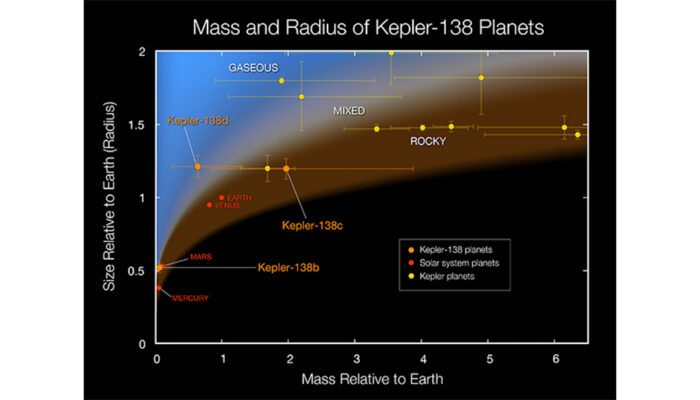
Accurate mass data help distinguish between rocky terrestrial planets, gas giants, and intermediate types, informing models of planetary structure and formation. - Atmospheric Studies:
When paired with atmospheric analysis techniques like transmission spectroscopy, mass measurements enable detailed investigations into atmospheric composition and potential habitability. - Comparative Planetology:
Comparing exoplanet masses with those of solar system planets allows scientists to explore diverse planetary evolution pathways and environmental conditions across the galaxy.
Broader Impact on Astrobiology and Cosmology
Direct mass measurements contribute to the ongoing search for extraterrestrial life by refining criteria for habitability and guiding the selection of promising targets for further study. Additionally, these measurements intersect with broader cosmological questions, such as the nature of dark matter and energy, by improving our understanding of mass distribution in the universe.
Common Misconceptions About Exoplanet Mass Measurement
All exoplanet masses can be precisely measured using a single method.
Different techniques provide complementary data, and often a combination of methods is necessary for accurate mass determination.
Indirect methods are unreliable.
While indirect methods have limitations, they remain essential tools, especially when direct measurements are not feasible.
Future Directions and Interdisciplinary Approaches
As measurement techniques continue to evolve, integrating knowledge from geology, biology, and environmental science will be crucial to fully interpret exoplanet data. This interdisciplinary collaboration will deepen our understanding of planetary environments and their potential to support life, while also informing cosmological models.
Conclusion: The Expanding Horizon of Exoplanet Research
The ability to directly measure the mass of exoplanets marks a transformative milestone in astronomy. This progress not only enriches our comprehension of distant worlds but also propels the broader quest to unravel the mysteries of the universe. As technology advances, the continued exploration of exoplanets promises to illuminate the intricate dynamics of planetary systems and our place within the cosmic expanse.
FAQ
What is an exoplanet?
An exoplanet is a celestial body that orbits a star outside our solar system.
Why is direct mass measurement of exoplanets important?
Direct mass measurements help scientists determine the composition and potential habitability of exoplanets.

Leave a Reply