

Short Answer
Definition of Ultracold Chemistry
Ultracold chemistry is a specialized field at the crossroads of quantum mechanics and chemical dynamics, focusing on interactions between particles cooled to temperatures just above absolute zero. At these extremely low temperatures, the thermal energy of atoms is minimized, leading to behaviors that deviate significantly from classical expectations. This domain particularly highlights the unique bonding and interaction patterns of atoms within ultracold Fermi gases, where quantum effects dominate chemical processes.
Fundamentals of Fermi Gases
Fermi gases are composed of fermions-particles that obey the Pauli exclusion principle, which forbids any two fermions from occupying the same quantum state simultaneously. This principle distinguishes fermions from bosons, which can share quantum states freely. When cooled to near absolute zero, Fermi gases enter a state known as quantum degeneracy, where the spatial distribution of atoms becomes highly ordered and their wave functions overlap, enhancing inter-particle correlations and leading to collective quantum phenomena.
Key Characteristics of Fermi Gases
- Pauli Exclusion Principle:
Prevents identical fermions from sharing quantum states, influencing the gas’s quantum behavior. - Quantum Degeneracy:
A regime where fermions occupy the lowest available energy states, resulting in a Fermi sea. - Wave Function Overlap:
Leads to enhanced correlations and novel quantum states.
Mechanisms of Ultracold Bonding in Fermi Gases
At ultracold temperatures, the suppression of thermal motion allows atoms to interact through quantum mechanical effects such as tunneling and molecular resonance. The energy scales involved in bond formation and dissociation approach the quantum ground state, enabling the creation of diatomic molecules from individual fermionic atoms. This environment also permits the study of exotic molecular states that are inaccessible under typical thermal conditions.
Quantum Effects in Bond Formation
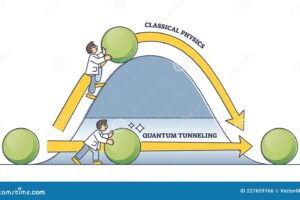
- Quantum Tunneling:
Allows particles to overcome energy barriers that would be insurmountable at higher temperatures. - Molecular Resonance:
Facilitates the stabilization of transient molecular states. - Ground State Energies:
Bonding energies approach minimal quantum levels, influencing reaction dynamics.
Techniques for Cooling and Trapping Fermi Gases
Achieving ultracold conditions for Fermi gases involves sophisticated methods such as laser cooling, magneto-optical trapping, and evaporative cooling. Laser cooling reduces atomic velocities by transferring momentum from photons to atoms, effectively slowing them down. Magneto-optical traps use magnetic fields to manipulate atomic spins and confine atoms in specific energy states. Evaporative cooling further lowers temperature by selectively removing higher-energy atoms, allowing the remaining gas to reach quantum degeneracy and form a Fermi sea.
Cooling Methods Explained
- Laser Cooling:
Uses photon momentum to decelerate atoms. - Magneto-Optical Traps:
Combine magnetic fields and laser light to confine and cool atoms. - Evaporative Cooling:
Removes energetic atoms to reduce overall temperature.
Ultracold Chemical Reactions and Associative Processes
Within ultracold environments, chemical reactions exhibit unique characteristics. One notable process is the associative reaction, where two atoms combine to form a molecule while a third atom is expelled. The low-energy setting reduces reaction barriers, enabling pathways that are typically inaccessible at higher temperatures. These reactions give rise to entangled quantum states and novel diatomic molecules, challenging classical interpretations of chemical bonding.
Associative Process Dynamics
- Atom Pairing:
Two atoms merge to create a molecule. - Third Atom Ejection:
A third atom is released, conserving energy and momentum. - Barrier Reduction:
Low thermal energy facilitates reaction pathways.
Controlling Interactions: Feshbach Resonances
The tunability of atomic interactions in ultracold chemistry is a powerful tool for exploring quantum phenomena. By adjusting the scattering length-a measure of interaction strength-scientists can manipulate how atoms bond and interact. This is achieved through Feshbach resonances, quantum mechanical effects where the scattering length diverges, dramatically altering the system’s properties. Such control allows for the synthetic design of interaction potentials, effectively reshaping the chemical landscape at ultracold temperatures.
Understanding Feshbach Resonances
- Scattering Length:
Parameter that quantifies interaction strength between atoms. - Resonance Effect:
Causes scattering length to become very large, modifying bonding behavior. - Interaction Tuning:
Enables precise control over atomic interactions and molecular formation.
Significance and Applications of Ultracold Chemistry
Research in ultracold chemistry extends beyond theoretical interest, offering profound implications for technology and fundamental science. The discovery of exotic states such as fermionic superconductivity, arising from unique pairing mechanisms, opens new avenues in quantum computing and precision measurement. Additionally, the ability to engineer novel materials with tailored quantum properties promises to revolutionize condensed matter physics and material science.
Impact on Science and Technology
- Quantum Computing:
Utilizes entangled states and controlled interactions for advanced computation. - Precision Measurement:
Enhances sensitivity in detecting physical phenomena. - Material Innovation:
Enables creation of materials with customized quantum characteristics.
Philosophical and Fundamental Implications
Ultracold chemistry challenges conventional notions of reality by making quantum phenomena such as superposition and entanglement directly observable. As temperature and energy scales approach absolute zero, particles exhibit behaviors that defy classical determinism, prompting new philosophical inquiries into the nature of matter and existence. Studies of spin-polarized fermionic mixtures and their interactions hint at the emergence of unprecedented material phases, potentially transforming our understanding of condensed matter physics.
Summary and Future Perspectives
In essence, ultracold chemistry offers a unique window into the behavior of matter at temperatures near absolute zero, where Fermi gas atoms engage in interactions governed by quantum mechanics rather than classical chemistry. The insights gained from this field are poised to expand the frontiers of physics and chemistry, enabling breakthroughs in both theoretical frameworks and practical technologies. The intricate quantum dance of ultracold Fermi gases continues to reveal nature’s hidden complexities, paving the way for transformative scientific advancements.
FAQ
What is ultracold chemistry?
Ultracold chemistry is the study of chemical interactions at temperatures near absolute zero, focusing on quantum effects that alter bonding and reaction dynamics.
What are Fermi gases?
Fermi gases consist of fermions that obey the Pauli exclusion principle, exhibiting unique behaviors when cooled to ultracold temperatures.
How are ultracold conditions achieved?
Methods such as laser cooling, magneto-optical trapping, and evaporative cooling are used to reach ultracold temperatures for Fermi gases.




Leave a Reply