
Short Answer
Understanding Gravitational Waves and Black Hole Mergers
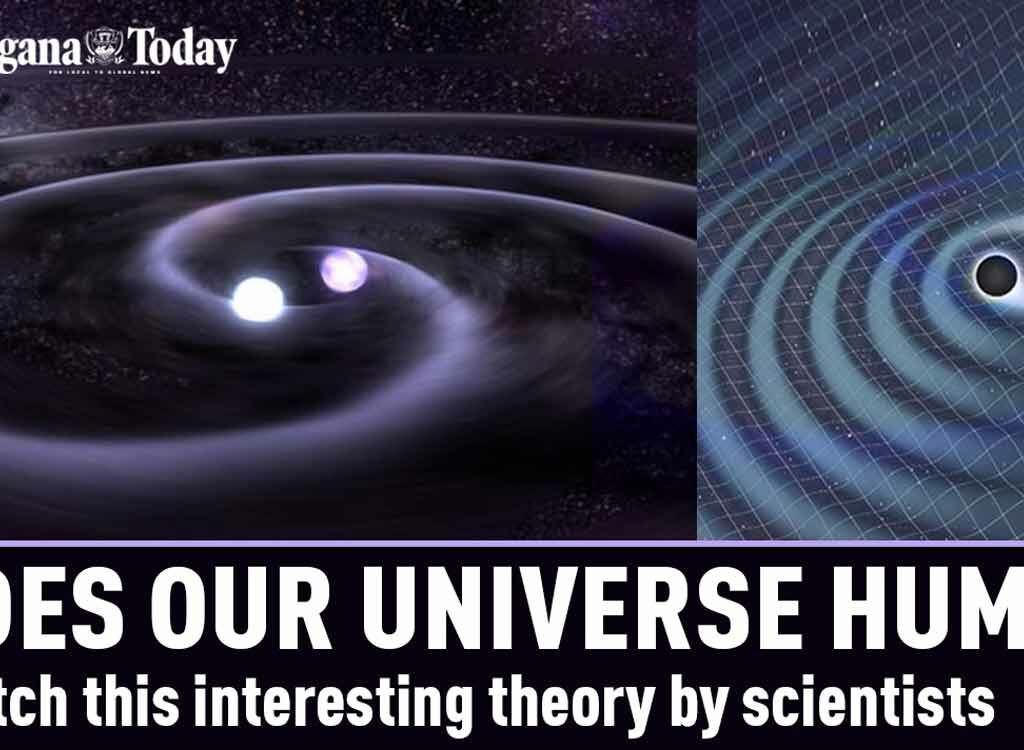
The universe, with its vast and intricate structure, may be perceived as producing a cosmic melody through the dynamic interactions of celestial bodies. Among the most fascinating contributors to this cosmic symphony are twin black holes merging, an event that generates gravitational waves-ripples in the fabric of spacetime. These waves not only confirm the existence of gravitational disturbances predicted by Einstein but also suggest that the universe resonates with subtle harmonies shaped by its fundamental forces and objects.
Definition of Black Holes and Gravitational Waves
Black holes are regions in spacetime where gravity is so overwhelmingly strong that nothing, including light, can escape their pull. When two such black holes orbit each other and eventually collide, they produce gravitational waves-disturbances that propagate through spacetime at the speed of light.
- Black Holes:
Extremely dense objects with gravitational fields so intense that escape velocity exceeds the speed of light. - Gravitational Waves:
Ripples in spacetime caused by accelerating masses, especially during cataclysmic events like black hole mergers.
Mechanism Behind Gravitational Wave Generation
The emission of gravitational waves during black hole mergers is governed by Einstein’s General Theory of Relativity. As two black holes spiral closer, their immense masses distort spacetime, creating waves that increase in intensity until the black holes collide. This collision releases a powerful burst of energy, sending gravitational waves outward across the cosmos. These waves carry detailed information about the black holes’ properties, such as their masses, spins, and the distance from Earth.
Mathematical Framework of Gravitational Waves
Gravitational waves can be described mathematically by perturbations in the metric tensor of spacetime. The strain ( h(t) ) detected by observatories like LIGO is related to the amplitude of these waves:
h(t) = frac{2G}{c^4 r} frac{d^2 Q_{ij}}{dt^2}
- h(t): Gravitational wave strain as a function of time
- G: Gravitational constant
- c: Speed of light
- r: Distance from the source to the observer
- Q_{ij}: Mass quadrupole moment tensor of the system
This formula encapsulates how changes in the mass distribution of the black hole system generate gravitational waves detectable on Earth.
Insights Gained from Observing Twin Black Hole Mergers
Analyzing gravitational waves from merging black holes provides astrophysicists with valuable clues about the nature of spacetime and the characteristics of these enigmatic objects. The frequency, amplitude, and duration of the waves reveal the masses and spins of the black holes, as well as their distance from Earth. This data helps reconstruct the evolutionary history of black holes, offering a window into their formation and the dynamics of their coalescence.
Challenges in Detecting and Interpreting Gravitational Waves
Despite advances in detection technology, such as the LIGO and Virgo observatories, interpreting gravitational wave signals remains complex. Researchers must differentiate genuine signals from background noise and other astrophysical sources. Additionally, systems with multiple black holes, such as those found in quasars or galactic centers, produce overlapping gravitational wave signals, complicating the analysis and requiring sophisticated theoretical models and enhanced detection methods.
Philosophical and Scientific Implications
The discovery of gravitational waves invites profound questions about the universe’s nature and our place within it. The concept that the cosmos “hums” through these waves suggests a deep interconnectedness of celestial phenomena. Scientists ponder whether these gravitational harmonies influence the formation and movement of galaxies and stars or if they are simply byproducts of massive objects’ interactions. This duality highlights the blend of empirical science and philosophical inquiry inherent in modern astrophysics.
Broader Significance of Gravitational Wave Research
Gravitational wave astronomy opens a new frontier beyond traditional electromagnetic observations, allowing scientists to explore previously hidden cosmic events. This capability enhances our understanding of fundamental physics and may provide insights into mysterious components of the universe, such as dark matter and dark energy. The study of gravitational waves thus plays a crucial role in unraveling the universe’s deepest secrets and advancing our comprehension of its underlying laws.
Future Prospects and Continuing Exploration
As detection technologies improve and theoretical frameworks evolve, the study of gravitational waves from black hole mergers promises to reveal even richer information about the cosmos. Researchers anticipate uncovering complex gravitational wave patterns from multiple interacting black holes, which could illuminate the dynamics of dense astrophysical environments. This ongoing exploration not only advances scientific knowledge but also enriches humanity’s understanding of the cosmic symphony in which we all participate.
FAQ
What are gravitational waves?
Gravitational waves are ripples in spacetime caused by accelerating masses, particularly during events like black hole mergers.
How do black holes generate gravitational waves?
When two black holes orbit each other and collide, they distort spacetime, creating gravitational waves that propagate through the universe.
What is the significance of detecting gravitational waves?
Detecting gravitational waves allows scientists to study cosmic events that are not visible through traditional electromagnetic observations, enhancing our understanding of the universe.
Leave a Reply