Could Dark Matter Be Used as Fuel?

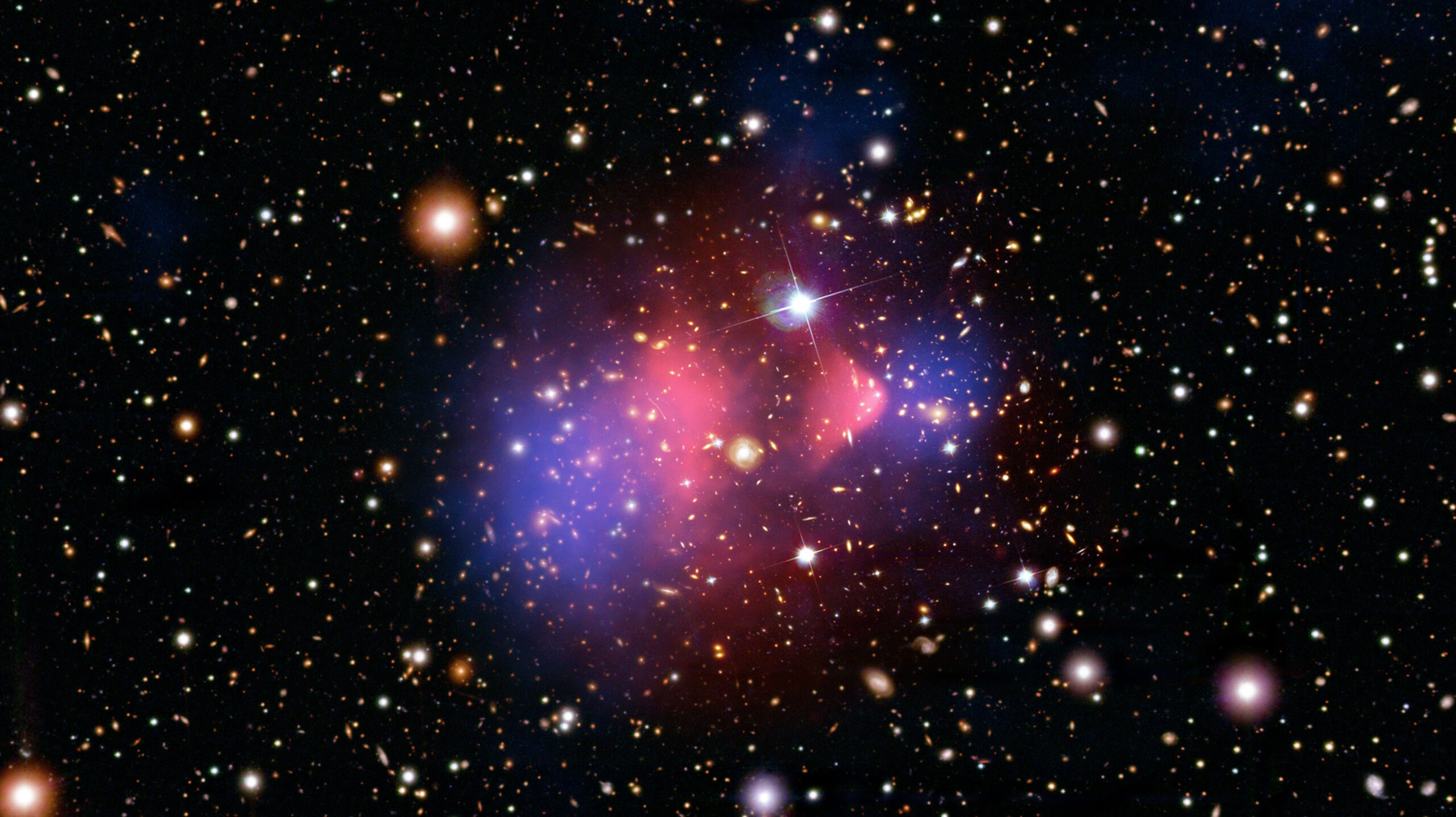
Definition of Dark Matter Dark matter is a mysterious and invisible form of matter that permeates the universe, outweighing all known ordinary matter combined. Unlike familiar substances, it neither emits nor absorbs light, making it undetectable by conventional telescopes. Despite its invisibility, dark matter exerts a powerful gravitational influence, shaping the structure and motion of […]

Read More →

How Gravitational Lensing Proves Invisible Matter Exists

Definition of Gravitational Lensing Gravitational lensing is a cosmic phenomenon where the gravitational field of a massive object bends and magnifies the light from a more distant source. This effect acts like a natural lens, distorting the appearance of galaxies, quasars, or other celestial bodies behind the massive object. It provides a unique observational window […]

Read More →

Inside the Underground Labs Hunting Dark Matter

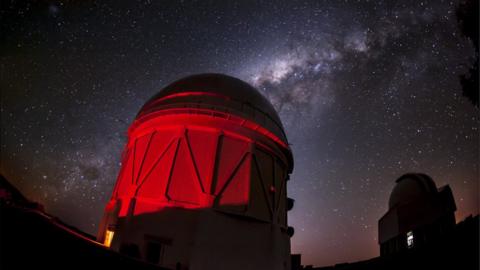
Understanding Underground Dark Matter Laboratories Hidden beneath the Earth’s crust lies a mysterious domain, as enigmatic as the vast universe itself. These subterranean research facilities serve as critical hubs where scientists strive to unravel one of the cosmos’ most perplexing mysteries: dark matter. Shielded from sunlight and enveloped in profound silence, these underground sanctuaries act […]

Read More →

Can Galaxies Exist Without Dark Matter?

Understanding Dark Matter and Its Role in the Universe Dark matter is a mysterious and invisible form of matter that neither emits nor absorbs electromagnetic radiation, making it undetectable by conventional telescopes. Its existence is inferred primarily through its gravitational effects on visible matter, radiation, and the large-scale structure of the universe. Introduced in the […]

Read More →

This Discovery Could Finally Reveal What Dark Matter Is

Definition of Dark Matter Dark matter is a form of matter that does not emit, absorb, or reflect light, making it invisible to traditional astronomical instruments. Despite its elusive nature, it exerts a significant gravitational influence on visible matter, shaping the large-scale structure of the universe. It acts as an unseen framework that holds galaxies […]

Read More →

Cosmic Rays Might Finally Reveal Dark Matter

Definition of Dark Matter and Cosmic Rays Dark matter constitutes approximately 27% of the universe’s total mass-energy composition, yet it remains invisible to direct observation. This mysterious form of matter exerts a significant gravitational pull, shaping the large-scale structure of the cosmos. Conversely, cosmic rays are high-energy charged particles, including protons, electrons, and atomic nuclei, […]

Read More →

Is Dark Matter Proven—or Still Just a Hypothesis?

Definition of Dark Matter Dark matter refers to a form of matter that does not emit, absorb, or reflect light, making it invisible to current electromagnetic observational methods. Despite its invisibility, it exerts gravitational effects on visible matter, radiation, and the large-scale structure of the universe. It is hypothesized to constitute about 27% of the […]

Read More →

Is Dark Matter the Biggest Mistake in Physics?

Understanding Dark Matter Dark matter is one of the most mysterious and significant components of the universe, accounting for roughly 27% of its total mass-energy content. Unlike ordinary matter, it neither emits nor absorbs light, making it invisible to conventional detection methods. Despite its elusive nature, dark matter plays a crucial role in explaining various […]

Read More →

Is Dark Matter Actually a Hidden Shadow Universe?

Understanding Dark Matter Dark matter remains one of the most intriguing mysteries in contemporary physics and cosmology. Although invisible to electromagnetic detection, it exerts a significant gravitational influence that shapes the large-scale structure of the universe, including galaxies, galaxy clusters, and the cosmic web. Despite its pervasive presence, dark matter has eluded direct observation, prompting […]

Read More →