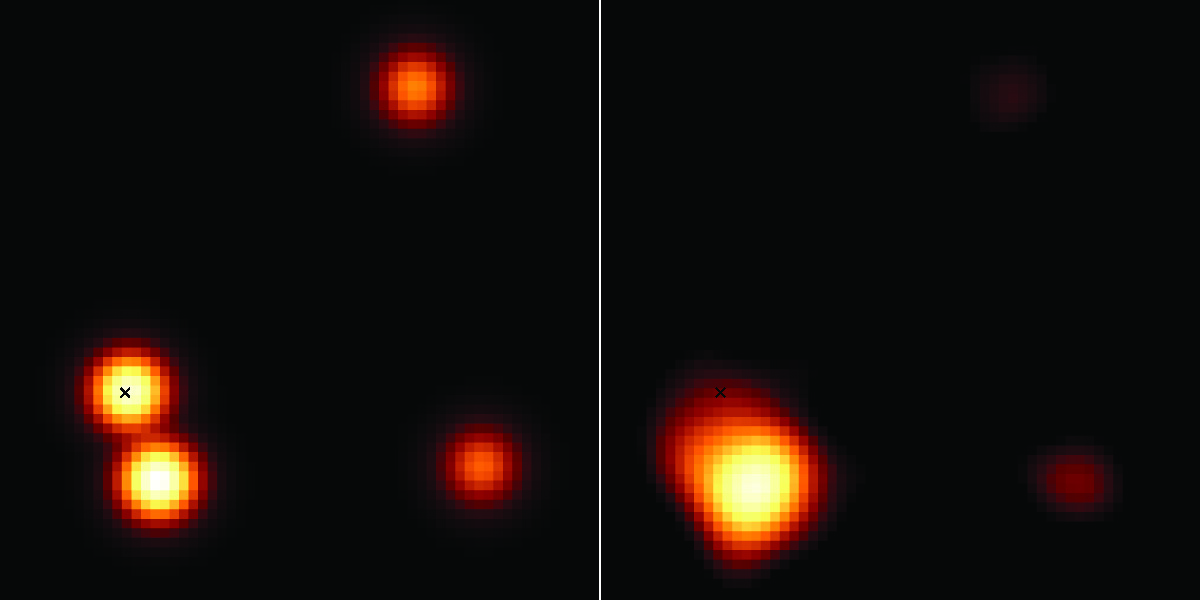
Gamma Rays Hint at the Existence of Dark Matter

Understanding Dark Matter Dark matter is a mysterious and invisible form of matter that is believed to constitute about 27% of the total mass-energy content of the universe. Despite its significant presence, it cannot be detected directly through conventional means because it does not emit, absorb, or reflect light. Its existence is inferred primarily through […]

Read More →

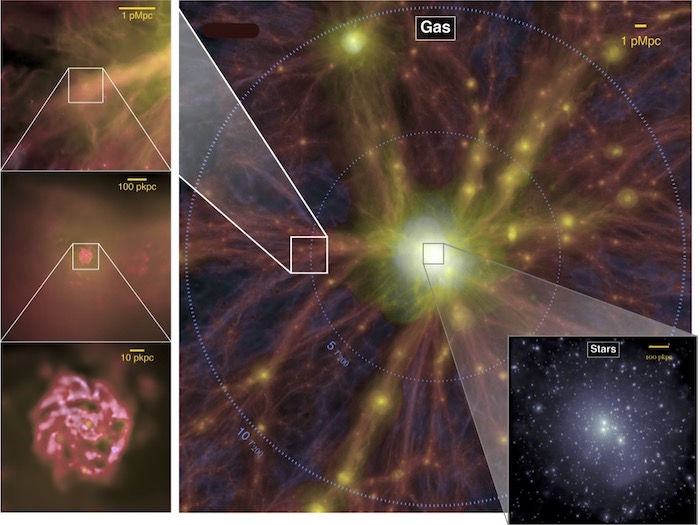
Rethinking the Darkness: Alternative to Dark Matter Tackles Galaxy Curves

Understanding the Dark Matter Debate In astrophysics, the concept of dark matter has been central to explaining the puzzling behaviors observed in galaxy formation and motion. The gravitational lensing effects seen in galaxies reveal a mismatch between the visible matter and the gravitational forces acting upon them, leading scientists to propose the existence of dark […]

Read More →

Still at Large: The Hunt for Dark Matter Continues

Definition of Dark Matter Dark matter is a mysterious and invisible form of matter that permeates the universe, making up about 27% of its total mass-energy content. Unlike ordinary matter, which constitutes roughly 5% of the universe and interacts with electromagnetic radiation, dark matter does not emit, absorb, or reflect light, rendering it undetectable by […]

Read More →

Are negative energy and dark matter related?

Definition of Dark Matter and Negative Energy Within the fields of cosmology and theoretical physics, two enigmatic phenomena-dark matter and negative energy-pose significant challenges to our comprehension of the universe. These concepts, while distinct, provoke questions about their possible interconnection and the broader implications for cosmic understanding. Dark Matter Dark matter is a form of […]

Read More →

Is there a dark matter connected with elementary particles?

Definition of Dark Matter Dark matter is a mysterious form of matter that constitutes approximately 27% of the universe’s total mass-energy composition. Unlike ordinary matter, it neither emits nor interacts with electromagnetic radiation, making it invisible to conventional telescopes and detectors. Its presence is inferred primarily through gravitational effects on visible matter, radiation, and the […]

Read More →

What do dark matter and energy have in common?

Understanding Dark Matter and Dark Energy Within the expansive and mysterious field of cosmology, dark matter and dark energy stand out as two of the most intriguing and challenging subjects. Despite their distinct characteristics, these two components share significant similarities that warrant detailed exploration. Investigating these phenomena not only reveals common observational features but also […]

Read More →